Russian lip filler has become one of the most requested lip enhancement techniques in aesthetic medicine. Known for its lifted, heart-shaped appearance and defined Cupid’s bow, this style uses a precise injection method rather than simply adding volume.
However, like all dermal filler procedures, swelling is a natural and expected part of the healing process.
Understanding Russian lip filler swelling is important because many people worry when their lips look “too big,” uneven, or overly dramatic in the first few days. In reality, early swelling is almost always temporary and part of the body’s normal response to injection trauma and hyaluronic acid-based fillers.
This article explains everything in detail: why swelling happens, how long it lasts, what is normal vs abnormal, and how to manage recovery safely.
What Is Russian Lip Filler?
Russian lip filler is a specialized injection technique that focuses on vertical lift rather than outward projection. Instead of filling the lips horizontally, the practitioner injects small amounts of dermal filler in a structured way to create height and definition.
Key characteristics include the following:
- A flatter side profile (less “duck lip” projection)
- A pronounced Cupid’s bow
- A lifted, doll-like appearance
- More height than forward volume
Most Russian lip techniques use hyaluronic acid (HA) fillers because they are reversible, customizable, and safe when used correctly.
But because this method involves multiple precise injections across the lip tissue, swelling is almost always more noticeable compared to traditional lip filler methods.

Why Swelling Happens After Lip Filler
Swelling after Russian lip filler is not a complication—it is a biological response.
When the lips are injected, several things happen at once:
1. Tissue trauma.
Even with fine needles or cannulas, the lips experience micro-injuries. This triggers inflammation, which causes fluid accumulation.
2. Hyaluronic acid attracts water.
HA fillers naturally bind water molecules. This means your lips will temporarily hold more fluid than usual during the first days.
3. Increased blood flow.
The body sends healing cells to the area, increasing circulation and contributing to puffiness.
4. Multiple injection points.
Russian lip techniques involve many small injections in vertical columns, which increases overall swelling compared to single-entry methods.
Russian Lip Filler Swelling Timeline
Swelling follows a predictable pattern, although individual healing varies.
First 24 hours: Immediate swelling phase
- Lips appear significantly larger than expected.
- Possible redness and tenderness.
- Mild asymmetry is common.
- Sensation of tightness or firmness.
This is the peak swelling stage for most people.
Days 2–3: Peak swelling
This is usually when swelling is at its highest.
- Lips may look 30–70% larger than the final result.
- Bruising may become visible.
- Texture can feel hard or lumpy.
- Speaking and smiling may feel slightly stiff.
This stage often causes anxiety, but it is completely normal.
Days 4–7: Reduction phase
- Swelling begins to decrease.
- Lips start to soften.
- Shape becomes more visible.
- Bruises (if present) begin fading.
By the end of this stage, most people see a more realistic preview of their results.
Week 2: Settling phase
- The majority of the swelling is gone.
- Lip shape becomes more natural.
- Final contour starts to appear.
- Any minor asymmetry usually improves.
Weeks 3–4: Final results
- Full healing is complete.
- Filler integrates with tissue.
- Final shape and symmetry are visible.
At this point, what you see is the true outcome of the Russian lip filler treatment.
Is Russian Lip Filler More Swollen Than Regular Lip Filler?
In most cases, yes.
Russian lip filler often causes more initial swelling because
- It involves deeper, more precise injections.
- Multiple vertical entry points are used.
- The technique focuses on lifting tissue rather than just filling volume.
- The lips are manipulated more during shaping.
However, this does NOT mean it is riskier. It simply means the healing appearance is more dramatic in the beginning.
Normal vs. Abnormal Swelling
Understanding the difference is important.
Normal swelling includes:
- Puffiness that peaks within 48–72 hours
- Mild to moderate bruising
- Slight asymmetry during early healing
- Tenderness or sensitivity
- Firmness in the lips
Warning signs (seek medical attention):
- Severe pain that worsens after 48 hours
- White or dark patches on the lips
- Excessive redness spreading beyond the lips
- Fever or signs of infection
- Hard lumps that do not improve after 2–3 weeks
- Skin discoloration (blue, gray, or blotchy areas)
Serious complications are rare, but early detection is important.
Factors That Affect Swelling
Not everyone swells the same way. Several factors influence your healing response:
1. Injection technique
More precise techniques (like Russian lips) can initially increase swelling.
2. Amount of filler used
Higher volume = more tissue expansion = more swelling.
3. Individual biology
Some people naturally retain more fluid or bruise easily.
4. Lifestyle habits
- Alcohol increases swelling.
- Smoking delays healing.
- High salt intake can worsen puffiness.
5. Menstrual cycle and hormones
Hormonal fluctuations can increase fluid retention.
6. Aftercare compliance
Following instructions reduces swelling duration.
How to Reduce Russian Lip Filler Swelling?
While swelling is unavoidable, it can be managed.
1. Use cold compresses.
- Apply gently (not directly on skin for long periods).
- Helps reduce inflammation.
- Best used in the first 24–48 hours.
2. Sleep elevated.
Keeping your head slightly raised reduces fluid buildup.
3. Avoid heat.
No saunas, hot showers, or intense sun exposure for 48–72 hours.
4. Limit alcohol.
Alcohol increases blood flow and worsens swelling.
5. Avoid strenuous exercise.
Exercise increases circulation and can prolong swelling.

6. Stay hydrated.
Proper hydration helps your body regulate inflammation.
7. Avoid touching or pressing your lips.
Manipulation can worsen irritation.
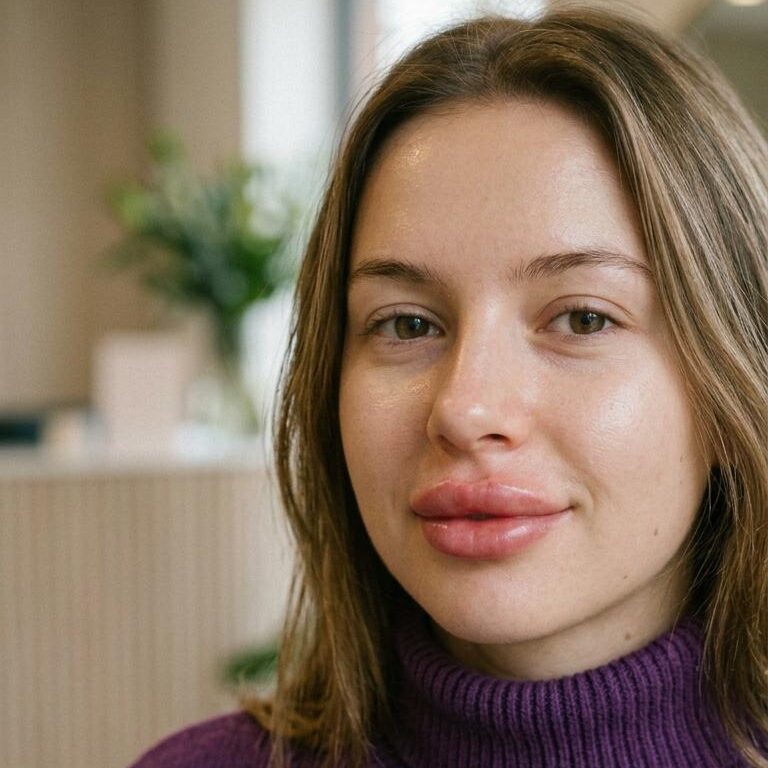
What Russian Lips Look Like During Swelling?
Many people panic because swollen lips can look unnatural in the early stage.
Common temporary appearances include:
- Overly large or “overfilled” look.
- Uneven shape between the top and bottom lips.
- Sharp or stiff definition.
- Small lumps or firmness.
- Exaggerated Cupid’s bow.
This is not the final result. Russian lip filler is specifically designed to settle into a refined shape once swelling decreases.
When Will You See the Final Result?
Most people see a close-to-final result within 10–14 days.
However:
- Subtle settling continues up to 4 weeks.
- Minor adjustments in shape are normal.
- Final softness takes time as filler integrates with tissue.
If results still feel uneven after 2–3 weeks, a follow-up appointment may be recommended.
Common Concerns During Swelling
“My lips look too big.”
- This is extremely common in the first 72 hours. Swelling exaggerates volume significantly.
“My lips are uneven.”
- Temporary asymmetry is normal due to uneven swelling distribution.
“My lips feel hard.”
- Early firmness is caused by swelling and filler placement. It softens over time.
“I don’t like how it looks.”
- Final judgment should never be made for 2 weeks.
Complications vs. Normal Healing.
Most Russian lip filler swelling is harmless. However, complications—though rare—can occur if the filler is injected incorrectly or if aftercare is ignored.
Possible complications include:
- Prolonged swelling beyond 2–3 weeks
- Persistent lumps
- Vascular occlusion (rare but serious)
- Infection
Choosing a qualified injector significantly reduces these risks.
Tips for a Smooth Recovery
- Avoid makeup on lips for 24 hours.
- Do not massage unless instructed by your injector.
- Follow all aftercare instructions strictly.
- Keep lips clean and moisturized.
- Avoid smoking during the healing phase.
- Be patient with the results.
Healing is just as important as the injection technique itself.
How Long Do Russian Lip Fillers Last?
While swelling resolves in weeks, filler longevity is much longer.
Typically:
- 6 to 12 months for most HA fillers
- Slight variation depending on metabolism and product type
- Russian technique may visually “last longer” due to structural placement
Maintenance treatments help preserve shape over time.
What’s the best sleeping position after lip fillers?
The best sleeping position after lip fillers is on your back (supine position) with your head elevated.
Why is this position recommended?
Sleeping on your back helps:
- Reduce swelling by preventing fluid from pooling in the lips
- Avoid pressure on freshly injected filler
- Lower the risk of uneven healing or shifting in the early days
Keeping your head slightly raised (about 30–45 degrees) further helps control swelling and bruising.
Positions to avoid
For at least the first 3–5 nights (or as advised by your injector), try to avoid:
- Sleeping on your side → can press one side of the lips and cause uneven swelling
- Sleeping on your stomach/face down → increases pressure and irritation
- Resting your face on your hand or pillow → can distort healing tissue
Helpful tips for better sleep after fillers
- Use 1–2 extra pillows or a wedge pillow to stay elevated.
- Sleep in a slightly “locked” back position (some people place pillows on both sides to prevent turning).
- Avoid alcohol or very salty food before bed (they can worsen swelling).
- Keep your sleep environment cool to reduce inflammation.
How long should you sleep this way?
- First 2–3 nights: very important to strictly sleep on your back.
- Up to 1 week: still ideal to avoid side sleeping as much as possible.
- After that, most people can gradually return to normal sleeping positions once swelling settles.
If you want, I can also tell you what NOT to do in the first 24–48 hours after lip fillers or how to reduce swelling faster.
Why do lip fillers take 2 weeks to settle?
Lip fillers take about 2 weeks to fully settle because what you see right after treatment is not the final result—it’s a mix of swelling, tissue response, and filler adjustment inside the lips.
Here’s what’s actually happening in those 2 weeks:
1. Initial swelling hides the real shape (first 3–5 days).
Right after the injection, your lips swell due to the following:
- Tiny needle trauma to tissue
- Natural inflammatory response
- Hyaluronic acid filler attracts water
This swelling can make the lips look
- Bigger than intended
- Uneven
- Firm or tight
This is temporary, not the outcome.
2. The filler is still “integrating” into tissue (days 5–10).
Lip filler (usually hyaluronic acid) doesn’t just sit in place immediately. It gradually
- Distributes evenly within the lip tissue.
- Blends with natural hydration levels.
- Softens as inflammation reduces.
During this stage, small lumps or stiffness can still feel present, even though they are usually normal.
3. Water balance is stabilizing.
Hyaluronic acid binds water. In the first days:
- It may absorb more fluid than expected.
- Then gradually reaches a stable hydration level.
This is why lips can look “overfilled” at first and then become more natural later.
4. Micro-bruising and inflammation are healing.
Even if you don’t see major bruises, there still are.
- Internal healing is happening.
- Minor swelling differences between the two sides.
- Temporary firmness from tissue repair
As inflammation reduces, the true shape becomes visible.
5. Final shaping happens as muscles adapt (up to 2 weeks).
Your lips are constantly moving (talking, eating, smiling). Over time:
- Filler settles into natural movement patterns
- Any uneven distribution smooths out
- The lips soften and become more flexible
This “adaptation phase” is why injectors wait before doing touch-ups.
Typical timeline of settling
- 0–3 days: peak swelling, distorted appearance.
- 4–7 days: swelling drops, shape becomes clearer.
- 7–14 days: filler fully integrates and softens.
- After 2 weeks, the true final result was considered.
Why do doctors always say “wait 2 weeks”?
Because it’s before 2 weeks.
- Swelling can hide asymmetry.
- Lumps may still resolve naturally.
- The final volume is not accurate yet.
If adjustments are made too early, it can lead to overfilling or unnecessary correction.
A simple way to understand it.
Think of lip filler like a new mattress that needs time to expand and adjust after unpacking:
- Day 1: looks too big and uneven
- Week 1: starts shaping properly
- Week 2: fully “settled” and natural
When to worry
Most changes in the first 2 weeks are normal. But you should contact a professional if you notice the following:
- Increasing pain after day 3
- Severe asymmetry that doesn’t improve
- White/blue discoloration
- Hard lumps that worsen instead of softening
Read more: Rose lips vaseline
Final Thoughts
Russian lip filler swelling is a normal part of the healing process. Although the first few days can look dramatic and even concerning, this phase does not represent the outcome.
Swelling peaks within 48–72 hours, improves significantly within a week, and fully settles by 2–4 weeks. Understanding this timeline helps reduce anxiety and prevents premature judgment of results.
The key to a successful experience is patience, proper aftercare, and choosing a skilled injector who understands facial anatomy and the Russian lip technique precisely.
When healed properly, Russian lip filler can create a beautifully lifted, structured, and natural-looking enhancement—but the journey always begins with temporary swelling. If you have any queries, please don’t hesitate to reach out to fajarhafeez117@gmail.com.