Hair coloring is one of the most common beauty practices worldwide, whether done at home or in professional salons. People dye their hair to cover grays, change their appearance, or express personal style. But one question that often comes up is, “Can you put hair dye on wet hair?”
The response is not as straightforward as “yes” or “no.” It depends on the type of dye, your hair condition, the result you want, and whether you are coloring at home or in a salon.
In this detailed guide, we will explore everything you need to know about applying hair dye on wet hair, including the science behind it, pros and cons, expert recommendations, and best practices.
Understanding Hair Structure First
Before deciding whether dye works on wet hair, it is important to understand how hair behaves.
Hair is made of three layers:
- Cuticle (outer layer): Protects the hair shaft and opens when exposed to chemicals or water.
- Cortex (middle layer): Contains melanin (natural pigment) and is where dye works.
- Medulla (inner layer): Soft inner core, not directly involved in coloring.
When hair is dry, the cuticle is relatively closed. When hair gets wet, the cuticle slightly swells and lifts.
This is the key reason why wet hair behaves differently during dyeing.
Can You Apply Hair Dye to Wet Hair?
Yes, you can apply hair dye to wet hair—but it depends on the type of dye and the desired result.
However, most professional hair colorists recommend applying dye on dry hair unless the product specifically says otherwise.
Let’s break it down.
Types of Hair Dye and Wet Application
1. Permanent Hair Dye
Permanent dye is designed to penetrate deep into the hair cortex and permanently change hair color.
Wet hair application is NOT recommended
Why?
- Water inside hair dilutes the dye
- Chemical reaction becomes weaker
- Color may turn uneven or lighter than expected
- Gray coverage becomes less effective
✔ Best used on: Dry, unwashed hair (usually 24–48 hours after shampooing)
2. Semi-Permanent Hair Dye
Semi-permanent dye coats the outer layer of hair and gradually fades with washing.
Can be applied on damp or wet hair (in some cases)
Why it sometimes works:
- Slight moisture helps spread the dye evenly
- Less chemical penetration is required
- Produces softer, more natural tones
✔ Best used on: Towel-dried hair for even distribution.
3. Temporary Hair Color (Sprays, rinses, chalks)
These products are surface-level coatings.
Wet hair is NOT recommended
Why?
- Water prevents pigment from sticking properly
- Color may drip or wash away immediately
✔ Best used on: Dry hair only
4. Toners and Glosses
Hair toners are used to neutralize unwanted tones (like brassiness).
Sometimes applied on damp hair
Why professionals use damp hair:
- Better product spread
- Controlled absorption
- More natural blending result
✔ Common in salons after bleaching.
Why Some People Apply Dye on Wet Hair?
Even though dry hair is generally preferred, wet hair dyeing is still done in some situations.
1. Easier Application
Wet hair is
- Softer
- Less tangled
- Easier to distribute product evenly
2. More Subtle Color Result
Wet hair dilutes dye slightly, resulting in:
- Softer tones
- Less intense color
This is sometimes preferred for natural looks.
3. Damage Reduction (Perceived)
Some believe wet hair reduces damage because
- Water acts as a buffer
- Hair feels less harsh during chemical processing
However, this is partially a myth. Dye chemicals still affect the hair structure.
The Science Behind Wet Hair and Dye
When hair is wet:
- The cuticle layer lifts
- Water fills the cortex
- Hair swells in size
Now when dye is applied:
- Dye molecules must compete with water molecules
- Pigment penetration becomes inconsistent
- The oxidation process (for permanent dyes) is weakened
This leads to:
- Uneven color
- Reduced vibrancy
- Shorter-lasting results
Pros of Applying Hair Dye on Wet Hair
Although not ideal in many cases, wet hair dyeing has some advantages:
✔ Easier spreading
Dye moves more smoothly through wet strands.
✔ Less harsh feeling
Wet hair feels less rough during application.
✔ Softer final tone
Good for subtle highlights or pastel shades.
✔ Time-saving
Some quick salon techniques use damp hair to speed up processing.
Cons of Applying Hair Dye on Wet Hair
There are also significant downsides:
✘ Diluted color
Water weakens dye concentration.
✘ Uneven results
Some areas may absorb more color than others.
✘ Poor gray coverage
Especially for stubborn grays.
✘ Shorter-lasting color
Fades faster compared to dry hair application.
✘ Chemical inefficiency
Permanent dyes may not activate properly.
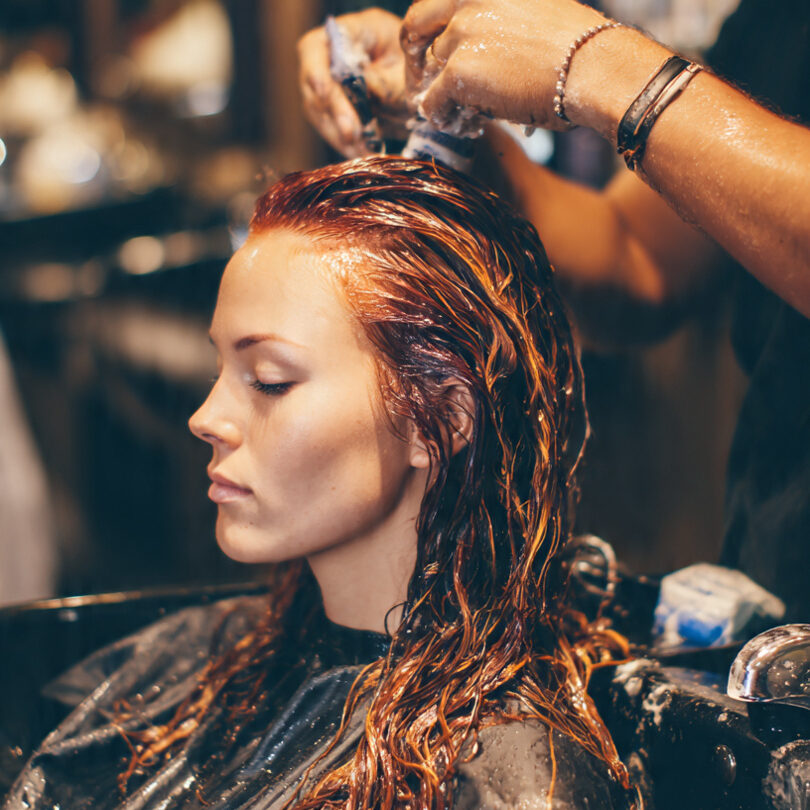
What Professional Hair Stylists Recommend?
Most professional colorists strongly recommend the following:
Apply dye on dry, unwashed hair
Why?
- Natural oils protect the scalp
- Better pigment absorption
- More predictable results
- Longer-lasting color
In salons, stylists may slightly dampen hair only for:
- Toners
- Gloss treatments
- Special creative techniques
But for standard coloring, dry hair is the rule.
When It IS Okay to Dye Wet Hair
There are specific situations where wet hair dyeing is acceptable:
1. Semi-permanent color refresh
If you’re refreshing faded color, wet application can help.
2. Toners after bleaching
Often applied on towel-dried hair for controlled toning.
3. Fashion colors (pastels)
Light shades sometimes require damp hair for dilution.
4. Quick salon techniques
Some stylists use wet hair for fast, blended results.
When You Should never Use Wet-Hair Dye
Avoid wet application if:
- You are covering gray hair
- You are using permanent dye
- You want bold or vibrant color
- You want long-lasting results
- You are lightening hair (bleach or high-lift dye)
How to Properly Prepare Hair for Dyeing?
For best results, follow this preparation routine:
Step 1: Do not wash hair immediately before dyeing
Natural oils protect the scalp.
Step 2: Ensure hair is dry
Unless instructed otherwise.
Step 3: Detangle the hair.
Prevents patchy application.
Step 4: Divide into sections
Ensures even coverage.
Step 5: Perform a patch test
Avoid allergic reactions.
Wet Hair vs Dry Hair Dyeing Comparison
| Feature | Wet Hair | Dry Hair |
| Color intensity | Weaker | Stronger |
| Evenness | Less consistent | More consistent |
| Gray coverage | Poor | Excellent |
| Longevity | Short | Short |
| Damage control | Slightly gentler feel | Standard |
| Professional use | Limited | Preferred |
Myths About Dyeing Wet Hair
Myth 1: Wet hair absorbs color better
❌ False. Water actually blocks pigment absorption.
Myth 2: It reduces hair damage
❌ Partially false. Damage still occurs from chemicals.
Myth 3: It saves dye products.
❌ Not true. You may actually need more dye for coverage.
Expert Advice for Best Results
If you want salon-quality results at home:
- Always prefer dry hair for permanent dyes
- Use damp hair only when product instructions allow it
- Follow timing instructions carefully
- Avoid mixing methods without knowledge
- Consult a stylist for major color changes
Should You Dye Your Hair While Dry or Wet?
In almost all normal hair coloring situations, the correct answer is you should dye your hair while it is dry.
Wet hair dyeing exists, but it is the exception—not the standard. The condition of your hair (wet vs. dry) directly affects how color penetrates, how evenly it spreads, and how long it lasts.
Let’s break it down clearly so you know exactly when to use each method and why.
The Short Answer
- Permanent hair dye → Use on DRY hair (always recommended)
- Semi-permanent dye → Usually DRY or slightly damp
- Toners or gloss → Sometimes DAMP hair
- Bleach or lightener → Always DRY hair
If you’re unsure, dry hair is the safest and most reliable choice.
Why Dry Hair Is Usually Better
Hair is made of a protective outer layer called the cuticle. When hair is dry:
- The cuticle is relatively stable
- The dye can enter the cortex properly
- The color develops evenly and predictably
When hair is wet:
- Water fills the hair shaft
- Dye gets diluted
- Chemical reactions become weaker
- Color results become less consistent
That’s why most professional colorists prefer dry hair for dyeing.
What Happens When You Dye Wet Hair?
Applying dye on wet hair changes how the product behaves:
1. Dilution of color
Water inside the hair shaft mixes with the dye, making it weaker. This can lead to:
- Less vibrant color
- Patchy results
- Faster fading
2. Uneven absorption
Some strands absorb more water than others, so the dye may not distribute evenly.
3. Reduced gray coverage
Wet hair makes it harder for pigment to fully cover resistant gray strands.
4. Unpredictable results
The final shade may look lighter or different than expected.
When Wet Hair Dyeing CAN Work?
Even though dry hair is the standard, there are a few situations where wet or damp hair is used:
1. Semi-permanent color
Semi-permanent dyes sit on the surface of the hair. Slight dampness can help.
- Spread color more evenly
- Create softer, natural-looking tones
2. Hair toners
After bleaching, stylists sometimes apply toner on towel-dried hair:
- Helps even out brassiness
- Creates smoother blending
- Prevents overly harsh color deposits
3. Fashion or pastel shades
Light or creative colors may be applied to damp hair to
- Reduce intensity
- Create a washed, soft effect
When You SHOULD NOT Dye Wet Hair?
Avoid wet application in these cases:
✘ Permanent hair dye
Wet hair weakens the chemical process, leading to poor results.
✘ Gray coverage
Gray hair needs strong pigment penetration, which wet hair prevents.
✘ Hair lightening or bleach
Bleach must work on dry hair for controlled and even lifting.
✘ Vibrant or dark color changes
Wet hair will soften and distort the final shade.
Dry vs Wet Hair Dye Comparison
| Feature | Dry Hair | Wet Hair |
| Color strength | Strong & vibrant | Weaker |
| Evenness | Consistent | Often patchy |
| Gray coverage | Excellent | Poor |
| Longevity | Long-lasting | Fades faster |
| Control | High | Low |
| Professional use | Standard method | Limited use |
What Professionals Actually Do?
Most salon colorists follow this rule:
Permanent color is always applied on dry, unwashed hair?
Why unwashed?
- Natural oils protect the scalp
- Hair is in its most stable state
- Color develops more evenly
Stylists only use damp hair when:
- Adjusting tone (toners)
- Creating soft fashion colors
- Working with special techniques
The Science Behind It (Simple Explanation)
Hair behaves like a sponge:
- Dry sponge: Absorbs dye in a controlled way
- Wet sponge: Already filled with water → less space for dye
So when hair is wet:
- Dye competes with water
- Pigment becomes diluted
- Chemical reaction is weaker
That’s why results are less predictable.
When Should You Dye Hair Dry?
You should always use dry hair when
- Covering gray hair
- Using permanent box dye
- Wanting long-lasting results
- Doing root touch-ups
- Applying bleach or highlights
When Slight Dampness Is Okay?
Some professionals lightly towel-dry hair before applying:
- Toner
- Gloss treatments
- Semi-permanent dyes
This is not fully wet hair—it is damp hair, which is controlled and intentional.
Simple Rule to Remember
If you’re unsure, always follow this:
- Dry hair for permanent color.
- Damp hair only when the product specifically says so.
How to Avoid Damaging Hair When Dyeing?
Hair dye can completely transform your look, but frequent coloring or improper techniques can leave hair dry, brittle, weak, and prone to breakage. The good news is that you can color your hair while keeping it healthy if you follow the right steps before, during, and after dyeing.
This guide explains how to minimize damage and maintain soft, shiny, healthy hair even after coloring.
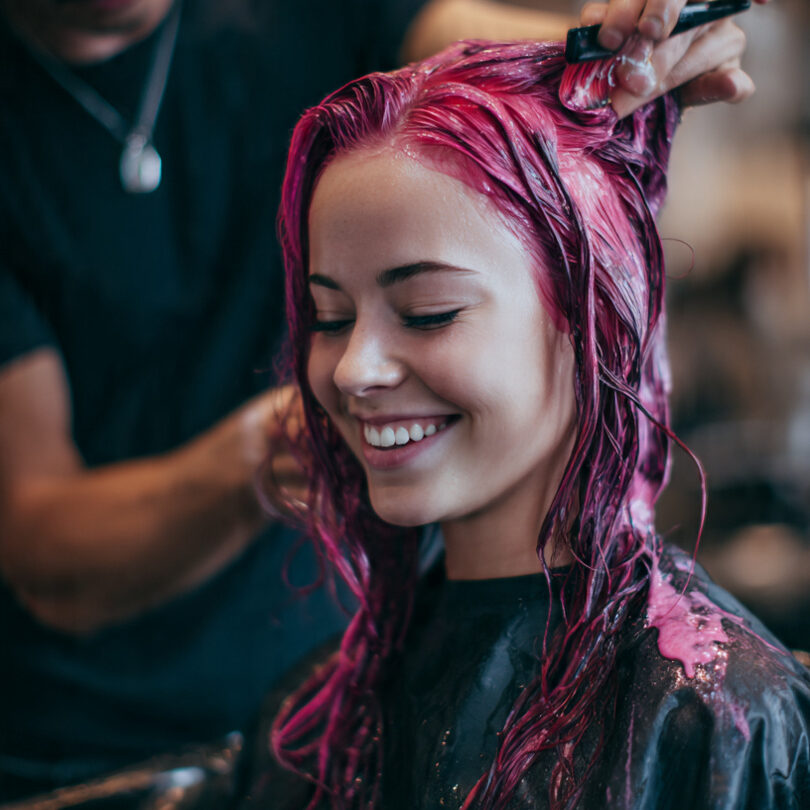
Why Hair Dye Can Damage Hair?
Most permanent hair dyes contain chemicals such as
- Ammonia
- Hydrogen peroxide
- Bleaching agents
These ingredients open the hair cuticle so pigment can enter the hair shaft. During this process:
- Natural moisture is lost
- Protein structure weakens
- Hair becomes more porous
The more often you dye or bleach hair, the greater the potential damage.
1. Choose the Right Type of Hair Dye
Not all dyes damage hair equally.
Least Damaging Options
✔ Semi-permanent dye
- No harsh developer
- Coats the hair instead of deeply penetrating
- Fades gradually
- Good for beginners
✔ Demi-permanent dye
- Gentler than permanent dye
- Adds shine
- Less ammonia
✔ Ammonia-free dye
- Milder formula
- Better for sensitive or dry hair
2. Avoid Frequent Coloring
One of the biggest causes of hair damage is over-processing.
Recommended waiting times:
- Permanent dye: every 6–8 weeks
- Root touch-up: only on regrowth
- Bleach sessions: several weeks apart
Coloring too often weakens hair structure and increases breakage.
3. Never Bleach Unhealthy Hair
Bleach is the most damaging hair process because it strips natural pigment.
Avoid bleaching if your hair is:
- Extremely dry
- Breaking easily
- Chemically treated
- Elastic or gummy when wet
Strengthen hair first before any lightening treatment.
4. Prepare Hair Before Dyeing
Healthy hair handles dye much better.
A Few Days Before Coloring:
✔ Deep condition your hair
Use:
- Hair masks
- Protein treatments
- Moisturizing conditioners
✔ Avoid heat styling
Reduce use of:
- Flat irons
- Curling wands
- Blow dryers
✔ Don’t wash hair right before dyeing
Natural scalp oils protect against irritation and dryness.
Best practice:
- Wash hair 24–48 hours before coloring
5. Always Perform a Strand Test
A strand test helps you:
- Predict color results
- Check how your hair reacts
- Prevent severe damage
This is especially important if:
- You previously used bleach
- Your hair is fragile
- You are switching colors dramatically
6. Use the Correct Developer Strength
Higher developer volume = more damage.
| Developer | Use | Damage Level |
| 10 volume | Deposit colo | Low |
| 20 volume | Standard coloring | Moderate |
| 30 volume | Strong lift | High |
| 40 volume | Extreme lightning | Very high |
For healthier hair:
Use the lowest developer strength possible.
7. Avoid Overlapping Dye
Many people repeatedly apply dye to already-colored hair.
This causes:
- Dryness
- Breakage
- Uneven texture
Correct method:
Apply permanent dye only to:
- New root growth
Refresh lengths only when necessary.
8. Do Not Leave Dye on Too Long
Longer processing time does NOT mean better color.
Leaving dye beyond instructions may
- Over-process hair
- Increase dryness
- Cause scalp irritation
Always follow the product timing carefully.
9. Rinse With Cool or Lukewarm Water
Hot water opens the cuticle and strips moisture.
After dyeing:
✔ Use cool or lukewarm water
✔ Rinse thoroughly
✔ Avoid harsh scrubbing
This helps:
- Seal the cuticle
- Reduce fading
- Maintain shine
10. Use Color-Safe Shampoo
Regular shampoos may contain harsh sulfates that:
- Strip color quickly
- Dry out hair
Choose:
- Sulfate-free shampoo
- Color-safe formulas
- Moisturizing cleansers
11. Deep Condition Weekly
Dyed hair needs extra hydration.
Best treatments:
- Hair masks
- Leave-in conditioners
- Oils
- Bond-building treatments
Weekly conditioning restores:
- Moisture
- Elasticity
- Smoothness
12. Protect Hair From Heat
Colored hair becomes more sensitive to heat.
Excessive heat causes the following:
- Split ends
- Fading
- Dryness
Tips:
✔ Use heat protectant spray
✔ Lower styling temperatures
✔ Air dry when possible
13. Avoid Tight Hairstyles After Dyeing
Freshly dyed hair is more fragile.
Avoid:
- Tight ponytails
- Tight buns
- Heavy extensions
These styles can cause breakage at weak points.
14. Use Hair Oils Carefully
Natural oils help restore softness and shine.
Good options:
- Argan oil
- Coconut oil
- Jojoba oil
- Rosemary oil (diluted)
Benefits:
- Reduces frizz
- Adds moisture
- Improves softness
Avoid overusing oil, especially on fine hair.
15. Protect Hair From Sun and Chlorine
UV rays and pool chemicals fade and weaken color-treated hair.
Protection tips:
✔ Wear hats outdoors
✔ Use UV hair sprays
✔ Wet hair before swimming
✔ Use swim caps in chlorinated pools
16. Trim Split Ends Regularly
Dyeing can worsen split ends over time.
Regular trims:
- Prevent breakage from spreading
- Keep hair healthier-looking
- Improve manageability
Trim every 6–10 weeks if needed.
17. Eat for Healthy Hair
Hair health also depends on nutrition.
Important nutrients:
- Protein
- Iron
- Omega-3 fatty acids
- Biotin
- Vitamin D
- Zinc
Healthy hair from within tolerates coloring better.
18. Be Careful With DIY Bleaching
Home bleaching mistakes can severely damage hair.
Common problems:
- Uneven lift
- Melted hair texture
- Severe dryness
- Breakage
For dramatic color changes:
Consider visiting a professional stylist.
19. Try Bond-Building Treatments
Modern bond-repair products help strengthen hair during coloring.
These products work by repairing broken protein bonds inside the hair shaft.
Popular types:
- Bond builders
- Protein reconstructors
- Repair masks
They are especially useful for bleached hair.
20. Listen to Your Hair
Stop chemical treatments if you notice:
- Excessive shedding
- Stretchy wet hair
- Extreme dryness
- Hair snapping easily
Hair needs recovery time before more processing.
Signs Your Hair Is Damaged From Dye
Watch for:
- Rough texture
- Split ends
- Frizz
- Dullness
- Breakage
- Elastic or gummy hair
- Tangling
Early care can prevent severe damage.
Best Routine for Dyed Hair
Daily
- Use gentle products
- Avoid heat when possible
- Apply leave-in conditioner
Weekly
- Deep conditioning mask
- Oil treatment
- Minimal heat styling
Monthly
- Trim ends
- Refresh moisture treatments
Biggest Mistakes That Cause Hair Damage
Avoid these common errors:
❌ Bleaching too often
❌ Using very high developer
❌ Dyeing already damaged hair
❌ Excessive heat styling
❌ Skipping conditioner
❌ Washing hair too frequently
❌ Overlapping bleach or dye.
Read more: Can you dye synthetic hair?
Conclusion
Hair coloring is an art as much as a science. While wet hair might seem like a convenient shortcut, it often compromises the final result. Understanding how hair chemistry works helps you make better decisions and achieve more professional-looking color at home.
If your goal is long-lasting, vibrant, and even-toned hair color, dry hair remains the gold standard.