Acne scars can be frustrating long after breakouts disappear. Many people turn to retinol hoping it will smooth skin, fade marks, and restore an even complexion. But does retinol actually help with acne scars? Wondering, does retinol help with acne scars? Learn how retinol improves skin texture, fades dark marks, boosts collagen, and supports smoother, clearer skin.
The short answer is yes — retinol can improve certain types of acne scars and post-acne marks, especially when used consistently and correctly. However, the results depend on the type of scars you have, the strength of the retinoid, and your overall skincare routine.
Dermatologists often recommend retinoids because they increase skin cell turnover, stimulate collagen production, and improve skin texture over time. Research suggests that topical retinoids can help reduce acne scarring and prevent future scars by controlling acne breakouts.
This guide explains everything you need to know about retinol for acne scars, including how it works, which scars respond best, how long it takes, side effects, and how to use it safely.
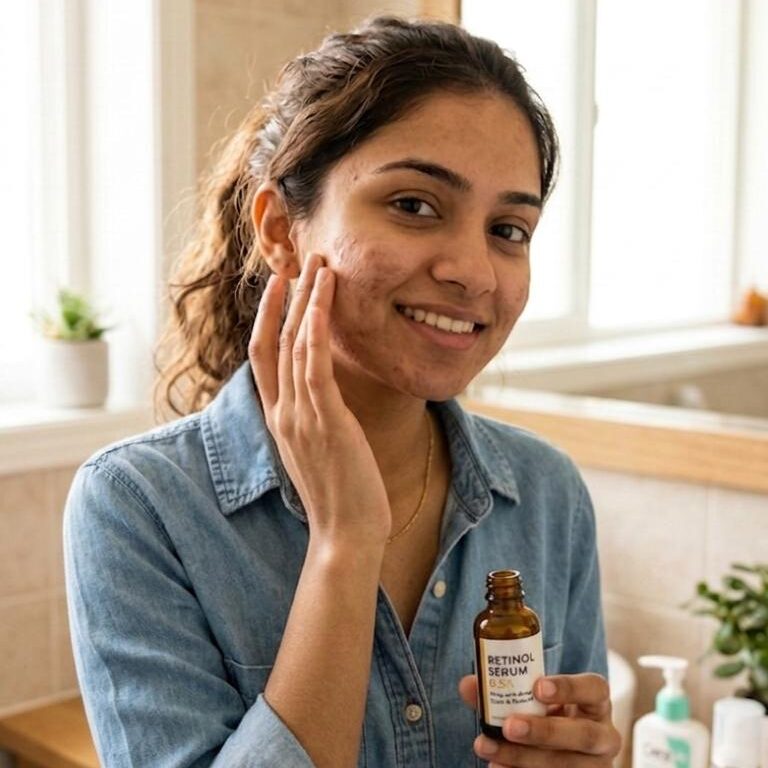
What Is Retinol?
Retinol is a derivative of vitamin A that is part of the retinoid group. Retinoids are skincare ingredients known for improving acne, fine lines, wrinkles, discoloration, and uneven skin texture.
There are different types of retinoids:
- Retinol (over-the-counter)
- Retinaldehyde
- Adapalene
- Tretinoin
- Tazarotene
Over-the-counter retinol products are usually gentler but slower-acting. Prescription retinoids like tretinoin and tazarotene are stronger and often provide faster results for acne scars.
Retinol works by accelerating skin renewal and encouraging collagen production. This procedure aids in substituting injured skin cells with fresher, healthier ones.
How Acne Scars Form
Before understanding how retinol helps, it’s important to understand acne scars.
Acne scars form when inflammation harms the deeper skin layers. When the skin heals improperly, scars can form.
There are several types of acne scars:
1. Post-Inflammatory Hyperpigmentation (PIH)
These are dark or reddish spots that linger after pimples have cleared up. Technically, they are not true scars but discoloration.
2. Atrophic Scars
These are indented scars caused by collagen loss.
Types include:
- Ice pick scars
- Boxcar scars
- Rolling scars
3. Hypertrophic or Keloid Scars
Raised scars caused by excess collagen production.
Retinol tends to work best on:
- Dark marks
- Mild textural scars
- Early atrophic scars
Deep ice pick scars usually need professional treatments like laser resurfacing or microneedling.
How Retinol Helps Acne Scars
Retinol improves acne scars in several ways.
Increased Cell Turnover
Retinol speeds up how quickly skin sheds old cells and creates new ones. This helps fade post-acne discoloration and smooth rough skin texture.
Collagen Production
Collagen is the protein that ensures skin firmness and structure.
Retinol stimulates collagen synthesis, which can gradually fill shallow acne scars and improve skin elasticity. The collagen mechanism is often summarized as:
Retinoids→↑Collagen Production→Improved Skin Texture
Prevention of New Acne
One major benefit of retinol is acne prevention. Fewer breakouts mean fewer future scars.
Retinoids unclog pores and reduce inflammation, helping prevent the cycle of acne and scarring.
Smoother Skin Texture
Retinol helps refine uneven texture caused by acne damage. Over time, skin may appear brighter and smoother.
Does Retinol Work for All Acne Scars?
Not exactly.
Best Results
Retinol works best for:
- Post-inflammatory hyperpigmentation
- Mild acne scars
- Uneven texture
- Red acne marks
- Early shallow scars
Moderate Results
Retinol may moderately improve the following:
- Rolling scars
- Mild boxcar scars
Limited Results
Retinol usually cannot be fully removed:
- Deep ice pick scars
- Severe atrophic scars
- Raised keloid scars
In severe cases, dermatologists often combine retinoids with:
- Chemical peels
- Microneedling
- Laser treatments
- Subcision
- Fillers
A clinical trial involving topical tazarotene showed improvement in atrophic acne scars, suggesting stronger retinoids can help remodel scar tissue.
Retinol vs. Retinoids for Acne Scars
People often confuse retinol with retinoids.
Here’s the difference:
| Type | Strength | Availability | Speed |
| Retinol | Mild | OTC | Slower |
| Retinaldehyde | Moderate | OTC | Faster |
| Adapalene | Moderate | OTC/Prescription | Faster |
| Tretinoin | Strong | Prescription | Fast |
| Tazarotene | Very Strong | Prescription | Fastest |
Prescription retinoids usually work better for acne scars because they are more potent.
Nevertheless, more potent products also heighten the likelihood of irritation.
How Much Time Does Retinol Require to Diminish Acne Scars?
Patience is essential.
Most people begin noticing improvements after:
- 6–8 weeks for a smoother texture
- 3–6 months for fading marks
- 6–12 months for visible scar improvement
Dermatologists emphasize that consistent long-term use is necessary.
Skin renewal takes time, especially for deeper scars.
Can Retinol Make Acne Worse at First?
Yes. This process is called the “retinol purge.”
During the first few weeks:
- Breakouts may temporarily increase
- Dryness and peeling can occur
- Skin may become irritated
This happens because retinol accelerates skin turnover and brings clogged pores to the surface more quickly.
The purge usually lasts
- 2–6 weeks
Afterward, skin often begins improving.
How to Use Retinol for Acne Scars
Using retinol correctly is extremely important.
Step 1: Start Slowly
Begin with:
- 0.25% to 0.3% retinol
- 2–3 nights per week
Gradually increase frequency as your skin adjusts.
Step 2: Apply at Night
Retinol breaks down in sunlight, increasing sun sensitivity.
Always use it at night.
Step 3: Use a Pea-Sized Amount
A small amount is enough for the entire face.
Using too much increases irritation.
Step 4: Moisturize
Retinol can dry out the skin.
Pair it with:
- Ceramides
- Hyaluronic acid
- Gentle moisturizers
Step 5: Wear Sunscreen Daily
This step is non-negotiable.
Retinol makes skin more sensitive to UV damage, which can worsen acne marks and pigmentation. Experts recommend SPF 30 or higher.
Best Ingredients to Combine With Retinol
Certain ingredients work well alongside retinol.
Niacinamide
Helps calm irritation and reduce redness.
Hyaluronic Acid
- Adds hydration and supports the skin barrier.
Ceramides
- Repair and strengthen damaged skin.
Vitamin C
- Brightens pigmentation and supports collagen.
- Use vitamin C in the morning and apply retinol at night.
Salicylic Acid
- Helpful for acne-prone skin, but overuse with retinol can cause irritation.
Ingredients to Avoid Mixing Immediately With Retinol
Some combinations can irritate the skin.
Be cautious with:
- Benzoyl peroxide
- Strong AHAs/BHAs
- Harsh scrubs
- Alcohol-heavy products
If combining active ingredients, introduce them slowly.
Retinol for Dark Acne Marks
Retinol is especially effective for post-inflammatory hyperpigmentation.
It helps:
- Fade brown spots
- Reduce red marks
- Brighten uneven tone
This happens because increased cell turnover helps remove pigmented skin cells faster.
Retinol for Pitted Acne Scars
Pitted scars are harder to treat.
Retinol may soften:
- Mild rolling scars
- Early shallow scars
But deep scars usually need professional treatment.
Some Reddit users report gradual improvements in texture with retinoids, especially when combined with procedures like microneedling or glycolic acid.
Prescription Retinoids vs. Over-the-Counter Retinol
OTC Retinol
Good for:
- Beginners
- Mild acne scars
- Sensitive skin
Results come slowly, but irritation is usually lower.
Prescription Retinoids
Better for:
- Moderate acne scars
- Active acne
- Faster results
Tretinoin and tazarotene are commonly prescribed for acne and acne scarring.
Side Effects of Retinol
Retinol can cause temporary side effects.
Common reactions include:
- Dryness
- Peeling
- Redness
- Burning
- Flaking
- Increased sun sensitivity
These side effects typically lessen as the skin adjusts.
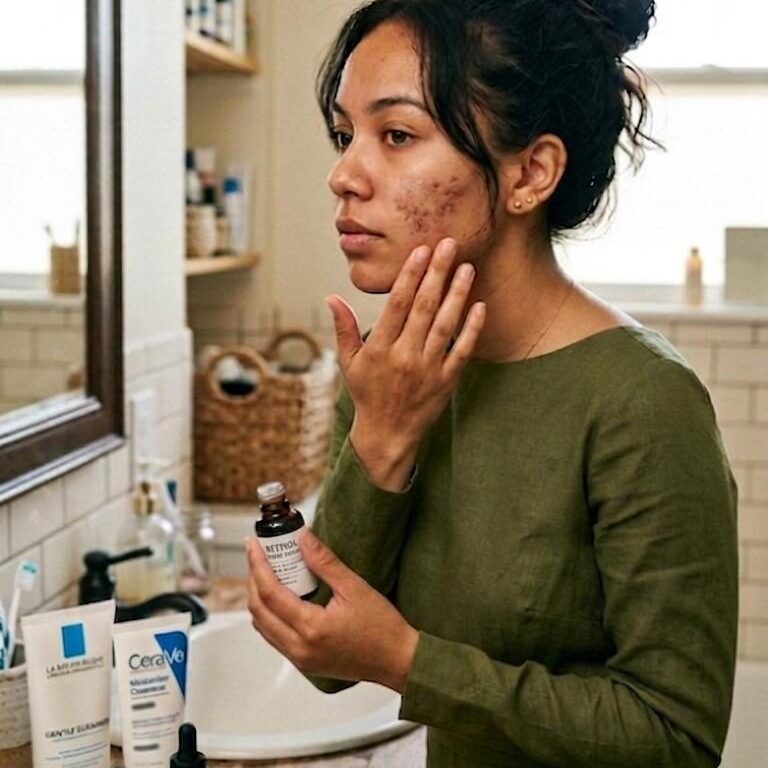
To minimize irritation:
- Start slowly
- Use moisturizer
- Avoid over-exfoliation
- Use sunscreen daily
Who Should Avoid Retinol?
Retinol may not be suitable for everyone.
People who should speak with a dermatologist first include:
- Pregnant individuals
- Breastfeeding mothers
- People with eczema
- Those with rosacea
- Extremely sensitive skin types
Retinoids are generally avoided during pregnancy.
Professional Treatments That Work Well With Retinol
Retinol often works best as part of a larger acne scar treatment plan.
Dermatologists may combine it with:
- Microneedling
Stimulates collagen production.
- Chemical Peels
Improve pigmentation and texture.
- Laser Resurfacing
Targets deep scars and uneven texture.
- Subcision
Releases tethered rolling scars.
- Fillers
Help lift depressed scars. Retinoids may also prepare the skin for procedures and improve healing afterward.
Tips for Faster Results
If you want better results from retinol:
- Stay consistent.
- Use sunscreen every day.
- Avoid picking pimples.
- Keep skin moisturized.
- Be patient
- Treat active acne early
Scar improvement takes months, not days.
Common Myths About Retinol and Acne Scars
Myth 1: Retinol Removes Scars Overnight
False.
Retinol works gradually over several months.
Myth 2: Stronger Is Always Better
False.
Too much retinol can damage the skin barrier.
Myth 3: Retinol Only Helps Wrinkles
False.
Retinoids are widely used for acne and acne scars.
Myth 4: You Can Skip Sunscreen
False.
Without sunscreen, irritation and pigmentation may worsen.
What Dermatologists Say About Retinol for Acne Scars
Dermatologists generally agree that retinoids are one of the most effective topical treatments for acne and mild acne scarring.
Clinical evidence supports their role in:
- Collagen remodeling
- Texture improvement
- Scar prevention
- Pigmentation reduction
However, experts also note that severe scars usually require professional intervention.
Realistic Expectations
Retinol can improve acne scars, but it will not completely erase every scar.
You may expect:
- Brighter skin
- Smoother texture
- Faded dark marks
- Softer shallow scars
- Fewer future breakouts
For severe scarring, retinol is often just one part of treatment.
Is vitamin C or retinol more effective for acne scars?
Both vitamin C and retinol can help with acne scars, but they work differently. In most cases, retinol is better for textured acne scars and overall scar improvement, while vitamin C is better for brightening dark marks and post-acne pigmentation. Dermatologists often recommend using both together in a routine because they complement each other.
Retinol vs. Vitamin C for Acne Scars
| Concern | Retinol | Vitamin C |
| Dark spots (PIH) | Very effective | Very effective |
| Pitted acne scars | Better option | Limited effect |
| Collagen production | Strong stimulation | Moderate stimulation |
| Uneven texture | Excellent | Mild improvement |
| Active acne | Helps treat acne | Limited acne control |
| Sensitive skin | Can irritate | Usually gentler |
| Speed of results | Moderate | Moderate |
| Best time to use | Night | Morning |
Why Retinol Is Usually Better
Retinol increases skin cell turnover and stimulates collagen production, which helps improve:
- Shallow acne scars
- Uneven texture
- Post-acne marks
- Active acne
It also helps prevent future breakouts, reducing the risk of new scars. Dermatologists commonly consider retinoids one of the most effective topical treatments for acne-related skin damage.
The collagen-supporting effect is often explained like this:
Retinol→↑Cell Turnover+↑Collagen→Smoother Acne Scars
When Vitamin C Is Better
Vitamin C is excellent for:
- Red acne marks
- Brown spots
- Dull skin
- Brightening uneven tone
- Reducing inflammation
It acts as an antioxidant and helps fade pigmentation caused by acne. However, vitamin C usually does less for deep or textured scars.
Best Choice by Scar Type
Choose Retinol If You Have:
- Pitted scars
- Rolling scars
- Rough texture
- Active acne
- Enlarged pores
Choose Vitamin C If You Have:
- Dark spots
- Red marks
- Uneven skin tone
- Sensitive skin
- Dullness after acne
Can You Use Both Together?
Yes, many dermatologists recommend the following:
- Vitamin C in the morning
- Retinol at night
Vitamin C protects against environmental damage during the day, while retinol repairs and renews skin overnight.
A simple routine looks like this:
Morning
- Cleanser
- Vitamin C serum
- Moisturizer
- Sunscreen
Night
- Cleanser
- Retinol
- Moisturizer
Which Gives Faster Results?
For pigmentation and dark marks:
- Vitamin C may brighten skin faster initially.
For long-term scar remodeling and texture:
- Retinol usually gives better overall improvement.
Most people need:
- 6–8 weeks for early changes
- 3–6 months for visible scar improvement
What Real Users Often Say
Many skincare users report that retinoids made the biggest difference for acne scars, especially textured scars, while vitamin C helped mainly with brightness and discoloration.
FAQS
Does retinol really help with acne scars?
Yes, retinol can help improve acne scars, especially mild scars, dark spots, and uneven skin texture. It works by increasing skin cell turnover and boosting collagen production, which helps smooth and renew the skin over time.
How much time does retinol require to diminish acne scars?
Most people begin seeing small improvements in 6–8 weeks, but noticeable fading of acne scars may take 3–6 months or longer. Deep scars can require up to a year of consistent use.
Can retinol remove deep acne scars completely?
Retinol may soften the appearance of deep scars, but it usually cannot remove severe acne scars completely. Treatments like laser resurfacing, microneedling, or chemical peels are often needed for deep pitted scars.
Is retinol better for acne scars or dark spots?
Retinol works especially well for post-acne dark spots and discoloration. It can also improve shallow scars, but pigmentation usually fades faster than deep textural scars.
Can retinol make acne scars worse?
Retinol itself does not usually worsen scars, but irritation from overuse can cause redness and inflammation. Using too much product or skipping sunscreen may worsen pigmentation temporarily.
Does retinol cause purging?
Yes, retinol can cause a temporary “purge” during the first few weeks. This happens because clogged pores come to the surface faster. The purge usually improves within 2–6 weeks.
How often should I use retinol for acne scars?
Beginners should start with retinol 2–3 nights per week and gradually increase usage as the skin adjusts. Daily use may be possible once irritation decreases.
Should I use retinol every night?
Not necessarily. Some people tolerate nightly use, while others do better using it every other night. Consistency matters more than overusing it.
Read more: Best moisturizer for dry acne-prone

Final Thoughts
So, does retinol help with acne scars?
Yes — especially for discoloration, uneven texture, and mild, shallow scars. Retinol increases skin cell turnover, boosts collagen production, and helps prevent future acne breakouts that can lead to more scarring. Studies and dermatologists support the use of retinoids for improving acne-related skin damage.
However, results take time. Most people need several months of consistent use before seeing visible improvement. Deep or severe acne scars usually require stronger prescription retinoids or professional treatments like lasers and microneedling.
The key to success with retinol is consistency, patience, hydration, and daily sunscreen use. When used correctly, retinol can become one of the most powerful tools in your skincare routine for smoother, clearer, healthier-looking skin. If you have any queries, please don’t hesitate to reach out fajarhafeez117@gmail.com.