Face piercings have become a popular form of self-expression across different age groups and cultures. From nose rings and eyebrow piercings to lip studs and cheek piercings, facial jewelry allows people to showcase their personality and style.
Learn the common face piercing side effects, including swelling, infection, scarring, and allergies, plus expert tips for safe healing and proper piercing care.
While face piercings can look attractive and fashionable, they also come with potential side effects and health risks that should never be ignored.
Many people focus only on the appearance of a piercing without understanding the possible complications that may happen during healing or even years later. Some side effects are mild and temporary, while others may become serious enough to require medical treatment.
This article explains the side effects of face piercings in detail, including infections, allergic reactions, nerve damage, dental problems, scarring, and emotional or social concerns. It also discusses the safest piercing practices and how to reduce complications.
What Is a Face Piercing?
A face piercing is a puncture made in facial tissue to insert jewelry. Common facial piercings include:
- Nose piercing
- Septum piercing
- Eyebrow piercing
- Lip piercing
- Medusa piercing
- Monroe piercing
- Cheek piercing
- Bridge piercing
- Tongue piercing
Each type of piercing affects different tissues, nerves, and blood vessels, meaning the side effects can vary depending on the location.
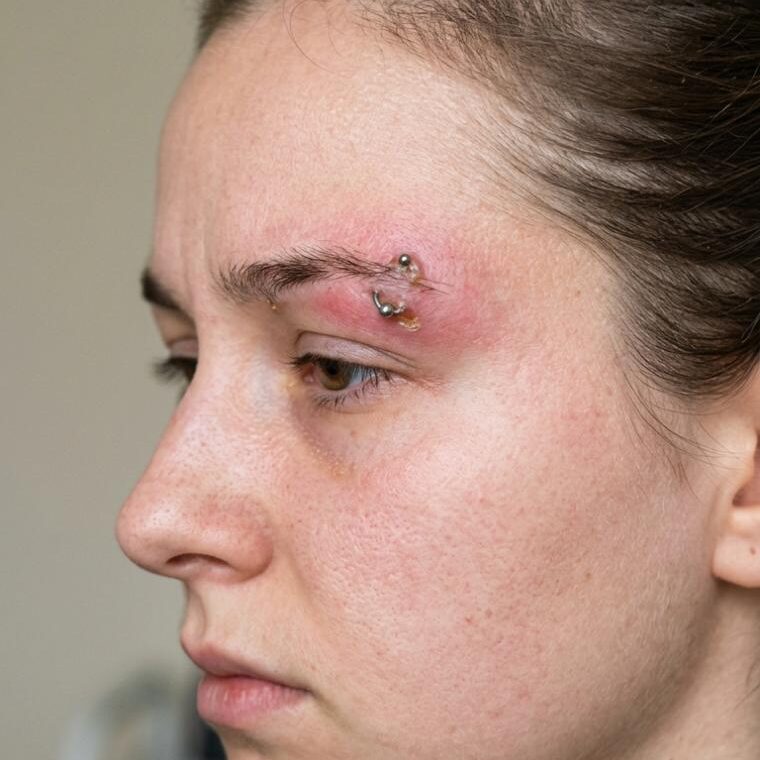
Common Side Effects of Face Piercings
1. Pain and Swelling
Pain is one of the most common side effects immediately after getting a face piercing. Since the skin and tissue are punctured with a needle, discomfort is expected.
Symptoms may include:
- Tenderness
- Burning sensation
- Swelling
- Redness
- Warm skin around the piercing
Most swelling improves within a few days, but oral piercings like tongue or lip piercings may swell significantly and interfere with speaking or eating. According to the OCD, severe tongue swelling can sometimes affect breathing.
2. Infection
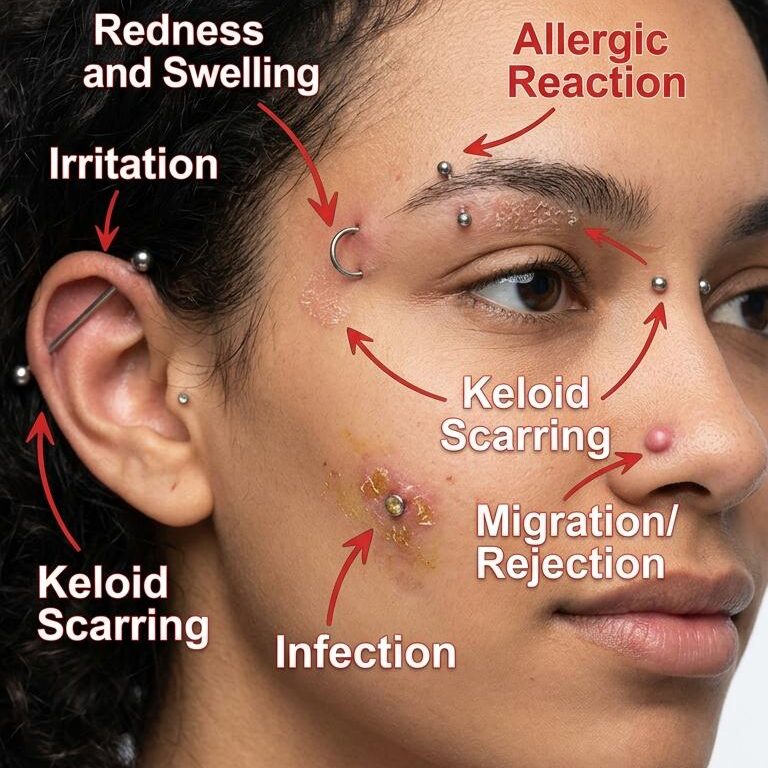
Infection is one of the biggest risks associated with face piercings. A piercing results in an open sore, permitting bacteria to enter the body.
Signs of Infection
- Yellow or green discharge
- Severe redness
- Heat around the area
- Throbbing pain
- Fever
- Bad odor
- Swollen lymph nodes
Mild infections may clear with proper cleaning, but severe infections can spread into deeper tissues or the bloodstream. Poor hygiene, touching the piercing with dirty hands, or using unsterilized equipment greatly increases the risk.
Certain areas like nose cartilage and cheek piercings are more vulnerable because they heal slowly.
3. Allergic Reactions
Some people are allergic to metals used in jewelry, especially nickel. Allergic reactions may appear days or even weeks after getting pierced.
Symptoms Include
- Itching
- Rash
- Red bumps
- Burning skin
- Dry or flaky skin
- Persistent irritation
Hypoallergenic jewelry made from titanium, surgical steel, or gold is usually safer for sensitive skin.
Side Effects by Piercing Type
Nose Piercing Side Effects
Nose piercings are among the most popular facial piercings, but they still carry risks.
Possible Problems
- Infection
- Nose cartilage damage
- Bleeding
- Scarring
- Bumps around the piercing
- Difficulty healing
Improper septum piercings may damage the nasal cartilage and cause long-term pain or deformity.
Some rare infections near the nose may become serious because veins in the facial area connect to deeper structures near the brain.
Eyebrow Piercing Side Effects
Eyebrow piercings pass through thin skin and are more likely to migrate or reject.
Common Side Effects
- Bruising
- Swelling
- Skin thinning
- Jewelry rejection
- Scarring
- Hair loss near the brow
If rejection occurs, the jewelry slowly moves toward the surface until it falls out, leaving visible scars.
Because the eyebrow area contains nerves and blood vessels, incorrect placement may cause numbness or nerve irritation.
Lip Piercing Side Effects
Lip piercings look stylish but often cause oral health issues.
Risks Include
- Gum recession
- Tooth damage
- Excess saliva
- Difficulty eating
- Speech problems
- Infection
Ongoing contact between jewelry and teeth can wear down enamel or lead to cracked teeth over time.
Large or heavy jewelry increases gum damage risk.
Tongue Piercing Side Effects
Tongue piercings are considered one of the riskiest facial piercings.
Side Effects Include
- Severe swelling
- Difficulty breathing
- Bleeding
- Nerve damage
- Taste changes
- Tooth fractures
- Gum erosion
The tongue contains many blood vessels, and improper piercing can cause heavy bleeding.
Some people also develop long-term speech difficulties or chronic irritation.
Cheek Piercing Side Effects
Cheek piercings are less common because they have higher complication rates.
Risks Include
- Salivary gland damage
- Nerve injury
- Severe swelling
- Infection
- Excess drainage
- Permanent scarring
Improper cheek piercings may puncture salivary ducts or facial nerves.
These piercings also tend to leave visible scars even after removal.
Bridge Piercing Side Effects
A bridge piercing goes through the skin between the eyes.
Common Problems
- Migration
- Rejection
- Redness
- Scarring
- Irritation from glasses
Because bridge piercings sit on surface skin rather than deep tissue, rejection rates are higher.
Long-Term Side Effects of Face Piercings
Some complications appear months or years after the piercing.
1. Scarring
Almost every piercing leaves some type of scar after removal.
Types of Scars
- Flat scars
- Dark marks
- Hypertrophic scars
- Keloids
Keloids are raised scars caused by excess collagen production. They may continue growing over time and become itchy or painful.
Individuals with deeper skin tones are at a greater risk for keloids.
2. Jewelry Rejection
The body sometimes treats jewelry like a foreign object and pushes it outward.
Symptoms
- Thinning skin
- Visible jewelry under the skin
- Increased redness
- Jewelry shifting position
Surface piercings like eyebrow and bridge piercings are especially vulnerable.
3. Nerve Damage
Improperly placed piercings may injure facial nerves.
Possible Symptoms
- Numbness
- Tingling
- Loss of sensation
- Chronic pain
- Muscle weakness
Nerve injury can be either temporary or permanent based on its severity.
4. Dental Damage
Oral piercings can gradually destroy dental health.
Long-Term Dental Problems
- Chipped teeth
- Cracked fillings
- Worn enamel
- Gum recession
- Tooth sensitivity
Dentists often warn against tongue and lip piercings because repeated contact with jewelry damages teeth and gums over time.
5. Psychological or Social Effects
Although facial piercings are more accepted today, some individuals still experience the following:
- Workplace discrimination
- Negative judgments
- Social stigma
- Regret after piercing
Some professions maintain strict appearance standards.
However, attitudes toward facial piercings are becoming more accepting in many workplaces and communities.
Serious Medical Complications
While rare, severe complications can occur.
Bloodborne Diseases
Using contaminated needles may transmit infections such as
- Hepatitis B
- Hepatitis C
- Tetanus
Sterile equipment is extremely important.
Abscess Formation
Untreated infections may form painful pus-filled pockets under the skin called abscesses.
These may require:
- Drainage
- Antibiotics
- Jewelry removal
Sepsis
In severe cases, infection may spread through the bloodstream and become life-threatening.
Emergency Symptoms
- High fever
- Rapid heartbeat
- Confusion
- Extreme weakness
Medical attention is required immediately.
Breathing Problems
Tongue swelling after piercing can sometimes interfere with breathing. This risk is highest during the first few days after the procedure.
Factors That Increase Side Effects
Certain factors make complications more likely.
- Poor Hygiene
Touching the piercing with dirty hands introduces bacteria side effect.
- Cheap Jewelry
Low-quality metals increase allergy and irritation risk.
- Inexperienced Piercers
Incorrect placement can damage nerves, blood vessels, or cartilage.
- Smoking
Smoking slows healing and increases infection risk, especially for oral piercings.
- Medical Conditions
People with diabetes, weak immune systems, or skin disorders may heal more slowly.
How to Reduce Face Piercing Risks
Choose a Professional Piercer
Always visit a licensed, experienced professional who follows sterilization procedures.
The piercer should:
- Wear gloves
- Use sterile needles
- Open equipment in front of you
- Provide aftercare instructions
Use Safe Jewelry
Recommended materials include:
- Titanium
- Surgical stainless steel
- Niobium
- 14K or 18K gold
Avoid mystery metals or cheap fashion jewelry.
Follow Aftercare Instructions
Basic Aftercare Tips
- Clean with saline solution.
- Avoid touching the piercing.
- Do not rotate jewelry unnecessarily.
- Avoid makeup near fresh piercings.
- Keep oral piercings clean with alcohol-free mouthwash.
Proper aftercare greatly reduces infection risk.
Avoid Swimming Pools During Healing
- Pools, lakes, and hot tubs contain bacteria that may infect healing piercings.
Eat Carefully With Oral Piercings
Avoid:
- Spicy foods
- Alcohol
- Smoking
- Hard crunchy foods
during early healing.
Healing Time for Facial Piercings
Healing times vary depending on the area.
| Piercing Type | Average Healing Time |
| Nostril | 2–6 months |
| Septum | 6–8 weeks |
| Eyebrow | 2–3 months |
| Lip | 6–8 weeks |
| Tongue | 4–8 weeks |
| Cheek | 6–12 months |
| Bridge | 2–3 months |
Healing may take longer if complications occur.
When to See a Doctor
Seek medical care if you experience:
- Fever
- Severe swelling
- Difficulty breathing
- Thick green discharge
- Persistent bleeding
- Extreme pain
- Red streaks spreading from the piercing
Ignoring symptoms can lead to dangerous complications.
Are Face Piercings Safe?
Face piercings can be safe when performed by skilled professionals using sterile techniques and quality jewelry. However, no piercing is completely risk-free.
Some piercings, especially tongue, cheek, and surface piercings, carry higher complication rates than others. Understanding the risks before getting pierced helps people make informed decisions.
The safest approach is careful research, proper aftercare, and avoiding impulsive decisions.
What is the 2-piercing rule?
The “2-piercing rule” isn’t a single official medical law—it’s more of a general guideline used by piercers and aftercare professionals, and it can mean a few different things depending on the context.
1. Two piercings per session (common meaning)
Many professional piercers follow a rule of not doing more than 2 new piercings in one sitting, especially on the same ear or body area.
This is because
- Healing becomes harder with multiple fresh wounds.
- Infection risk increases.
- Your immune system has more work to do.
- Aftercare gets more complicated.
2. Two-week spacing rule (sometimes confused version)
Some people refer to a guideline of waiting at least 2 weeks between getting new piercings, especially if:
- You had swelling or irritation.
- You’re healing cartilage piercings (which take longer).
However, most piercers actually recommend waiting much longer than 2 weeks for full healing before adding new piercings in the same area.
3. Two-piercing limit per ear (less strict guideline)
In some studios, especially for first-timers, they may suggest the following:
- Maximum 2 piercings per ear at once to reduce trauma and improve healing outcomes.
Why this rule exists
The main goals are to:
- Prevent overloading your body’s healing system.
- Reduce infection and bump formation (especially in cartilage).
- Improve long-term healing quality.
What is the best age to get a piercing?
There isn’t one “perfect” age for everyone, but there are age ranges that are considered safer and more appropriate depending on the type of piercing and how responsible the person is with aftercare.
Childhood (under ~12)
- Usually only earlobe piercings
- Should be done only with parental consent and professional hygiene standards
- Healing can be good, but children may
- Touch or irritate the piercing
- Forget aftercare rules
Teens (13–17)
- This is the most common age for first piercings.
- Often includes earlobes, cartilage, nose (in some places with consent)
- Pros:
- Good healing ability.
- Cons:
- Hormonal changes can sometimes increase irritation.
- Aftercare discipline varies a lot.
- Many studios require parental consent for minors:
Young adults (18–25)—often considered the best range
This is generally the ideal age group for piercings, because:
- Fully developed immune system.
- Better decision-making and consent autonomy.
- More consistent aftercare habits.
- Lower risk of regret compared to younger teens.
Adults (25+)
- Piercings are still very safe.
- Healing may be slightly slower in some cases.
- Often better aftercare compliance.
- People tend to choose placements more thoughtfully.
What matters more than age?
Age is less important than these factors:
- Clean, professional piercing studio.
- Proper hygiene and sterilization.
- Aftercare discipline (cleaning, not touching, avoiding irritation).
- Overall health (immune system, skin sensitivity).
Important note
Cartilage piercings (like helix and tragus) heal slowly at any age (3–12 months), so responsibility matters more than how old you are.
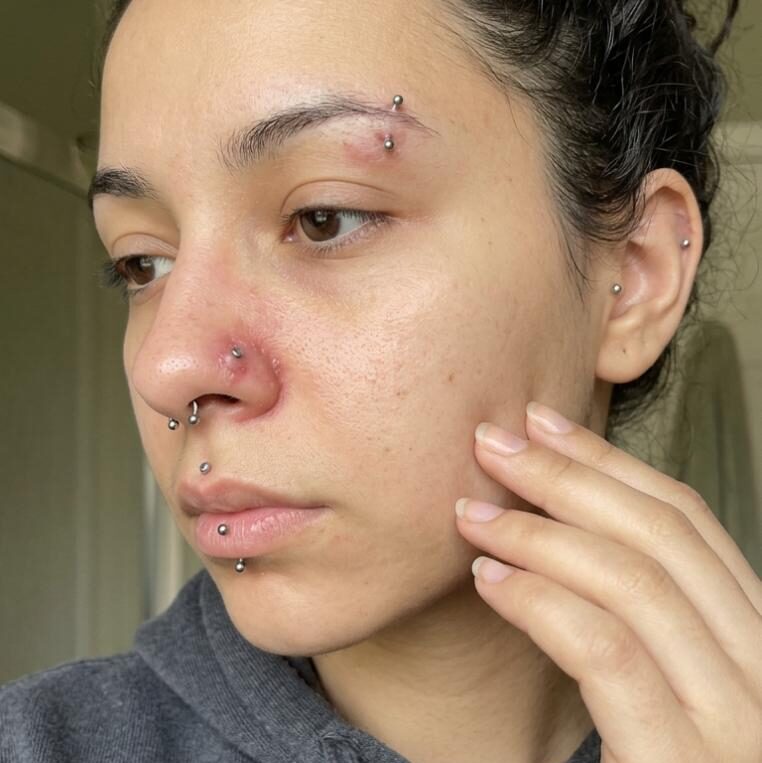
FAQs About Face Piercing Side Effects
1. Can face piercings cause permanent damage?
Yes. Some piercings may leave permanent scars, gum damage, nerve injuries, or dental problems if complications occur.
2. Which facial piercing is the riskiest?
Tongue and cheek piercings are often considered higher risk because they involve nerves, blood vessels, and oral bacteria.
3. How do I know if my face piercing is infected?
Signs include redness, swelling, pain, pus, bad odor, and fever.
4. Can face piercings affect teeth?
Yes. Lip and tongue piercings can chip teeth, damage enamel, and cause gum recession over time.
5. Are keloids common after face piercings?
Some people are genetically more likely to develop keloids, especially after cartilage or facial piercings.
6. How long does a face piercing take to heal?
Healing times vary from several weeks to several months depending on the piercing type and aftercare.
7. Is it safe to pierce your face at home?
No. Home piercings increase the risk of infection, incorrect placement, and serious complications.
8. Can facial piercings trigger allergies?
Yes. Jewelry containing nickel or other irritating metals may cause allergic reactions.
9. Do face piercing scars go away completely?
Some scars fade over time, but many piercings leave permanent marks.
10. Should I take off jewelry if a piercing becomes infected?
Not always. Removing jewelry too early can trap infection inside the skin. Consult a healthcare professional first.
Read more: Face piercing name
Final Thoughts
Face piercings are a popular way to express identity and personal style, but they also come with potential side effects ranging from mild irritation to serious medical complications. Infections, allergic reactions, scarring, gum damage, nerve injuries, and rejection are all possible risks.
The likelihood of complications can be reduced by choosing a professional piercer, using high-quality jewelry, and following proper aftercare instructions. People considering facial piercings should weigh both the aesthetic appeal and the possible long-term consequences before making a decision.
A well-informed choice is always safer than a rushed one. If you have any queries, please don’t hesitate to reach out fajarhafeez117@gmail.com.