Eyelash extensions are among the most sought-after beauty services currently, providing lengthy, full, and curled lashes without the need for mascara or daily cosmetic application.
But when it’s time to remove them, many people look for safe home remedies instead of visiting a salon. One of the most commonly searched questions is
Can rosehip oil remove eyelash extensions?
At first glance, it makes sense. Rosehip oil is natural, nourishing, and widely used in skincare. But when it comes to lash extension removal, things are more complicated than they seem.
In this comprehensive guide, we will cover all the essential information you need to understand:
- How eyelash extension glue works.
- What rosehip oil actually does.
- Whether it can dissolve lash adhesive.
- Risks of using oil near the eyes.
- Safe removal methods.
- And what dermatologists and lash artists recommend.
Let’s go deep into the science and reality behind this beauty myth.
Understanding Eyelash Extensions: Why They Don’t Come Off Easily
To understand whether rosehip oil can remove eyelash extensions, we first need to understand how extensions are attached.
Eyelash extensions are applied using a professional-grade adhesive known as cyanoacrylate-based glue. This glue is
- Fast-drying
- Waterproof
- Oil-resistant once cured
- Extremely strong
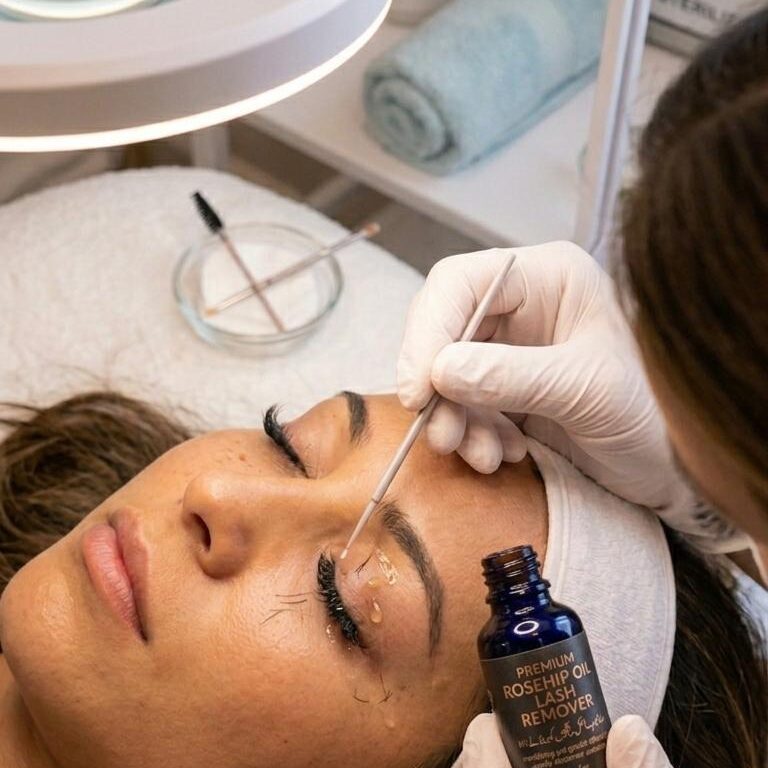
When applied correctly, each synthetic lash is bonded individually to a natural lash. This bond is designed to last 3 to 6 weeks, depending on your natural lash cycle.
How Lash Glue Works
Lash glue goes through three stages:
1. Wet stage (application)
The glue is liquid and flexible during application.
2. Curing stage (first 24–48 hours)
The glue starts hardening when exposed to moisture in the air.
3. Fully cured stage (after 48 hours)
The glue becomes a hardened polymer structure that is very resistant to external substances.
At this point, it behaves more like plastic than a liquid adhesive.
This is the key reason why removal is not simple—and why oils like rosehip oil struggle to break it down.
What Is Rosehip Oil?
Rosehip oil is extracted from the seeds of wild rose bushes, mainly Rosa canina. It is a lightweight, nutrient-rich oil used in skincare for:
- Skin hydration
- Reducing scars
- Anti-aging benefits
- Brightening skin tone
- Improving skin texture
It contains:
- Vitamin A (retinoic acid derivatives)
- Vitamin C
- Linoleic acid
- Linolenic acid
- Antioxidants
Because of these properties, rosehip oil is often praised for improving skin health. But skincare benefits do not automatically translate into adhesive removal ability.
Can Rosehip Oil Dissolve Eyelash Extension Glue?
Here is the most important question—and the answer is very clear:
- No, rosehip oil cannot dissolve eyelash extension glue.
Let’s understand why.
1. Lash glue is not oil-soluble.
Cyanoacrylate adhesives (used in lash glue) are not broken down by oils. Instead, they require:
- Professional glue removers (containing specific solvents)
- Controlled chemical breakdown
Rosehip oil is a fatty acid-based oil, not a solvent. It cannot break the polymer bonds in cured lash glue.
2. Oil only affects the surface.
When applied near lash extensions, rosehip oil:
- Coats the lashes
- Creates a slippery layer
- Reduces friction temporarily
But it does NOT penetrate or dissolve the hardened glue underneath.
3. The bond is too strong.
Once cured, lash glue forms a durable bond between the following:
- Natural lash
- Synthetic extension
This bond is designed to withstand the following:
- Water
- Sweat
- Cleansing
- Facial oils
A cosmetic oil like rosehip oil simply does not have enough chemical strength to break this bond.
What Happens If You Use Rosehip Oil on Eyelash Extensions?
Even though it doesn’t remove extensions, rosehip oil still affects them.
1. Slight weakening of retention
Oil can slowly break down the adhesive surface layer, which may
- Reduce how long lashes stay attached
- Cause early shedding over days or weeks
But this is inconsistent and unpredictable.
2. Uneven lash loss
Instead of clean removal, you may notice:
- Some lashes fall out faster
- Others stay attached
- Patchy appearance
This is not safe or aesthetically ideal.
3. Eye irritation risk
Rosehip oil is generally safe for skin, but the eye area is sensitive.
Possible side effects include:
- Blurred vision if oil enters the eye
- Burning sensation
- Puffy eyelids
- Watery eyes
4. Clogged lash line
Excess oil buildup can
- Block hair follicles
- Trap dirt and bacteria
- Increase risk of blepharitis (eyelid inflammation)
Why People Believe Oils Remove Lash Extensions
There is a widespread myth online that oils—including coconut, olive, castor, and rosehip oil—can remove lash extensions.
This belief comes from partial truth.
The confusion:
- Oils can weaken lash glue slightly.
- Extensions may fall out faster naturally.
- People assume oil “dissolves” the glue.
But in reality:
- Oil does NOT dissolve lash adhesive.
- It only weakens the outer layer over time.
This misunderstanding spreads easily on social media.
What Lash Experts Say About Oils
Professional lash artists consistently warn against using oils as removal methods.
They explain:
- Lash glue requires specific professional removers.
- Oils cannot break the chemical bond.
- DIY oil removal can damage natural lashes.
In most salons, lash removal is done using:
- Gel removers.
- Cream removers.
- Adhesive solvents designed for cyanoacrylate breakdown.
These are applied carefully to avoid contact with the eyes.
Is Rosehip Oil Safe Around the Eyes?
Yes—but with caution.
Rosehip oil is generally considered safe for the following:
- Skin hydration
- Scar treatment
- Fine lines around the eyes
However, safety depends on usage.

Safe use:
- Small amounts
- Applied away from lash roots
- Used as part of a skincare routine
Unsafe use:
- Direct application of lash glue
- Heavy coating on extensions
- Rubbing into the lash line
Better Alternatives for Removing Eyelash Extensions
If your goal is removal, here are safe and effective methods:
1. Professional removal (best option)
A lash technician uses a specialized remover that
- Breaks down cyanoacrylate glue.
- Works in 10–15 minutes.
- Protects natural lashes.
This is the safest and most recommended method.
2. Natural shedding
Eyelash extensions naturally fall out as your lash cycle continues.
Timeline:
- 3 to 6 weeks for the full shedding cycle.
- No damage when left alone.
This is the healthiest method.
3. Steam method (supportive only)
Steam can:
- Soften residue slightly
- Help natural oils loosen buildup
But it does NOT fully remove extensions.
4. Oil cleansing (supportive, not primary)
Cleansers with oils may:
- Reduce bond strength slightly
- Help with gradual loosening
But again, not a complete removal method.
What NOT to Do
Many people damage their natural lashes by trying unsafe removal methods.
Avoid:
- Pulling extensions off
Rubbing eyes aggressively
Using tweezers
Cutting lashes
Relying only on oils like rosehip oil
These can cause:
- Permanent lash thinning
- Bald spots
- Irritation
- Eye infections
Can Rosehip Oil Help After Removal?
Yes—this is where rosehip oil actually shines.
After extensions are removed, rosehip oil can:
- Nourish natural lashes
- Moisturize the lash line.
- Improve healing.
- Reduce dryness and irritation
How to use it safely:
- Apply a tiny drop on clean fingertips.
- Gently tap onto skin around lashes (not inside eyes).
- Use at night for best absorption.
Is rosehip oil good for your eyelashes?
Rosehip oil can be good for eyelashes indirectly, but it’s not a proven eyelash-growth treatment.
Here’s the realistic breakdown:
What rosehip oil can do for eyelashes
Rosehip oil is rich in fatty acids and antioxidants (like vitamins A, C, and E), which may:
- Moisturize lashes and lash line.
- Reduce dryness and breakage.
- Make eyelashes look slightly shinier and healthier.
- Support the skin around the lashes (which is important for lash growth).
So in that sense, it can help your existing lashes stay stronger, which may make them appear fuller over time.
What it can not do
There is no scientific evidence that rosehip oil:
- Makes eyelashes grow longer
- Creates new lashes
- Works like a medical lash serum
Dermatologists generally say plant oils may condition hair, but they don’t change the growth cycle of eyelashes.
Important caution (this matters for the eyes)
Because rosehip oil is still an oil:
- It can irritate sensitive eyes.
- It may cause tearing, dryness, or redness if it gets too close.
- Some people react to it, especially near the eye area.
So you should avoid putting it directly on the lash line or inside the eye area.
Better way to use it (if you try it)
- Apply a tiny amount on a clean spoolie/mascara wand.
- Lightly brush through lashes (not into roots).
- Use at night only.
- Stop if any irritation happens.
What are the disadvantages of rosehip oil?
Rosehip oil is generally considered safe and beneficial for skin, but it does have some disadvantages and risks, especially if used incorrectly or on sensitive skin.
1. Can cause skin irritation
Even though it’s natural, rosehip oil can still trigger the following:
- Redness
- Itching
- Burning sensation
- Breakouts in sensitive or acne-prone skin.
This is more likely if your skin barrier is already weak.
2. May clog pores for some people
Rosehip oil is usually rated as non-comedogenic (low clogging risk), but
- Some individuals still experience pimples or congestion.
- Especially if used in large amounts or layered with heavy products.
3. Oxidation (goes bad easily)
Rosehip oil is very unstable because it contains natural fatty acids.
- It can oxidize quickly when exposed to air, heat, or sunlight.
- Old or oxidized oil can become irritating and less effective.
- This is why it must be stored in a dark glass bottle in a cool place.
4. Not suitable for everyone
You should be cautious if you have:
- Very sensitive skin.
- Rosacea.
- Active eczema or dermatitis.
- Known allergy to plant oils.
A patch test is always recommended.
5. Can increase sun sensitivity (mild)
Rosehip oil contains natural vitamin A (retinoid-like compounds):
- It may slightly increase sensitivity to sunlight in some people.
- Not extreme, but sunscreen is still important.
6. Limited scientific evidence for major claims
While it’s popular in skincare, there are the following:
- Limited strong clinical proof for anti-aging or hair growth effects.
- Benefits are mostly based on traditional use and small studies.
7. Eye-area risk (important for your earlier question)
If used near eyelashes:
- It may lead to a burning sensation if it enters the eyes.
- May blur vision temporarily if it spreads into the eye.
Is rosehip oil effective for removing eye makeup?
Yes, you can use rosehip oil to remove eye makeup—but it’s not the best or safest option for everyone, especially around the eyes.
How it works
Rosehip oil is an oil, and oils can
- Break down waterproof mascara and eyeliner.
- Dissolve makeup more gently than harsh cleansers.
- Leave skin feeling soft and moisturized.
So technically, it can remove makeup.
Downsides (important for the eye area)
Using rosehip oil near your eyes has some risks:
- Eye irritation if it gets into the eye (burning, watering, blurry vision).
- Blurred vision temporarily because oils coat the eye surface.
- Not designed for cleansing, so it may not fully remove all residue.
- Possible breakouts or milia (tiny white bumps) around the eyes in some people.
- If the oil is oxidized (old), it can be more irritating.
If you still intend to utilize it (safer approach)
If you prefer a natural method:
- Use a small amount on a cotton pad or clean fingers.
- Gently press on the closed eyelid for a few seconds.
- Wipe softly—don’t rub hard.
- Follow with a gentle face wash.
Avoid letting it run directly into your eyes.
Better alternatives (recommended)
For eye makeup removal, these are safer and more effective:
- Micellar water (gentle and widely recommended).
- Dedicated eye makeup remover.
- Coconut oil or mineral oil (more commonly used than rosehip oil for this purpose).
Common Questions
1. Will rosehip oil remove eyelash extensions overnight?
No. It does not dissolve lash glue and cannot remove extensions overnight or even within days.
2. Can rosehip oil damage lash extensions?
It doesn’t directly damage them, but it can weaken retention, causing them to fall out unevenly.
3. Is rosehip oil superior to coconut oil for eyelashes?
Both behave similarly in this context. Neither can remove extensions effectively.
4. What is the fastest way to remove lash extensions?
Professional removal using a lash-safe adhesive remover is the fastest and safest method.
Read more: Why I stopped eyelash extensions
Conclusion
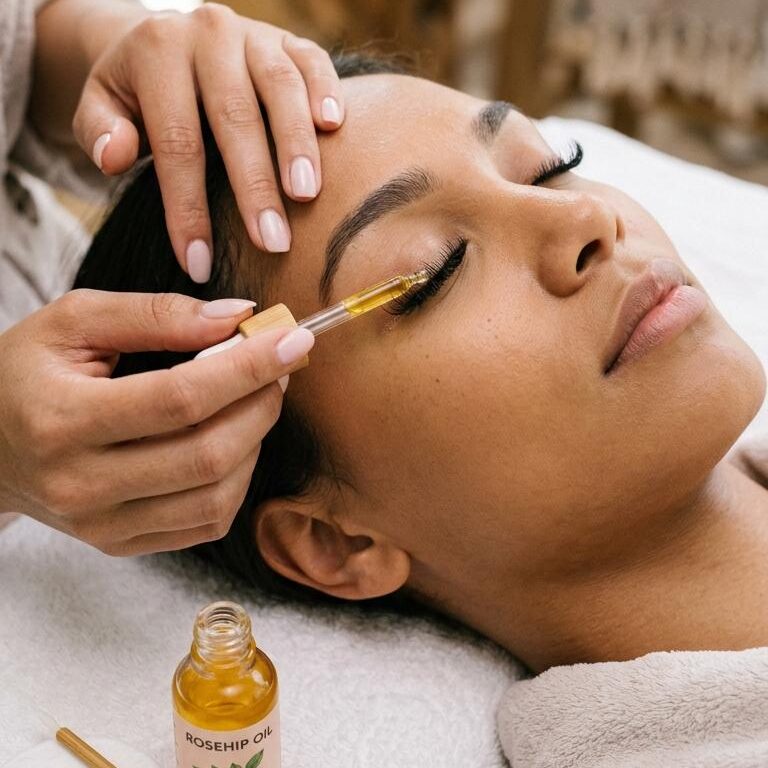
Eyelash extensions are designed with a strong, professional-grade adhesive that is resistant to oils and home remedies. While rosehip oil is excellent for skincare, it is not formulated to break down lash glue.
If you’re looking to remove your extensions safely, the best choice is always a professional lash technician or letting them naturally shed over time.
Using oils like rosehip oil may sound like a convenient DIY solution, but in reality, it only provides minimal loosening effects and does not replace proper removal methods. If you have any queries, please don’t hesitate to reach out to fajarhafeez117@gmail.com.