Tea tree oil has become one of the most popular natural ingredients in hair care. Many people use it to help with dandruff, itchy scalp, oily roots, buildup, and overall scalp health.
But one mistake can turn a helpful treatment into an irritating experience: using dilute tea tree oil without proper dilution. Tea tree oil is highly concentrated. Applying it directly to the scalp may cause redness, burning, dryness, or allergic reactions.
That is why learning how to dilute tea tree oil for hair correctly is essential before adding it to your routine. Experts commonly recommend mixing tea tree oil with a carrier oil, shampoo, or hair mask rather than using it alone.
What Is Dilute Tea Tree Oil?
Tea tree oil is an essential oil extracted from the leaves of the Australian dilute tea tree, scientifically known as Melaleuca alternifolia. It is widely known for its antibacterial, antifungal, antimicrobial, and anti-inflammatory properties.
It is commonly used in:
- Hair care products
- Anti-dandruff shampoos
- Skin care
- Acne treatments
- Scalp treatments
Many people use tea tree oil because it may help reduce scalp flakes, itching, excess oil, and fungal buildup. Research has shown that dilute tea tree oil shampoos may improve dandruff symptoms when used correctly.
However, because it is extremely potent, it should never be used undiluted on large areas of the scalp.
Why You Must Dilute Tea Tree Oil
Tea tree oil is not like regular hair oil. It is a concentrated essential oil, meaning only a few drops are needed. Applying pure, dilute tea tree oil directly to the scalp can lead to the following:
- Burning sensation
- Irritation
- Dryness
- Redness
- Itching
- Allergic reactions
- Scalp sensitivity
Several experts and dermatology-related sources warn that undiluted tea tree oil can irritate the skin barrier.
Reddit users discussing scalp care also frequently warn against using pure, dilute tea tree oil directly because it may cause burning and scalp discomfort. Diluting tea tree oil makes it safer and easier to spread across the scalp.
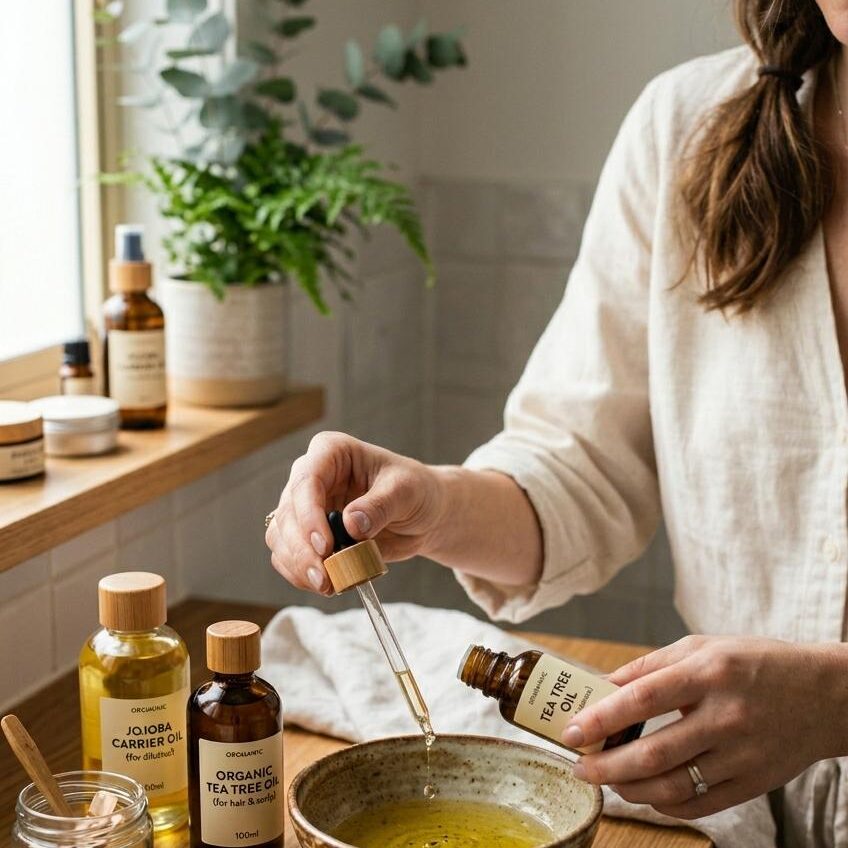
Best Dilution Ratio for Dilute Tea Tree oil
The safest dilution depends on your scalp sensitivity and how you plan to use the oil.
General Safe Dilution Guide
| Strength | Tea tree oil | Carrier oil | Best for |
| 0.5% | 3 drops | 30 ml | Sensitive scalp |
| 1% | 6 drops | 30 ml | Regular scalp care |
| 2% | 12 drops | 30 ml | Dandruff and oily scalp |
| 3–5% | Higher concentration | 30 ml | Short-term intensive treatment |
Most experts recommend starting low, especially if you have sensitive skin.
For beginners, a 1% dilution is usually enough.
Understanding Carrier Oils
A carrier oil is a mild oil used to dilute essential oils before applying them to the skin or scalp.
Carrier oils help:
- Reduce irritation.
- Moisturize the scalp.
- Spread the oil evenly.
- Protect the skin barrier.
Tea tree oil should always be mixed with a carrier oil unless it is already included in a shampoo or product formula.
Best Carrier Oils for Dilute Tea Tree Oil
Coconut oil
Coconut oil is one of the best carrier oils because it deeply moisturizes the scalp and hair.
Best for:
- Dry scalp
- Curly hair
- Damaged hair
How to use:
- Mix 2–3 drops of dilute tea tree oil with 1 tablespoon of coconut oil
Jojoba oil
Jojoba oil closely resembles the scalp’s natural oils.
Best for:
- Oily scalp
- Sensitive skin
- Lightweight hydration
Olive oil
Olive oil nourishes dry hair and reduces frizz.
Best for:
- Thick hair
- Dry ends
- Scalp massage treatments
Argan oil
Argan oil is abundant in vitamin E and antioxidants.
Best for:
- Color-treated hair
- Frizz control
- Hair shine
Castor oil
Castor oil is thick and commonly used in hair growth routines.
Best for:
- Thin hair
- Scalp massage
- Hair strengthening
Use small amounts because it can feel heavy.
How to Dilute Tea Tree Oil for Hair Growth
Many people use dilute tea tree oil in hair growth routines because a healthier scalp supports stronger hair growth.
Dilute tea tree oil may help by
- Removing buildup
- Keeping follicles clean
- Reducing inflammation
- Controlling dandruff
However, there is limited scientific proof that dilute tea tree oil alone directly grows hair. It mainly improves scalp conditions that can affect hair health.
Hair Growth Blend Recipe
Ingredients:
- 2 tablespoons jojoba oil
- 1 tablespoon castor oil
- 4 drops tea tree oil
Instructions:
- Mix oils in a small bottle
- Massage gently into the scalp
- Leave for 20–30 minutes
- Wash with mild shampoo
Use 1–2 times weekly.
How to Dilute Tea Tree Oil in Shampoo
This is one of the easiest ways to use dilute tea tree oil safely.
Method
Add:
- 5–10 drops of tea tree oil
- Into a 250 ml shampoo bottle
Shake well before use.
Research suggests dilute tea tree oil shampoos may improve dandruff symptoms over time.
How to Dilute Tea Tree Oil for Dandruff
Tea tree oil is especially popular for dandruff because of its antifungal properties.
DIY Dandruff Treatment
Ingredients:
- 2 tablespoons coconut oil
- 5 drops tea tree oil
Steps:
- Warm slightly
- Apply to scalp
- Massage for 5 minutes
- Leave for 20 minutes
- Shampoo thoroughly
Repeat twice weekly.
How to Use Dilute Tea Tree Oil for Itchy Scalp
An itchy scalp may happen due to:
- Product buildup
- Dryness
- Dandruff
- Excess oil
- Irritation
Tea tree oil can provide a cooling sensation and may help reduce itching when diluted properly.
Quick Scalp Soothing Blend
Ingredients:
- 1 tablespoon aloe vera gel
- 1 tablespoon jojoba oil
- 2 drops tea tree oil
Apply lightly and rinse after 15 minutes.
Can you mix dilute tea tree oil with water?
No, not properly. Oil and water do not mix evenly. This means dilute tea tree oil droplets can stay concentrated and touch the scalp directly, increasing irritation risk.
Instead of water, use:
- Carrier oils
- Aloe vera gel
- Shampoo
- Conditioner
- Emulsifying products
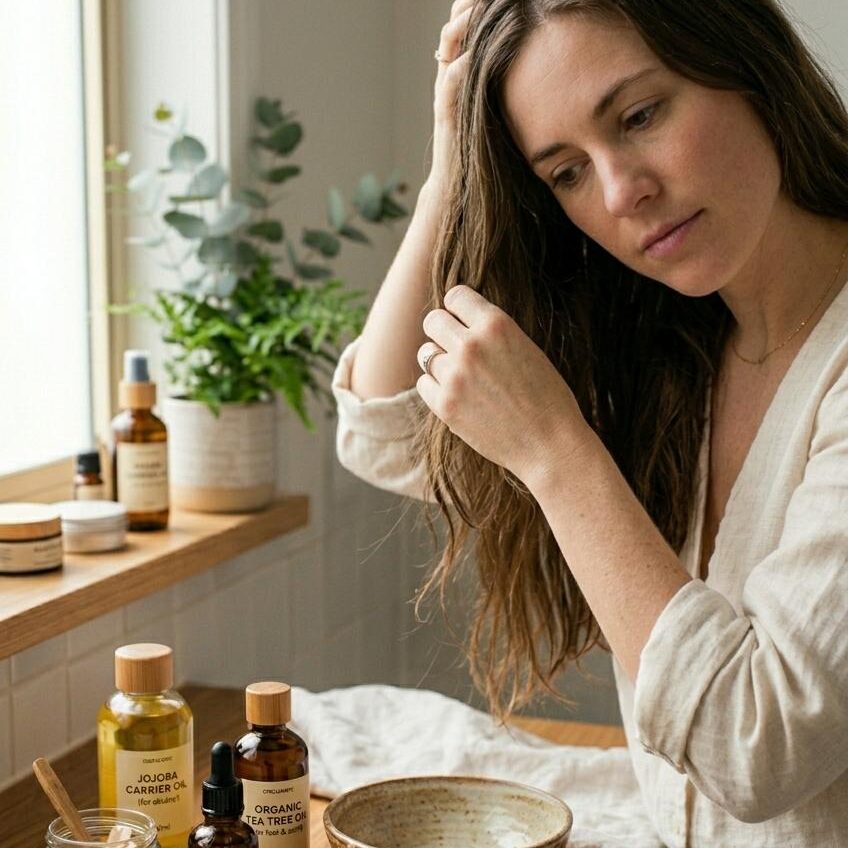
How Long Should You Leave Tea Tree Oil on Hair?
Most people leave dilute tea tree oil on the scalp for the following:
- 15–30 minutes before washing
Leaving it overnight may irritate sensitive skin.
If you are new to tea tree oil:
- Start with 10–15 minutes
How Often Should You Use Tea Tree Oil?
| Hair Type | Frequency |
| Dry scalp | 1 time weekly |
| Oily scalp | 2 times weekly |
| Dandruff | 2–3 times weekly |
| Sensitive scalp | Every 10–14 days |
Excessive use could lead to a dry scalp.
Patch Testing Is Important
Before using dilute tea tree oil on your scalp:
- Dilute the oil
- Apply a small amount to the inner arm
- Wait 24–48 hours
- Check for redness or itching
Patch testing is strongly recommended by experts before first use.
Signs You Are Using Too Much Tea Tree Oil
Stop using it if you notice:
- Burning
- Stinging
- Redness
- Flaking
- Increased dryness
- Rash
- Swelling
Using too much tea tree oil may damage the scalp barrier.
Tea Tree Oil for Different Hair Types
- Curly Hair
- Tea tree oil works best when combined with moisturizing oils like coconut or argan oil.
- Straight Hair
- Light oils like jojoba are ideal.
- Oily Hair
- Tea tree oil may help reduce excess scalp oil.
- Dry Hair
- Use smaller amounts and combine with hydrating ingredients.
DIY Tea Tree Oil Hair Recipes
1. Tea Tree Scalp Massage Oil
Ingredients:
- 2 tablespoons olive oil
- 4 drops dilute tea tree oil
Massage into scalp before showering.
2. Tea Tree Hair Mask
Ingredients:
- 2 tablespoons yogurt
- 1 tablespoon honey
- 3 drops tea tree oil
Apply for 15 minutes.
3. Tea Tree and Rosemary Blend
Rosemary oil
Ingredients:
- 2 tablespoons carrier oil
- 2 drops rosemary oil
- 2 drops tea tree oil
Popular for scalp massages.
Common Mistakes to Avoid
- Using Too Much
- More is not better with essential oils.
- Applying Directly to Scalp
- Never apply pure, dilute tea tree oil directly.
- Mixing with only water
- Water does not dilute oils properly.
- Using daily
- Daily use may dry the scalp.
- Skipping Patch Test
- Even natural ingredients can trigger allergies.
Benefits of Tea Tree Oil for Hair
Tea tree oil may help the following:
- Reduce dandruff.
- Soothe itchy scalp.
- Control excess oil.
- Remove buildup.
- Refresh the scalp.
- Improve scalp cleanliness.
Some people also feel it makes hair appear healthier because the scalp environment improves.
Possible Side Effects
Tea tree oil is not suitable for everyone.
Possible side effects include:
- Irritation
- Dry scalp
- Allergic reaction
- Burning
- Redness
People with eczema or very sensitive skin should be cautious.
Who Should Avoid Tea Tree Oil?
Avoid it or consult a healthcare professional if you
- Have severe scalp conditions
- Have allergies to essential oils
- Are pregnant or breastfeeding
- Are using medicated scalp treatments
- Have open wounds on the scalp
How to Store Tea Tree Oil
Tea tree oil can degrade over time.
Store it:
- In a dark bottle
- Away from sunlight
- In a cool place
Old oxidized dilute tea tree oil may increase irritation risk.
Choosing a Good Tea Tree Oil
Look for:
- 100% pure dilute tea tree oil
- Dark glass bottle
- Trusted brand
- Fresh smell
- Proper labeling
Some experts suggest checking for ISO standards and terpinen-4-ol content.
Tea Tree Oil vs. Peppermint Oil
Peppermint Oil
| Feature | Tea Tree oil | Peppermint oil |
| Best for dandruff | Yes | Moderate |
| Cooling effect | Mild | Strong |
| Antifungal properties | Strong | Moderate |
| Oily scalp | Excellent | Good |
| Sensitive scalp | Needs caution | Can irritate |
Both oils should be diluted before use.
Tea Tree Oil vs. Rosemary Oil
| Feature | Tea Tree oil | Rosemary oil |
| Dandruff | Excellent | Moderate |
| Hair growth support | Moderate | Popular choice |
| Oily scalp | Excellent | Good |
| Dry scalp | Can dry if overused | Gentler |
Many people combine both oils in scalp treatments.
FAQs About How to Dilute Tea Tree Oil for Hair
1. Can I apply tea tree oil directly to my scalp?
No, tea tree oil should not be applied directly to the scalp without dilution. Pure tea tree oil is highly concentrated and may cause irritation, redness, burning, or dryness. Always mix it with a carrier oil, shampoo, or conditioner before use.
2. What is the best carrier oil to mix with tea tree oil?
The best carrier oil depends on your hair type and scalp needs. Coconut oil works well for dry hair, jojoba oil is ideal for oily scalps, and argan oil is great for frizzy and damaged hair. Olive oil and castor oil are also popular choices.
3. How many drops of tea tree oil should I use for hair?
A safe starting point is 2–6 drops of tea tree oil mixed into 1–2 tablespoons of carrier oil. Beginners should start with a lower concentration to avoid scalp irritation.
4. Can tea tree oil help with dandruff?
Yes, tea tree oil is widely used for dandruff because of its antifungal and antimicrobial properties. It may help reduce flakes, itchiness, and scalp buildup when diluted properly and used consistently.
5. How often should I use tea tree oil on my hair?
Most people can safely use dilute tea tree oil 1–2 times per week. Using it too often may dry out the scalp, especially for people with sensitive skin or dry hair.
6. Can tea tree oil promote hair growth?
Tea tree oil may support healthier hair growth by keeping the scalp clean and reducing buildup around hair follicles. However, it is not a guaranteed hair growth treatment and works best as part of an overall healthy haircare routine.
7. Can I mix tea tree oil with shampoo?
Yes, adding tea tree oil to shampoo is one of the easiest and safest methods. You can mix about 5–10 drops into a 250 ml shampoo bottle and shake well before use.
8. Is tea tree oil safe for all hair types?
Tea tree oil can work for curly, straight, oily, or dry hair when diluted correctly. However, people with sensitive scalps, eczema, or allergies should patch test first before full use.
9. Can I leave tea tree oil in my hair overnight?
Leaving tea tree oil overnight is not recommended for beginners or sensitive scalps. It is usually safer to leave dilute tea tree oil on the scalp for 15–30 minutes before washing it out.
10. What happens if I use too much tea tree oil?
Using too much tea tree oil may lead to scalp irritation, burning, redness, itching, or excessive dryness. If irritation occurs, stop using the product immediately and wash the scalp thoroughly.
Read more: Castor oil for hair loss before and after
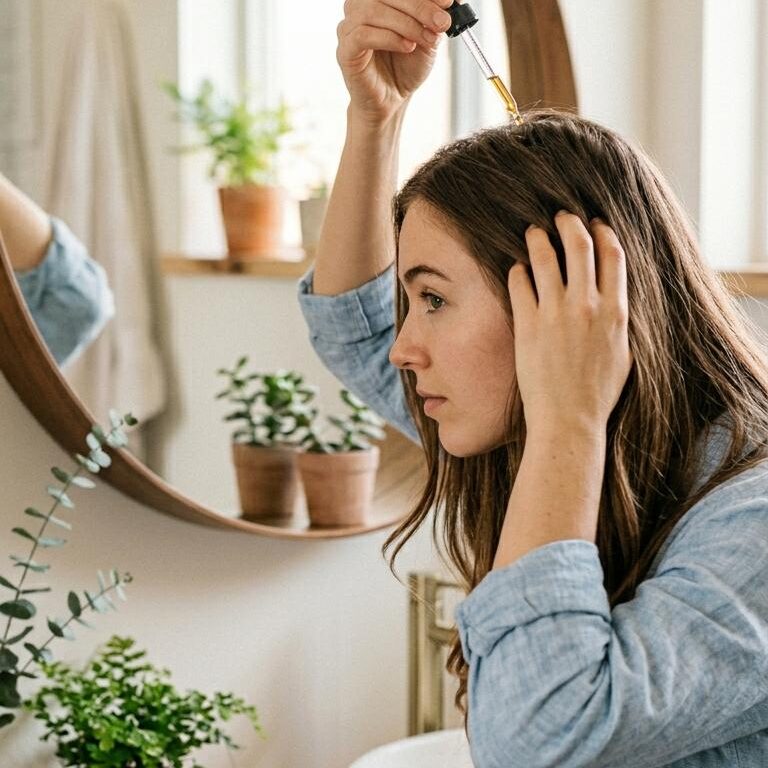
Final Thoughts
Tea tree oil can be a useful addition to a hair care routine when used safely. It may help with dandruff, oily scalp, buildup, and itching while supporting a cleaner scalp environment. However, proper dilution is essential.
For most people:
- 1–2% dilution is enough.
- Carrier oils are the safest mixing option.
- Patch testing helps prevent reactions.
- Using it 1–2 times weekly is usually sufficient.
Avoid applying pure tea tree oil directly to the scalp, and never rely on water alone for dilution. Using the correct method can help you enjoy the benefits while minimizing irritation risks. If you have any queries, please don’t hesitate to reach out to fajarhafeez117@gmail.com.