Hairline microblading has become one of the most popular cosmetic treatments for people dealing with thinning edges, uneven hairlines, sparse baby hairs, or visible scalp areas. Explore Hairline microblading before and after results, including benefits, healing stages, costs, aftercare tips, and how this treatment creates a fuller-looking hairline.
The treatment creates the appearance of fuller, denser hair using semi-permanent pigment strokes that mimic natural hair follicles. For many people, the biggest attraction is the dramatic “before and after” transformation.
A receding or patchy hairline can look sharper, fuller, and more balanced after just one session. Whether caused by genetics, overstyling, postpartum shedding, aging, or traction alopecia, hairline microblading offers a non-surgical option to improve appearance without a hair transplant.
In this detailed guide, you’ll learn everything about hairline microblading, including before-and-after results, how the procedure works, who it is best for, the healing stages, side effects, maintenance, costs, and long-term expectations.
What Is Hairline Microblading?
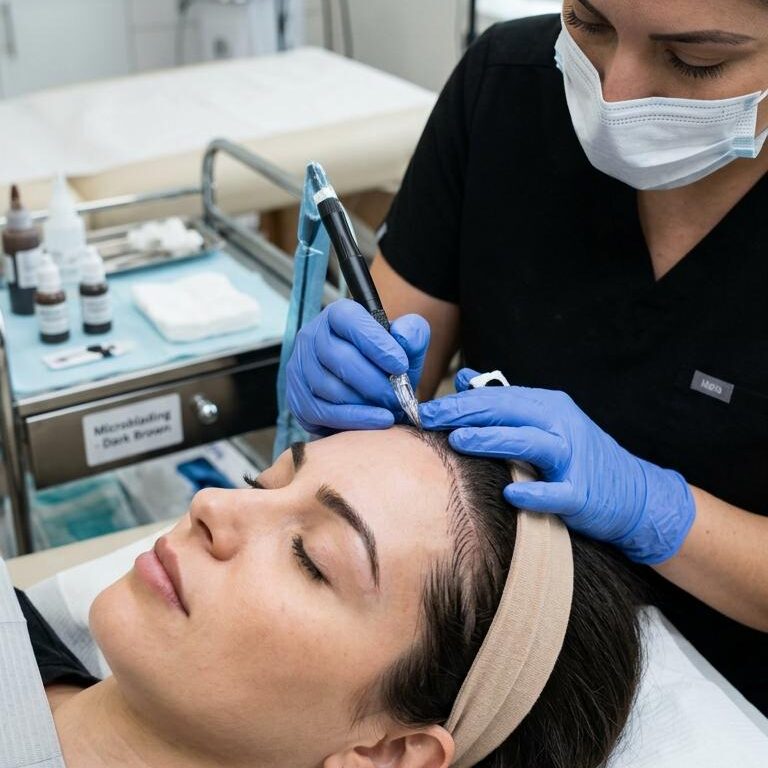
Hairline microblading is a cosmetic tattooing technique that uses tiny needles to deposit pigment into the skin around the hairline. The goal is to imitate the appearance of real hair strands and create the illusion of thicker hair.
Unlike traditional tattoos, microblading uses fine strokes that resemble natural hair. The pigment is placed more superficially in the skin, which is why the results are semi-permanent rather than permanent.
The treatment is commonly used to:
- Fill thinning edges.
- Define an uneven hairline.
- Camouflage bald spots.
- Create fuller-looking baby hairs.
- Improve hair density and appearance.
- Correct traction alopecia areas.
- Shape the forehead frame
Both men and women choose hairline microblading, although the styling and techniques vary depending on hair type and desired results.
Hairline Microblading Before and After: What Changes?
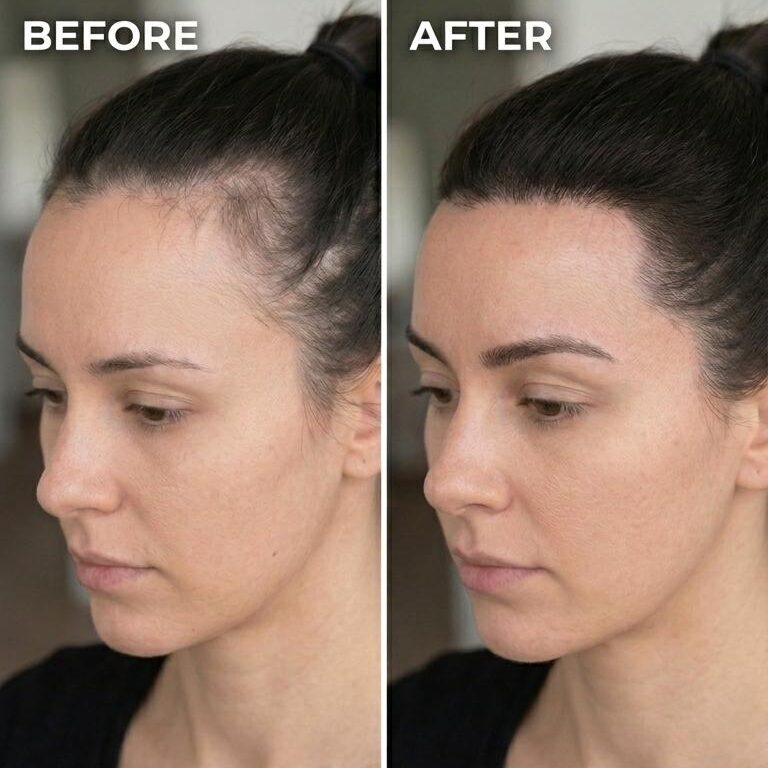
The most noticeable change after hairline microblading is the appearance of fullness and definition.
Before Hairline Microblading
Before treatment, many people experience:
- Sparse or thin edges
- Receding temples
- Uneven hair growth
- Visible scalp
- Hairline asymmetry
- Bald patches from tight hairstyles
- Loss of confidence in appearance
People often use makeup powders, fibers, sprays, or hairstyles to hide thinning areas before choosing microblading.
After Hairline Microblading
After the procedure, the hairline often appears
- Fuller
- More symmetrical
- Sharper and more defined
- Naturally shaded
- Younger-looking
- Better framed around the face
The treatment can create subtle or dramatic results depending on the amount of density added.
Who Is a Good Candidate for Hairline Microblading?
Hairline microblading works best for people with mild to moderate hair thinning rather than complete baldness.
Good candidates usually include:
- Women with thinning edges
- Men with early hairline recession
- People with traction alopecia
- Individuals with patchy hair growth
- Postpartum hair thinning sufferers
- People want cosmetic enhancement
- Those not ready for surgery
The treatment is especially effective when some natural hair remains because the strokes blend more naturally.
Who Should Avoid Hairline Microblading?
Not everyone is an ideal candidate. Some conditions may interfere with healing or pigment retention.
You might have to refrain from the procedure if you possess the following:
- Active scalp infections
- Psoriasis near the hairline
- Severe eczema
- Uncontrolled diabetes
- Blood clotting disorders
- Extremely oily skin
- Keloid scarring tendency
- Recent hair transplant surgery
- Active alopecia areata flare-ups
Pregnant or breastfeeding individuals are often advised to wait before undergoing cosmetic tattoo procedures.
How Hairline Microblading Works
The process usually involves several stages.
1. Consultation
The artist evaluates your:
- Hair type
- Skin tone
- Hairline shape
- Hair density
- Goals and expectations
They also discuss pigment color and desired fullness.
2. Hairline Mapping
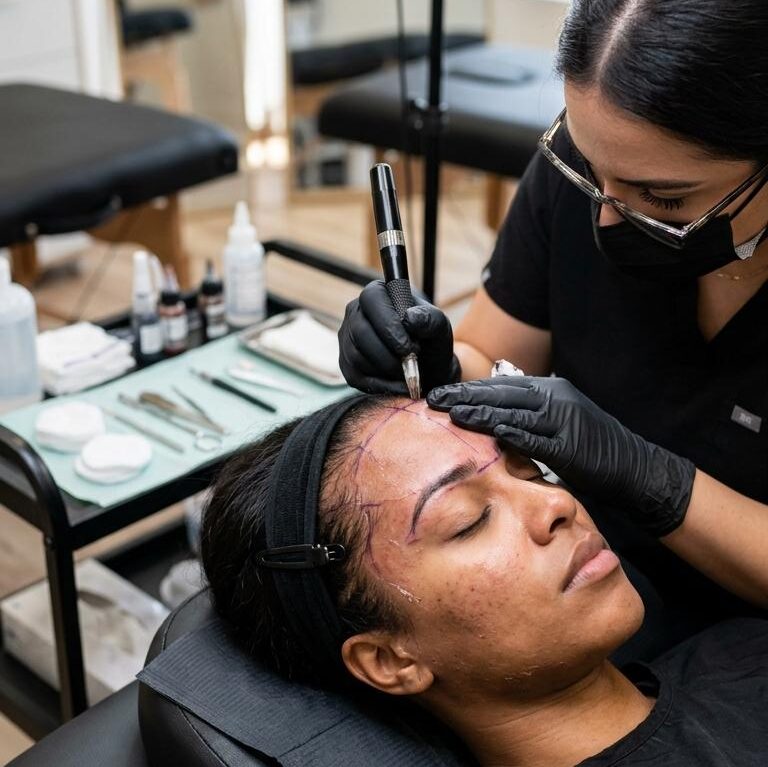
A temporary outline is drawn to design the future hairline. The shape should complement facial structure and appear natural.
3. Numbing Cream Application
A topical anesthetic helps reduce discomfort during the procedure.
4. Pigment Implantation
Using a handheld microblading tool, the artist creates tiny hair-like strokes along the hairline.
The strokes imitate:
- Baby hairs
- Hair follicles
- Density shadows
- Fine edge details
5. Healing Process
The treated area heals over several weeks, during which the pigment softens and settles.
Hairline Microblading Healing Stages
Healing is an important part of achieving good results before and after.
Day 1–3: Bold Appearance
Immediately after treatment:
- Pigment looks darker.
- Hairline appears sharp.
- Mild redness may occur.
- Slight tenderness is common.
This stage can surprise some people because the results initially appear very intense.
Day 4–7: Scabbing Begins
Light flaking or scabbing develops as the skin heals.
During this stage:
- Avoid scratching
- Do not pick flakes
- Keep the area clean
Picking can cause uneven pigment retention.
Day 7–14: Patchy Appearance
The pigment may temporarily look faded or uneven. This is a normal healing stage.
Some strokes may seem to disappear before reappearing later.
Week 3–6: Final Results Emerge
The pigment settles into a softer, more natural shade.
The hairline begins looking
- More blended
- Natural
- Balanced
- Less harsh
Hairline Microblading Before and After on Different Hair Types
Straight Hair
- Microblading can create very realistic hair strokes for straight hair textures because the strokes easily mimic fine strands.
Curly Hair
- For curly hair, artists often create softer and more textured strokes to blend naturally with curls and coils.
Afro-Textured Hair
- Hairline microblading can effectively restore edges and create fuller-looking baby hairs for textured hair types.
Experienced artists are essential for natural-looking results.
Hairline Microblading vs. Hair Transplant
Many people compare these two treatments.
Hairline Microblading
Pros:
- Non-surgical
- Faster recovery
- Lower cost
- Immediate cosmetic improvement
- Minimal downtime
Cons:
- Semi-permanent
- Requires touch-ups
- Does not grow actual hair
Hair Transplant
Pros:
- Permanent hair growth
- Real hair follicles
- Long-term solution
Cons:
- Expensive
- Surgical procedure
- Longer recovery
- Risk of scarring
Some people combine both treatments for enhanced density.
How Long Does Hairline Microblading Last?
Results usually last between:
- 12 to 24 months
Longevity depends on the following:
- Skin type
- Sun exposure
- Skincare products
- Sweating
- Pigment quality
- Lifestyle habits
People with oily skin often experience faster fading.
Hairline Microblading Touch-Ups
A touch-up appointment is usually scheduled.
- 4 to 8 weeks after the first session
This session helps:
- Fill faded spots
- Improve symmetry
- Adjust color
- Add density
Subsequently, maintenance touch-ups are usually required every 1 to 2 years.
Does Hairline Microblading Hurt?
Pain levels vary, but most people describe the sensation as
- Mild scratching
- Light pressure
- Tingling
Numbing cream significantly reduces discomfort.
The hairline area can be slightly more sensitive than the eyebrows because the scalp contains many nerve endings.
Hairline Microblading Before and After for Women
Women commonly choose hairline microblading to restore edges damaged by:
- Tight ponytails
- Braids
- Weaves
- Chemical treatments
- Hormonal changes
The “after” results often look softer and more feminine, especially when baby hairs are carefully designed.
Many women report increased confidence wearing hairstyles that expose the hairline again.
Hairline Microblading Before and After for Men
Men often use the treatment to:
- Lower the appearance of a receding hairline
- Fill temple areas
- Create a density illusion
- Improve facial framing
Natural results are critical for men because overly sharp lines can look artificial.
A skilled artist uses irregular stroke patterns to imitate natural hair growth.
Hairline Microblading and Traction Alopecia
Traction alopecia is one of the most common reasons people seek this treatment.
This kind of hair loss occurs due to extended strain from hairstyles, including.
- Tight buns
- Braids
- Extensions
- Cornrows
- Ponytails
Hairline microblading can camouflage thinning areas effectively, especially if hair follicles are partially damaged rather than destroyed.
Possible Side Effects and Risks
Like any cosmetic procedure, hairline microblading has potential risks.
Common Side Effects
- Redness
- Swelling
- Tenderness
- Itching
- Temporary scabbing
These usually resolve within days.
Less Common Risks
- Infection
- Allergic reaction
- Uneven pigment
- Premature fading
- Scarring
- Color changes
Choosing a licensed and experienced technician reduces these risks significantly.
How to Prepare for Hairline Microblading
Preparation helps improve results.
Avoid the following before your appointment:
- Alcohol
- Blood thinners
- Excess caffeine
- Retinol products
- Heavy sweating
- Sunburn
- Chemical peels
Wash your hair beforehand because you may need to avoid washing immediately after treatment.
Hairline Microblading Aftercare
Good aftercare is essential for beautiful before and after results.
First Week Care Tips
- Keep the area dry.
- Avoid sweating.
- Do not scratch.
- Avoid direct sunlight.
- Sleep carefully.
- Avoid swimming
Long-Term Care
- Wear sunscreen.
- Avoid harsh exfoliants.
- Schedule touch-ups.
- Moisturize gently.
Sun exposure is one of the biggest causes of pigment fading.
Hairline Microblading Cost
Prices vary based on location, artist experience, and treatment size.
Typical costs range from the following:
- $300 to $1,500
Factors affecting price include:
- Clinic reputation
- Pigment quality
- Amount of hairline coverage
- Number of sessions
Cheaper services are not always safer or better.
Hairline Microblading vs. Scalp Micropigmentation
Although similar, these treatments are different.
Hairline Microblading
- Creates hair-like strokes
- Best for edges and detail work
- More natural for a close-up appearance
Scalp Micropigmentation (SMP)
- Uses tiny dots instead of strokes
- Mimics shaved follicles
- Better for larger bald areas
Some clinics combine both techniques.
Can Hairline Microblading Look Natural?
Yes, when performed by a skilled artist.
Natural-looking results depend on the following:
- Proper pigment matching
- Correct stroke direction
- Realistic density
- Conservative hairline design
Overly dark or sharply shaped hairlines may look fake.
The best results enhance your features without appearing obvious.
Hairline Microblading Before and After Expectations
Realistic expectations are important.
The treatment can
- Improve appearance
- Create a fullness illusion
- Restore confidence
- Enhance symmetry
However, it cannot:
- Regrow hair
- Stop hair loss
- Replace medical treatment
- Create unlimited density
People with advanced baldness may require additional treatments.
Choosing the Right Hairline Microblading Artist
Choosing the right professional matters more than almost anything else.
Look for:
- Licensed technicians
- Strong portfolio photos
- Healed result images
- Positive reviews
- Clean studio environment
- Experience with hairline work
Always ask to see healed before-and-after photos, not just fresh results.
Is Hairline Microblading Worth It?
For many people, yes.
Benefits include:
- Quick cosmetic improvement
- Non-surgical enhancement
- Improved confidence
- Reduced need for makeup fillers
- Natural-looking density
The treatment can be especially worthwhile for those struggling emotionally with thinning edges or hairline recession.
Emotional Impact of Hairline Transformation
Hair loss often affects more than appearance. Many people experience:
- Lower self-esteem
- Social anxiety
- Reduced confidence
- Stress about styling hair
Hairline microblading can provide emotional relief by helping individuals feel more comfortable with their appearance again.
Even subtle improvements can make a significant psychological difference.
Why can’t I shower after microblading?
You can sleep after microblading, but you should avoid sleeping “normally” for the first 7–10 days because pressure, sweat, and friction can affect the healing results.
Here’s what’s usually recommended after a microblading session:
- Sleep on your back if possible.
- Avoid pressing your face into the pillow.
- Use a clean pillowcase every night for the first few days.
- Try not to sweat heavily while sleeping, since moisture can interfere with pigment retention.
- Some people use a travel neck pillow to keep their face from rolling into the pillow.
During the first few nights, your brows may feel slightly tender, tight, or itchy. That’s normal. Rubbing or scratching the area while asleep can pull out pigment and lead to uneven healing.
You should also avoid:
- Sleeping face-down
- Applying heavy skincare products near the brows before bed
- Letting pets touch the healing area
- Using dirty pillowcases or blankets
Most technicians say the brows are especially vulnerable during the first 3–5 days. After that, you can gradually return to your usual sleep position if the area is healing well.
If you notice severe swelling, pus, increasing redness, or severe pain, contact your technician or a healthcare professional because those can be signs of infection.
Read more: Hair derma roller before and after
FAQs About Hairline Microblading Before and After
1. How long does hairline microblading last?
The majority of outcomes endure for 12 to 24 months before gradually diminishing. Touch-ups help maintain appearance.
2. Is hairline microblading permanent?
No. It is considered semi-permanent because the pigment fades over time.
3. Does hairline microblading damage hair follicles?
When done correctly, the treatment usually does not damage hair follicles because the pigment is placed superficially in the skin.
4. Can hairline microblading fix bald spots?
It can camouflage small or moderate bald spots but cannot regrow hair.
5. Is the procedure painful?
Most people experience mild discomfort rather than severe pain because numbing cream is used.
6. How long is the healing process?
Initial healing takes about 7–14 days, while full healing and pigment settling may take up to 6 weeks.
7. Can oily skin affect results?
Yes. Oily skin may cause faster fading and blurrier strokes over time.
8. What is the difference between hairline microblading and scalp micropigmentation?
Microblading creates hair-like strokes, while scalp micropigmentation uses tiny dots to imitate follicles.
9. Can I wash my hair after microblading?
You may need to avoid washing the treated area for several days, depending on your technician’s aftercare instructions.
10. How do I make my results last longer?
Protect the area from sunlight, avoid harsh skincare products, and schedule maintenance touch-ups when needed.
Read more: Best wet hair brush
Final Thoughts
Hairline microblading before and after transformations can be impressive when performed correctly. The procedure offers a non-surgical way to create the appearance of fuller, more defined hairlines using realistic pigment strokes.
While it is not a permanent cure for hair loss, it can dramatically improve confidence and facial framing. Success depends heavily on choosing an experienced artist, following proper aftercare, and maintaining realistic expectations.
Whether you want to restore thinning edges, camouflage sparse spots, or sharpen your hairline shape, hairline microblading may provide the cosmetic enhancement you are looking for. If you have any queries, please don’t hesitate to reach out to fajarhafeez117@gmail.com.