Dry shampoo has become one of their things? most popular hair care products in recent years. It promises fresh-looking hair without the need for a full wash, saves time during busy mornings, and helps extend hairstyles between washes. But one question many people ask is, can you use dry shampoo on wet hair?
The short answer is generally no—dry shampoo is designed for dry hair, not wet hair. However, there are some important details, exceptions, and alternative techniques worth understanding if you want the best results for your hair.
In this complete guide, you’ll learn:
- What dry shampoo actually does
- Why it usually doesn’t work on wet hair
- What happens if you apply it to damp hair
- Whether any dry shampoos are safe for wet use
- Better alternatives for refreshing wet or sweaty hair
- Common mistakes to avoid
- Expert tips for healthier hair care
By the end of this article, you’ll know exactly how to use dry shampoo properly and whether it belongs anywhere near wet hair.
What Is Dry Shampoo?
Dry shampoo is a water-free hair product designed to absorb excess oil, sweat, and grease from the scalp and roots. Most dry shampoos come in aerosol spray, powder, or foam form.
The product usually contains ingredients such as the following:
- Starch
- Rice powder
- Clay
- Silica
- Alcohol
- Fragrance
These ingredients soak up oils that make hair appear greasy. After application, the hair often looks cleaner, fuller, and fresher.
Dry shampoo is commonly used for:
- Extending time between washes
- Refreshing oily roots
- Adding texture and volume
- Preserving hairstyles
- Reducing frequent shampooing
- Quick fixes during travel or busy schedules
Even though it’s called “shampoo,” dry shampoo does not actually clean the hair the same way traditional washing does. It simply masks oil and improves appearance temporarily.
Can You Use Dry Shampoo on Wet Hair?
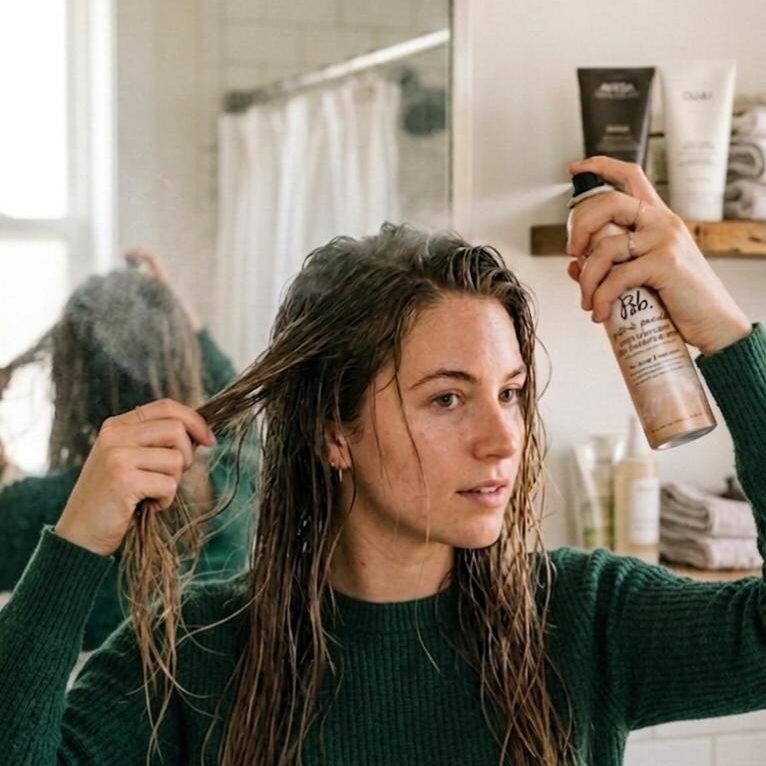
In most cases, dry shampoo should not be used on wet hair. Dry shampoo is specifically formulated to absorb oil from dry roots. When hair is wet or damp, the product cannot absorb moisture properly. Instead, it may clump together, leave residue, or create a sticky texture.
Applying dry shampoo to wet hair often causes:
- White patches
- Uneven buildup
- Crunchy texture
- Tangled roots
- Dull appearance
- Difficulty brushing
- Product waste
Wet hair already contains moisture, which prevents the oil-absorbing ingredients from working correctly.
So while it may seem tempting to spray dry shampoo on damp roots after a workout or shower, it usually leads to disappointing results.
Why Dry Shampoo Works Best on Dry Hair
To understand why dry shampoo struggles on wet hair, it helps to know how the product functions.
Dry shampoo works like a sponge for oil. The starches and powders bind to sebum — the natural oil produced by your scalp.
When your hair is dry:
- Oils sit on the surface of the scalp and strands.
- Dry shampoo absorbs those oils efficiently.
- Hair appears cleaner and less greasy.
But when hair is wet:
- Water coats the strands.
- Powders dissolve or clump.
- Oil absorption becomes ineffective.
- Product spreads unevenly.
The result is often messy, flaky, or sticky hair instead of refreshed hair.
What Happens If You Put Dry Shampoo on Wet Hair?
If you accidentally apply dry shampoo to wet hair, several things may happen depending on the product type and how wet your hair is.
1. The Product Clumps Together.
Powder-based ingredients absorb moisture immediately. Instead of blending naturally, they can stick together in small clumps around the roots.
This can make hair feel gritty or dirty.
2. White Residue Appears.
Many dry shampoos leave a white cast even on dry hair if not blended properly. On wet hair, this effect becomes worse because the powder sticks more visibly.
Dark hair colors especially show residue clearly.
3. Hair Feels Sticky or Crunchy.
Mixing moisture with dry shampoo can create a paste-like texture. Hair may feel stiff, sticky, or rough to the touch.
Some people compare it to hairspray buildup.
4. Scalp Irritation May Increase.
If product buildup remains trapped against the scalp while wet, it may irritate sensitive skin or clog follicles.
This can contribute to:
- Itchiness
- Flaking
- Redness
- Scalp discomfort
5. Styling Becomes Harder.
Wet hair is already more fragile. Adding excess product buildup can make brushing and styling difficult.
This may lead to:
- Breakage
- Knots
- Frizz
- Flattened roots
Is Damp Hair Different from Wet Hair?
There is a slight difference between damp hair and soaking wet hair.
Some people lightly apply dry shampoo to almost-dry hair with moderate success, especially if:
- The roots are only slightly damp.
- Sweat is minimal.
- The product is finely milled.
- Hair is blow-dried immediately afterward.
However, even in these cases, dry shampoo still performs best once the hair is completely dry.
If your roots are damp after exercise or humidity, it’s better to
- Blow-dry the roots first.
- Then apply dry shampoo afterward.
This gives much better absorption and avoids residue problems.
Can Dry Shampoo Be Used Before Blow-Drying?
Yes, but timing matters.
Some people apply dry shampoo before blow-drying slightly sweaty roots because the heat helps distribute the product evenly.
This method can work if:
- Hair is only mildly damp.
- You use a small amount.
- You finish with full drying.
The blow dryer helps evaporate moisture and activates volume at the roots.
Still, many hairstylists recommend applying dry shampoo after blow-drying for the cleanest finish.
Are There Any Dry Shampoos Made for Wet Hair?
A few modern formulas are marketed as “wet-to-dry” products or foam dry shampoos designed for damp hair. These products are different from traditional aerosol powders.
They may contain:
- Lightweight foaming agents
- Fast-drying alcohols
- Conditioning ingredients
- Minimal powder residue
These specialized products can sometimes work on slightly damp hair. However, they still are not replacements for actual shampooing.
Always read the label carefully because most standard dry shampoos explicitly instruct users to apply only to dry hair.
Can You Use Dry Shampoo After a Shower?
Yes, but only once your hair is dry.
Many people use dry shampoo preventively after styling freshly washed hair. This is actually one of the best ways to use it.
Applying dry shampoo to clean, dry roots can:
- Prevent oil buildup
- Add texture
- Extend blowouts
- Keep hair fresher longer
Instead of waiting until hair becomes greasy, applying a light layer early helps absorb oil gradually throughout the day.
Best Way to Use Dry Shampoo Correctly
To get the best results, follow these simple steps.
Step 1: Start with Completely Dry Hair
This is the most important rule.
Never apply traditional dry shampoo to soaking wet roots.
Step 2: Shake the Product Well
Shaking distributes the ingredients evenly and prevents concentrated white residue.
Step 3: Section the Hair
Lift sections around oily areas, especially near:
- Crown
- Hairline
- Bangs
- Nape
Step 4: Spray from a Distance
- Position the can approximately 6–10 inches from your scalp.
- Spraying too close creates buildup.
Step 5: Let It Sit
- Wait 30 seconds to several minutes before rubbing it in.
- This allows the product to absorb oil properly.
Step 6: Massage the Scalp
Use fingertips to blend the product naturally.
Step 7: Brush or Style
Brush through the hair or use a blow dryer for extra volume.
Common Mistakes People Make with Dry Shampoo
Many people misuse dry shampoo without realizing it.
Applying Too Much
Excess product causes heavy buildup and dullness.
Using It Daily
- Dry shampoo should not completely replace regular washing.
- Overuse can clog follicles and irritate the scalp.
Spraying Too Close
- This creates visible residue and sticky patches.
Applying to Wet Hair
This is one of the biggest mistakes because it reduces effectiveness dramatically.
Ignoring Scalp Health
Healthy hair begins with a healthy scalp. Dry shampoo is temporary, not a permanent cleansing solution.
Alternatives to Dry Shampoo for Wet Hair
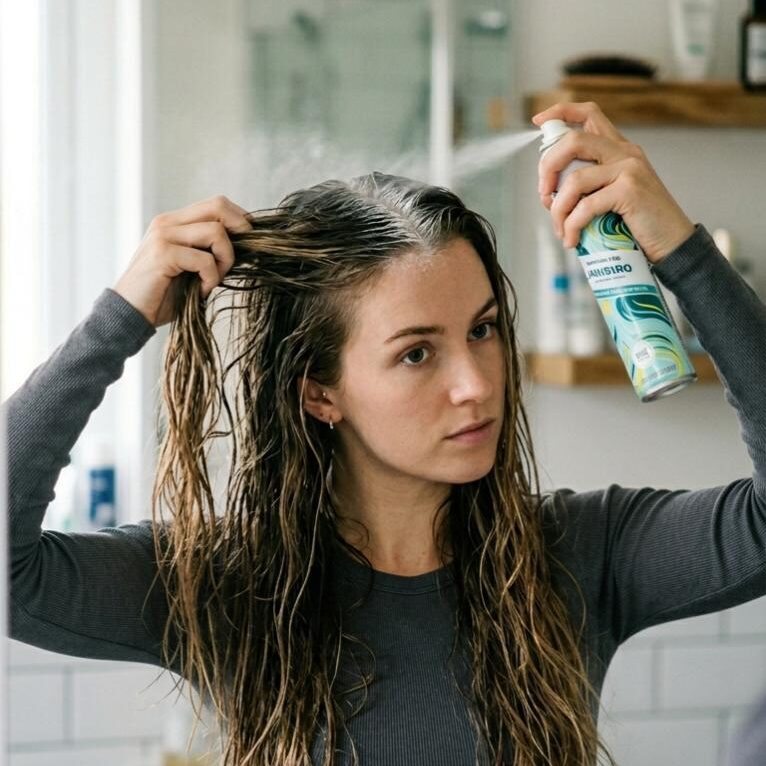
If your hair is wet or sweaty, these options work better.
1. Blow-Dry the Roots.
Quickly drying sweaty roots often restores volume and freshness naturally.
2. Use a Microfiber Towel.
Microfiber towels absorb moisture gently without rough friction.
3. Try a Scalp Mist.
Lightweight scalp-refreshing sprays are better for damp roots.
4. Use a Volumizing Spray.
Unlike dry shampoo, volumizing products are designed for damp hair.
5. Wash with regular shampoo.
Sometimes a quick wash is the healthiest solution.
Is Dry Shampoo Bad for Your Hair?
Dry shampoo itself is not necessarily bad when used correctly and occasionally.
However, overuse can create problems.
Potential issues include the following:
- Scalp buildup
- Itching
- Dryness
- Breakage
- Follicle blockage
- Dull hair
- Weakened roots
Hair experts generally recommend the following:
- Washing your scalp regularly
- Using dry shampoo in moderation
- Avoiding excessive layering of products
How Often Should You Use Dry Shampoo?
Most hairstylists recommend limiting dry shampoo use to about 1–2 days between washes.
This varies depending on:
- Hair type
- Oil production
- Lifestyle
- Exercise habits
- Climate
People with oily scalps may use it more frequently, while dry hair types may need it less often.
Dry Shampoo for Different Hair Types
Oily Hair.
- Dry shampoo works especially well for oily roots and fine hair.
Curly Hair.
- Curly hair often benefits because it’s washed less frequently. Use lightweight formulas to avoid buildup.
Fine Hair.
- Dry shampoo can add noticeable volume and texture.
Thick Hair.
- You may need section-by-section application for even coverage.
Color-Treated Hair.
- Dry shampoo helps preserve hair color by reducing frequent washing.
Can Dry Shampoo Replace Washing?
No, dry shampoo is a temporary cosmetic fix, not true cleansing.
Traditional shampoo removes the following:
- Dirt
- Sweat
- Dead skin
- Pollution
- Product buildup
- Bacteria
Dry shampoo only absorbs surface oil.
Eventually, your scalp still needs proper washing with water and shampoo.
Signs You Need a Real Hair Wash
Your hair likely needs actual washing if you notice the following:
- Persistent itchiness
- Heavy buildup
- Unpleasant odor
- Greasy strands
- Flakes
- Flat roots
- Irritated scalp
No amount of dry shampoo can fully replace scalp hygiene.
Tips for Using Dry Shampoo Safely
Avoid Inhaling the Spray.
- Use in a ventilated area.
Don’t Apply to Broken Skin.
- Avoid irritated or scratched scalp areas.
Wash brushes regularly.
- Dirty brushes spread buildup back into the hair.
Clarify occasionally.
- Use a clarifying shampoo occasionally to remove residue.
Choose the Right Formula.
Different formulas exist for:
- Dark hair
- Sensitive scalps
- Fine hair
- Curly hair
- Fragrance-free preferences
DIY Alternatives to Dry Shampoo
Some people use household powders temporarily.
Popular DIY options include:
- Cornstarch
- Arrowroot powder
- Cocoa powder for dark hair
However, homemade methods should be used carefully because excessive powder may clog follicles.
Myths About Dry Shampoo
Myth 1: Dry Shampoo Cleans Hair
False. It only absorbs oil temporarily.
Myth 2: More Product Works Better
False. Excess product causes buildup.
Myth 3: You Can Use It on Wet Hair
Mostly false. Traditional dry shampoo performs poorly on wet hair.
Myth 4: It Causes Hair Loss Immediately
Occasional use usually does not cause hair loss. Problems mostly arise from excessive buildup and poor scalp care.
Expert Hair Care Advice
Professional hairstylists often recommend this routine:
- Wash hair normally
- Dry completely
- Apply a small amount of dry shampoo preventively
- Reapply lightly only when needed
- Wash thoroughly every few days
This approach keeps the scalp healthier while extending hairstyles effectively.
Frequently Asked Questions (FAQs)
1. Can I use dry shampoo right after washing my hair?
No. Your hair is too clean and often damp, so it won’t absorb anything.
2. What happens if I spray dry shampoo on wet hair?
It becomes sticky, uneven, and ineffective.
3. Can dry shampoo damage hair?
Not directly, but overuse can lead to buildup and scalp issues.
4. How often should I use dry shampoo?
Ideally 1–3 times per week, depending on oiliness.
5. Is there a product for wet hair instead?
Yes—use mousse, root-lifting sprays, or leave-in conditioners.
6. Why does my hair feel worse after dry shampoo?
You may be using too much or applying it incorrectly.
7. Can dry shampoo replace washing?
No, it is only a temporary fix.
Read more: Should I blow-dry or air-dry my hair?
Final Verdict:
Technically, you can apply dry shampoo to wet or damp hair — but it usually does not work well. Traditional dry shampoo is specifically made for dry hair. On wet hair, it often creates clumps, residue, stiffness, and buildup instead of freshness.
For the best results:
- Wait until hair is fully dry.
- Blow-dry damp roots first.
- Use dry shampoo sparingly.
- Maintain regular hair washing.
If you need to refresh wet or sweaty hair, alternatives like blow-drying, scalp mists, or volumizing sprays are usually far more effective.
Dry shampoo is a useful beauty tool, but only when used correctly. Understanding how and when to apply it can help you enjoy fresher, healthier-looking hair without damaging your scalp or strands. If you have any queries, please don’t hesitate to reach out fajarhafeez117@gmail.com.