Dry acne-prone skin is one of the most frustrating skin types to manage. It behaves like two different skin conditions at once: dryness that causes tightness, flaking, and irritation, and acne that leads to breakouts, clogged pores, and inflammation.
Because of this combination, many people end up over-treating their skin with harsh acne products and skipping moisturizers entirely, which usually makes the situation worse.
The truth is simple: a properly chosen moisturizer is essential for healing dry acne-prone skin, not something optional. The right moisturizer helps repair the skin barrier, reduces irritation from acne treatments, and prevents the skin from overproducing oil.
In this complete guide, we’ll break down everything you need to know about choosing the best moisturizer for dry acne-prone skin, including ingredients, routines, mistakes to avoid, and expert-backed skincare principles.
1. Understanding Dry Acne-Prone Skin
To choose the right moisturizer, you must first understand what’s happening beneath the surface of your skin.
Dry acne-prone skin usually has two overlapping problems:
1.1 Skin Barrier Damage
The skin barrier is the outer protective layer of your skin. It locks in moisture and keeps irritants out. When it’s damaged:
- Water escapes quickly → dryness
- Irritants enter easily → inflammation
- Skin becomes sensitive → redness and acne flare-ups
Common causes include:
- Over-cleansing
- Harsh acne treatments (benzoyl peroxide, salicylic acid, retinoids)
- Weather changes (cold, dry air)
- Using stripping skincare products
1.2 Dehydration vs. Dryness (Important Difference)
Many people confuse dehydrated skin with dry skin:
- Dry skin = lacks oil
- Dehydrated skin = lacks water
Dry acne-prone skin often has both issues:
- It feels tight (lack of water)
- It may still break out (excess oil in certain areas)
This is why lightweight hydration is more important than heavy oils.
1.3 Why Acne Happens in Dry Skin
It may seem strange, but dry skin can still get acne because
- A damaged barrier causes inflammation.
- Skin produces excess oil to compensate.
- Dead skin builds up and clogs pores.
- Acne treatments irritate the skin and worsen breakouts.
So the solution is not to “dry out acne” but to balance and repair the skin.
2. Why moisturizer Is Essential for Acne-Prone Skin
Many people with acne avoid moisturizers, thinking it will make breakouts worse. In reality, skipping moisturizer often makes acne worse.
2.1 Benefits of Moisturizing
A good moisturizer:
- Restores the skin barrier.
- Reduces irritation from acne treatments.
- Prevents excess oil production.
- Speeds up the healing of acne marks.
- Keeps skin calm and balanced.
When your skin is properly hydrated, it produces less reactive oil and becomes less prone to inflammation.
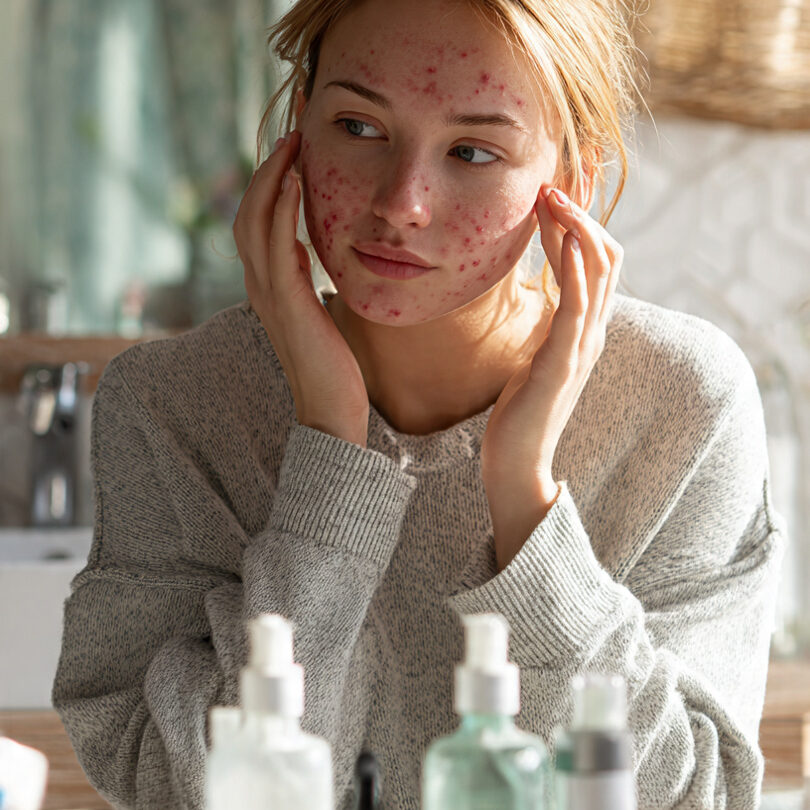
2.2 What Happens When You Don’t Moisturize
If you skip moisturizer:
- Skin becomes tight and flaky.
- Oil production increases.
- Acne treatments feel more irritating.
- Breakouts can become more frequent.
- Skin barrier weakens further.
So moisturizer is actually part of acne treatment—not separate from it.
3. What Makes a Moisturizer “Best” for Dry Acne-Prone Skin
Not all moisturizers are suitable for acne-prone skin. The best ones follow these principles:
3.1 Non-Comedogenic Formula
Non-comedogenic means the product is designed not to clog pores. This is essential for acne-prone skin.
3.2 Lightweight but Hydrating
You need hydration without heaviness. Ideal textures include:
- Gel creams
- Lightweight lotions
- Water-based moisturizers
3.3 Fragrance-Free and Gentle
Fragrance is a common irritant that can worsen the following:
- Redness
- Sensitivity
- Breakouts
3.4 Barrier-Supporting Ingredients
The best moisturizers repair the skin barrier rather than just sit on top of the skin.
4. Best Ingredients for Dry Acne-Prone Skin
Ingredients matter more than brand names. Let’s break them down.
4.1 Hydrating Ingredients (Humectants)
These attract water into the skin:
✔ Hyaluronic Acid
One of the most powerful hydrating ingredients. It:
- Holds water in the skin
- Plumps skin
- Reduces dryness without oiliness
✔ Glycerin
A simple but highly effective hydrator:
- Draws moisture into the skin.
- Strengthens hydration barrier.
- Very safe for acne-prone skin.
✔ Panthenol (Vitamin B5)
- Soothes irritation.
- Helps skin heal.
- Reduces redness.
4.2 Barrier Repair Ingredients
These are essential for dry acne-prone skin:
✔ Ceramides
Ceramides are natural lipids in the skin that:
- Repair the skin barrier.
- Lock in moisture.
- Reduce sensitivity.
Without ceramides, skin becomes dry and reactive.
✔ Cholesterol & Fatty Acids
These support ceramides and strengthen skin structure.
4.3 Anti-Acne and Soothing Ingredients
✔ Niacinamide (Vitamin B3)
One of the best ingredients for acne-prone skin:
- Controls oil production.
- Reduces redness.
- Minimizes the appearance.
- Strengthens the barrier.
✔ Centella Asiatica (Cica)
- Reduces inflammation
- Heals acne marks
- Calms irritated skin
✔ Green Tea Extract
- Antioxidant
- Reduces acne-causing bacteria
- Soothes skin
4.4 Safe Lightweight Emollients
These soften skin without clogging pores:
✔ Squalane
- Mimics natural skin oil
- Lightweight and non-greasy
- Extremely acne-safe
✔ Jojoba Oil
- Closely matches human sebum
- Balances oil production
5. Ingredients to Avoid
Some ingredients can worsen acne or dryness.
Heavy oils and butters
- Coconut oil
- Cocoa butter
- Heavy lanolin
These clog pores easily.
Irritating ingredients
- Strong fragrance
- Essential oils (peppermint, lavender)
- High alcohol content
These damage the skin barrier and worsen inflammation.
6. Best Types of Moisturizers
6.1 Gel Moisturizers
Best for:
- Oily acne-prone skin.
- Hot climates.
- Lightweight hydration needs.
Benefits:
- Fast absorbing.
- Non-greasy.
- Refreshing.
6.2 Lotion Moisturizers
Best for:
- Combination dry-acne skin
- Daily use
Benefits:
- Balanced hydration
- Not too heavy or light
6.3 Cream Moisturizers
Best for:
- Very dry acne-prone skin
- Night repair
Benefits:
- Strong hydration
- Barrier repair
Must still be non-comedogenic.
7. How to Choose the Right Moisturizer
Follow this simple process:
Step 1: Identify your skin behavior.
- Tight after washing → dehydrated
- Flaky but oily → combination skin
- Red and sensitive → barrier damage
Step 2: Check ingredients.
Look for:
- Ceramides
- Hyaluronic acid
- Niacinamide
Avoid:
- Heavy oils
- Fragrance
Step 3: Choose texture.
- Gel → oily acne skin
- Lotion → balanced skin
- Cream → dry skin
8. Proper Moisturizing Routine
Morning Routine:
- Gentle cleanser.
- Lightweight moisturizer.
- Sunscreen.
Night Routine:
- Cleanser.
- Acne treatment (if used)
- Moisturizer
Important Tip:
Use moisturizer on skin that is a bit wet for improved absorption.
9. Common Mistakes People Make
- Using too many acne treatments
Overuse leads to dryness and barrier damage.
- Skipping moisturizer
This worsens the oil imbalance and breakouts.
- Using heavy oils
They clog pores and worsen acne.
- Constant product switching
Skin needs time to adjust (2–4 weeks minimum).
10. Dermatologist-Recommended Approach
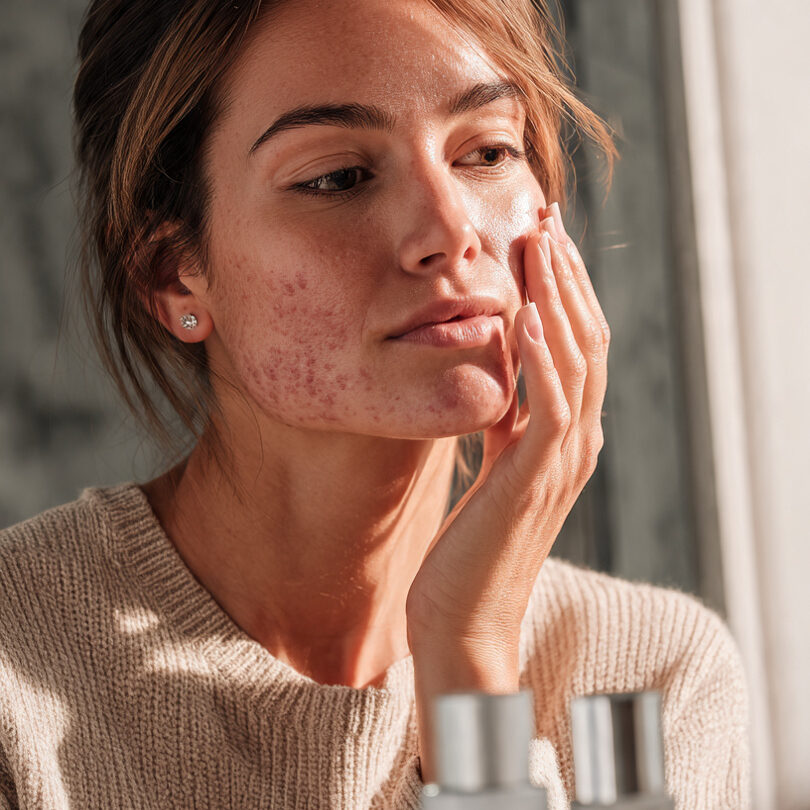
Dermatologists often recommend the following:
- Ceramide-based moisturizers
- Niacinamide formulas
- Fragrance-free hydration
These support long-term skin healing and reduce acne irritation.
11. Lifestyle Tips for Better Skin
- Drink enough water.
Hydration supports skin from the inside.
- Avoid harsh face washing.
Use gentle cleansers only twice daily.
- Use sunscreen daily.
UV damage worsens acne scars and dryness.
Maintain a balanced diet.
Reduce:
- Excess sugar.
- Processed foods.
Increase. - Fruits.
- Omega-3-rich foods.
What causes dry skin acne?
Dry skin acne happens when the skin is both dehydrated/damaged and still prone to clogged pores and inflammation. It can feel confusing because acne is usually linked with oily skin, but dryness actually doesn’t protect you from breakouts—in some cases, it makes them worse.
Here are the main causes:
1. Damaged Skin Barrier (Most Common Cause)
Your skin has a protective outer layer called the skin barrier. When it is weakened, moisture escapes, and irritants get in.
What damages it:
- Overuse of acne products (benzoyl peroxide, salicylic acid, retinoids)
- Harsh cleansers or scrubs
- Hot water washing
- Over-exfoliation
What happens:
- Skin becomes dry and tight
- Inflammation increases
- Pores become more reactive → acne forms easily
2. Dehydration (Lack of Water in Skin)
Dry skin acne often comes from water loss in the skin, not just an oil imbalance.
Causes:
- Not drinking enough water (minor role, but contributes)
- Low humidity (cold or dry weather)
- Using stripping skincare products
Result:
- Skin produces more oil to compensate
- Dead skin builds up
- Pores get clogged → acne
3. Over-Cleansing the Skin
Many people with acne think “more washing = better skin,” but it backfires.
What happens:
- Natural oils are removed too aggressively.
- Skin becomes dry and irritated.
- The body increases oil production to protect itself.
- This imbalance leads to breakouts.
4. Acne Treatments Causing Dryness
Many acne treatments are effective but drying.
Examples:
- Retinoids (tretinoin, adapalene)
- Benzoyl peroxide
- Salicylic acid
Side effects:
- Peeling
- Flaking
- Redness
- Tightness
When not balanced with moisturizer, they can trigger skin-to-skin acne flare-ups.
5. Dead Skin Cell Buildup
Dry skin sheds unevenly.
What happens:
- Dead skin sticks to the surface
- Mixes with oil and bacteria
- Blocks pores
👉 Result: whiteheads, blackheads, and small bumps.
6. Using the Wrong Moisturizer (or None at All)
Skipping moisturizer is a major cause.
Effects:
- Skin barrier weakens further
- Irritation increases
- Oil production becomes unstable
- Acne worsens instead of improving
Even oily-acne skin needs hydration.
7. Environmental Factors
Your surroundings also matter:
- Cold weather → dryness
- Air conditioning → moisture loss
- Pollution → clogged pores and inflammation
- Sun damage → weakened barrier
8. Hormonal Acne + Dry Skin Combination
Sometimes acne is hormonal, but the skin is dry at the same time due to skincare or the weather.
What happens:
- Hormones increase oil in certain areas.
- But the skin surface is still dehydrated.
- This creates “confused skin” → both dryness and acne.
9. Allergic or Irritant Reactions
Some skincare products can irritate the skin and cause the following:
- Redness
- Dry patches
- Small acne-like bumps
Common triggers:
- Fragrance
- Essential oils
- Harsh preservatives
10. Stress and Lifestyle Factors
Stress increases cortisol, which can:
- Worsen acne
- Disrupt skin barrier repair
- Increase inflammation
Poor sleep and diet also slow skin healing.
What is stage 4 acne?
Stage 4 acne refers to the most severe form of acne, also commonly called severe nodulocystic acne.
It is not an official universal medical “stage system” used everywhere, but in dermatology discussions and simplified grading systems, Stage 4 = very severe acne that deeply affects the skin.
What Stage 4 Acne Looks Like
Stage 4 acne is much more serious than regular pimples or moderate acne. It includes:
1. Deep, painful nodules
- Large, hard bumps under the skin.
- Often very painful to touch.
- No visible “head” like a normal pimple.
2. Cystic acne
- Soft, fluid-filled lumps under the skin.
- Can burst internally and spread inflammation.
- Often leaves scars.
3. Widespread breakouts
- Not just a few pimples.
- Appears across cheeks, jawline, back, chest, or shoulders.
- Multiple lesions at the same time.
4. Severe inflammation
- Skin looks red, swollen, and irritated.
- Areas may feel warm or tender.
5. Scarring and skin damage
Stage 4 acne often leads to:
- Deep acne scars (pitted or ice-pick scars)
- Dark marks (post-inflammatory hyperpigmentation)
- Uneven skin texture
Why Stage 4 Acne Happens
Severe acne is usually caused by a combination of factors:
1. Hormonal imbalance
- Increased androgens (male hormones).
- Overproduction of oil (sebum).
2. Severe pore blockage
- Dead skin cells + oil trap bacteria inside pores.
- Leads to deep infection.
3. Bacterial overgrowth
- Cutibacterium acnes bacteria multiply in clogged pores.
- Causes intense inflammation.
4. Genetic factors
- Family history of severe acne increases risk
5. Immune system overreaction
- Body reacts strongly to blocked pores → swelling and cyst formation
Symptoms of Stage 4 Acne
People with stage 4 acne often experience the following:
- Large, painful bumps under the skin.
- Constant breakouts that don’t heal quickly.
- Scarring is forming early.
- Skin sensitivity and redness.
- Emotional stress or low confidence.
How Stage 4 Acne Is Different from Mild Acne
| Mild Acne | Stage 4 Acne |
| Small pimples | Deep nodules and cysts |
| Few breakouts | Widespread inflammation |
| Quick healing | Slow healing |
| Rare scarring | High risk of scarring |
| Over-the-counter treatment helps | Needs medical treatment |
Treatment for Stage 4 Acne
Stage 4 acne usually cannot be controlled with basic skincare alone. Dermatologists often recommend the following:
1. Oral medications
- Isotretinoin (Accutane)
- Antibiotics (short-term)
- Hormonal therapy (for females in some cases)
2. Prescription topical treatments
- Strong retinoids
- Benzoyl peroxide combinations
- Antibiotic creams
3. Supportive skincare
- Gentle cleanser.
- Non-comedogenic moisturizer.
- Sunscreen.
4. Procedures (in some cases)
- Cortisone injections for cysts.
- Chemical peels (after control).
- Laser therapy for scars.
Can Stage 4 Acne Be Cured?
Yes—but it requires medical treatment and consistency.
Important points:
- It can take months to improve.
- Early treatment prevents permanent scarring.
- Self-treating with harsh products can make it worse.
Emotional Impact
Stage 4 acne can also affect:
- Confidence
- Social interaction
- Mental health
This is why dermatologists treat it seriously—not just as a cosmetic issue, but as a medical condition.
Read more: Best moisturizer for old wrinkled skin

Final Thoughts
The best moisturizer for dry acne-prone skin is not the richest or most expensive—it is the one that restores balance.
The ideal formula:
- Hydrates deeply without clogging pores
- Repairs the skin barrier
- Soothes inflammation
- Works well with acne treatments
If you focus on ingredients like ceramides, hyaluronic acid, niacinamide, and squalane, you can significantly improve both dryness and acne over time.
Consistency is the key. With the right moisturizer and routine, dry acne-prone skin can become calm, smooth, and balanced again.