When people hear the word “density,” they often think of science classes, physics formulas, or complex calculations. But in real life, density is a concept that quietly influences many parts of our daily experience—especially when it comes to hair, skin, materials, populations, and even health. Low density vs. high density hair: Learn the key differences, how to identify your hair type, and the best care tips for fuller, healthier-looking hair.
In this detailed guide, we will focus primarily on low-density vs. high-density in hair and physical appearance contexts, while also touching on general scientific and real-world applications.
By the end, you will clearly understand what density means, how low density differs from high density, why it matters, and how to manage or improve it depending on the context.
1. What Does Density Mean?
Density refers to how much quantity (mass, strands, particles, or elements) is packed into a specific space or area.
In simple terms:
- High density = more packed together
- Low density = more spaced out
In Hair:
Hair density refers to the number of hair strands per square centimeter on the scalp.
- High-density hair → thick, full appearance
- Low-density hair → sparse, thinner appearance
2. Low-Density vs. High-Density: Basic Difference
Low Density
Low density means fewer units are present in a given area.
Characteristics:
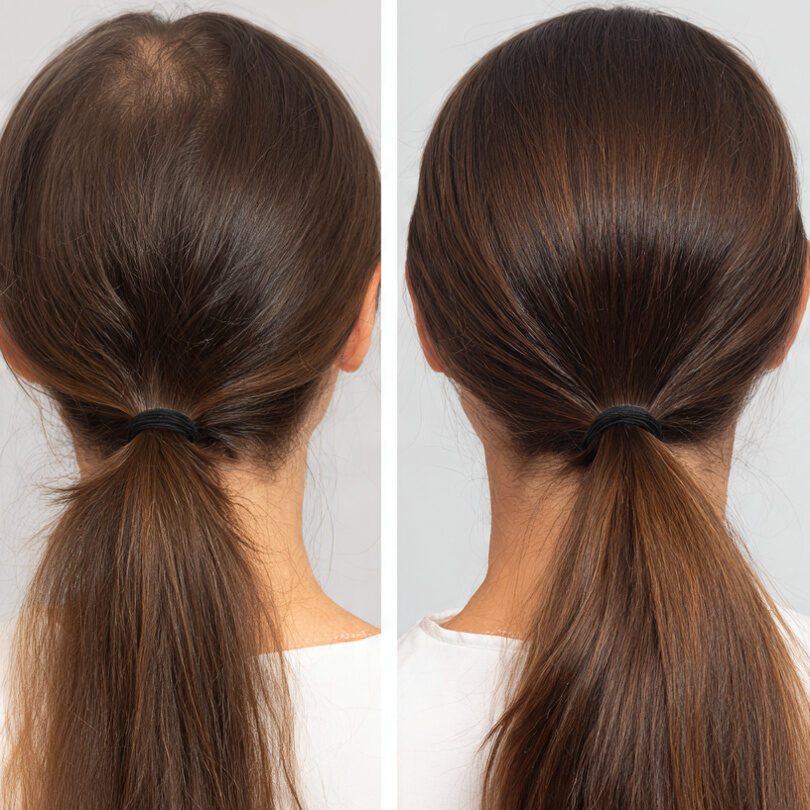
- The scalp is more visible.
- Hair looks thin or flat.
- Less volume.
- Styling appears less full.
- Hair may fall flat easily.
High Density
High density means more units are packed closely together.
Characteristics:
- Hair looks thick and voluminous.
- The scalp is less visible.
- Hairstyles hold better.
- Appears fuller naturally.
- Can look heavy or bulky.
3. Low-Density Hair Explained
Low-density hair is one of the most common hair concerns globally. It does not always mean hair loss—it often simply means fewer hair strands naturally.
Signs of Low-Density Hair:
- Visible scalp even without parting.
- Hair appears flat on the crown.
- Ponytail looks thin.
- Limited volume even after styling.
- Hair looks light or airy.
Causes of Low-Density Hair:
1. Genetics
The most important factor. If your family has fine or sparse hair, you may inherit low density.
2. Hormonal Changes
Hormones like estrogen, testosterone, and thyroid hormones can influence hair density.
3. Aging
As we age, hair follicles naturally produce thinner and fewer strands.
4. Nutritional Deficiency
Lack of:
- Iron
- Protein
- Biotin
- Zinc
can reduce hair density.
5. Stress
Ongoing stress can trigger hair to enter a shedding stage.
6. Over-Styling Damage
Heat tools, bleaching, and chemical treatments weaken follicles.
4. High-Density Hair Explained
High-density hair is often seen as desirable because it looks full and voluminous.
Signs of High-Density Hair:
- The scalp is barely visible.
- Hair feels thick even in small sections.
- Hairstyles look full naturally.
- Requires more time to dry.
- Can feel heavy on the head.
Causes of High-Density Hair:
1. Genetics
The strongest factor is that some people are naturally born with more follicles per cm².
2. Healthy Hormonal Balance
Balanced hormones support strong follicle activity.
3. Good Nutrition
A nutrient-rich diet promotes strong hair growth.
4. Proper Scalp Care
A clean, well-nourished scalp supports follicle density.
5. Low-Density vs. High-Density: Visual Difference
| Feature | Low Density | High Density |
| Scalp visibility | High | Low |
| Volume | Low | High |
| Hair fullness | Sparse | Thick |
| Styling hold | Weak | Strong |
| Ponytail size | Small | Large |
6. Density in Different Contexts
Although hair is the most common beauty-related context, density applies to many areas:
A. Skin Density
- High-density skin = firm, youthful, tight structure
- Low-density skin = thin, sagging, aged appearance
B. Population Density
- High-density cities = crowded (e.g., Tokyo, Mumbai)
- Low-density areas = rural, open spaces
C. Material Density
- Metal = high density
- Foam = low density
7. Psychological Impact of Hair Density
Hair density is closely tied to self-image.
Low-Density Impact:
- Reduced confidence
- Styling frustration
- Perception of thinning hair
High-Density Impact:
- Confidence boost
- Easier styling
- Perception of health and youth
However, it’s important to understand that density is not equal to beauty. Styling techniques can significantly change appearance.
8. Can Low Density Be Improved?
This depends on the cause.
If genetic:
You cannot fully change follicle count, but you can improve appearance.
If lifestyle-related:
Yes, improvements are possible.
Ways to improve appearance:
- Scalp massage to stimulate follicles
- A balanced diet rich in protein
- Using volumizing shampoos
- Avoiding heavy oils
- Reducing heat styling
- Using lightweight conditioners
- Layered haircut to add volume
9. How to Manage High-Density Hair
High-density hair also comes with challenges.
Common issues:
- Takes longer to dry
- Hard to detangle
- Can feel heavy
- Requires more product
Solutions:
- Use wide-tooth combs
- Layered haircut for shape
- Lightweight serums
- Regular deep conditioning
- Section-based styling
10. Styling Tips for Low-Density Hair
If you have low-density hair, the goal is to create the illusion of fullness.
Best techniques:
1. Layered Haircuts
Layers create movement and volume.
2. Root Lifting Products
Volumizing mousse or sprays lift roots.
3. Blow-Drying Upside Down
Adds instant volume at the roots.
4. Avoid Heavy Oils
They flatten hair quickly.
5. Dry Shampoo
Adds texture and fullness.
6. Short- to Medium-Length Styles
Long hair can weigh down low-density hair.
11. Styling Tips for High-Density Hair
For high-density hair, control and manageability matter most.
Best techniques:
1. Long Layers
Reduces bulk without losing length.
2. Thinning Shears (Professional)
Removes excess volume.
3. Smooth Serums
Helps reduce frizz.
4. Heat Styling Control
Avoid excessive heat to prevent puffiness.
12. Common Myths About Hair Density
Myth 1: Low density means hair loss
Not always. It may simply be natural.
Myth 2: Oils increase density
Oils improve scalp health but do not increase follicle count.
Myth 3: Cutting hair makes it thicker
Hair thickness is genetic, not dependent on cutting.
Myth 4: High-density hair is always healthy
Not necessarily—hair can be dense but damaged.
13. Scientific Perspective of Density
From a biological standpoint:
Hair density depends on the following:
- Number of follicles per cm²
- Hair growth cycle
- Strand thickness (diameter)
Even if two people have the same density, one may look fuller due to thicker individual strands.
14. Emotional and Social Perception
Society often associates the following:
- High-density hair → beauty, youth, vitality
- Low-density hair → aging, weakness
But these are perceptions, not truths. Many people with low-density hair achieve stunning looks through styling, confidence, and grooming.
15. Can Technology Change Hair Density?
Modern solutions include the following:
1. Hair Transplants
Redistribute follicles for a higher-density appearance.
2. PRP Therapy
Uses plasma to stimulate growth.
3. Laser Therapy
Improves follicle activity.
4. Hair Fibers
Cosmetic solution for instant fullness.
16. Choosing Hairstyles Based on Density
For Low Density:
- Bob cuts
- Pixie cuts
- Shoulder-length layers
- Curtain bangs
For High Density:
- Long layers
- V-cut styles
- Layered waves
- Feather cuts
How do I check my hair density?
You can check your hair density at home fairly easily—no special tools needed. Hair density is basically how many strands you have on your scalp in a given area.
Here are the most reliable ways:
1. Scalp visibility test (easiest method)
Stand in front of a mirror in good light.
- Part your hair in the middle.
- Look at your scalp along the parting.
Results:
- High density: scalp is barely visible.
- Medium density: scalp is slightly visible.
- Low density: scalp is clearly visible along the part.
This is the quickest and most common method.
2. Ponytail thickness test
Tie your hair into a tight ponytail at the back.
Then check the thickness:
- High density: thick, full ponytail (hard to wrap fingers around)
- Medium density: moderate thickness
- Low density: thin ponytail, fingers easily touch around it
👉 This works best for medium to long hair.
3. Hair strand section test (more accurate)
Take a small section of hair (about the size of a pencil):
- If the section feels very full → high density
- If it feels light and sparse → low density
4. Mirror parting test (professional trick)
Try different partings:
- Middle part
- Side part
If every part shows a lot of scalp → low density
If the scalp is mostly covered → high density
5. “First test” (quick, rough idea)
Grab all your hair into a loose fist:
- Feels very full and thick → high density
- Feels light or small → low density
(Not super scientific, but useful for a quick idea.)
6. What professionals use (most accurate)
Hair experts measure density as follows:
- Number of hairs per square centimeter
Approximate values:
- Low density: ~50–80 hairs/cm²
- Medium density: ~80–120 hairs/cm²
- High density: ~120–200+ hairs/cm²
But this usually requires a trichologist or clinic tools.
Important note
Hair density is NOT the same as
- Hair thickness (strand diameter)
- Hair volume (styling effect)
- Hair health
You can have thin strands but high density, or thick strands but low density.
Is high density better?
“Better” depends on what you care about—there’s no absolute winner between low and high hair density.
Is high density better?
✔ In some ways, yes
High-density hair is often considered “better” for appearance because:
- It looks fuller and thicker naturally.
- Hairstyles hold more volume.
- The scalp is less visible.
- Gives an impression of strong, healthy hair.
So, in terms of cosmetic look, many people prefer high density.
❌ But it also has downsides.
High-density hair isn’t automatically easier or healthier. It can also mean:
- Takes longer to wash and dry.
- Harder to detangle.
- More product is needed.
- Can feel heavy or bulky.
- Frizz control can be difficult.
So maintenance can actually be more challenging.
Low density is not “worse.”
Low-density hair can be
- Easier to manage
- Faster to wash and dry
- Lighter and more flexible for styling
- Still very healthy if strands are strong
The only main downside is that it may look less voluminous.
The real truth
Hair quality is not decided by density alone.
What matters more:
- Strand thickness
- Hair strength (breakage resistance)
- Scalp health
- Shine and moisture balance
You can have:
- High density + weak, damaged hair
- Low density + strong, shiny hair
Is low density stronger than high density?
Not really—low density is not stronger than high density, and high density is not automatically stronger either. “Density” and “strength” are two different things.
1. What “density” actually means
- Low density = fewer hair strands per area of scalp
- High density = more hair strands per area of scalp
This is just about quantity, not strength.
2. What does “strength” mean in hair?
Hair strength refers to the following:
- how resistant strands are to breakage
- elasticity (how much it can stretch)
- protein structure (keratin quality)
- moisture balance
So strength is about the quality of each strand, not how many strands you have.
3. Can low-density hair be stronger?
Yes, it can be, but not because it’s low density.
Low-density hair might be stronger if
- Each strand is thick and healthy.
- The cuticle layer is intact.
- minimal heat or chemical damage.
👉 Example:
Someone can have fewer strands (density), but each strand is strong and thick.
4. Can high-density hair be weak?
Yes, very common.
High-density hair can still be
- fragile
- dry
- prone to breakage
- chemically damaged
👉 Example:
Someone may have very thick-looking hair (high density), but each strand breaks easily due to damage.
5. Simple comparison
| Feature | Low-Density Hair | High-Density Hair |
| Number of strands | Few | Many |
| Strength | Depends on strand quality | Depends on strand quality |
| Breakage risk | Can be low or high | Can be low or high |
| Can be low or high | Not related to density | Not related to density |
What vitamin deficiency causes hair loss?
Hair loss can be linked to several vitamin and nutrient deficiencies, but it’s usually not just one single vitamin. It’s often a combination of poor intake, stress, hormones, or underlying health issues.
Here are the most important deficiencies connected to hair loss:
1. Iron deficiency (a very common cause)
Iron helps carry oxygen to hair follicles.
When iron is low:
- Hair follicles don’t get enough oxygen.
- Hair growth slows.
- Excess shedding occurs.
👉 Signs:
- Fatigue.
- Pale skin.
- Weak, thinning hair.
This is especially common in women.
2. Vitamin D deficiency
Vitamin D helps create new hair follicles and supports the hair growth cycle.
Low vitamin D can lead to the following:
- Increased shedding.
- Slower regrowth.
- Thinner hair over time.
👉 Common in people who:
- Stay most of the time indoors.
- Have limited sun exposure.
3. Biotin (Vitamin B7) deficiency
Biotin supports keratin production (the main protein in hair).
Low biotin may cause the following:
- Brittle hair
- Increased breakage
- Thinning hair
However, true biotin deficiency is rare.
4. Vitamin B12 deficiency
Vitamin B12 is essential for red blood cell production.
Low B12 can cause:
- Weak hair follicles
- Slow hair growth
- Diffuse hair thinning
👉 More common in:
- Vegetarians/vegans
- People with absorption issues
5. Zinc deficiency
Zinc helps with tissue repair and oil gland function around follicles.
Low zinc may lead to the following:
- Hair shedding
- Dry, flaky scalp
- Slower regrowth
6. Protein deficiency
Not a vitamin, but very important.
Hair is made of keratin (a protein), so low protein intake causes the following:
- Weak hair strands
- Excess shedding
- Slow regrowth
7. Vitamin A imbalance (too low OR too high)
- Low vitamin A → dry scalp, weak follicles
- Too much vitamin A → hair shedding
Balance is important.
8. Vitamin E deficiency (less common)
Vitamin E supports scalp circulation and antioxidant protection.
Low levels may cause:
- Poor scalp health
- Reduced hair growth quality
Read more: Hair derma roller before and after
Important truth
Most hair loss is NOT caused by just one deficiency.
Common real causes include:
- Stress (telogen effluvium)
- Hormonal changes
- Genetics
- Thyroid issues
- Iron + vitamin deficiencies combined
When to suspect deficiency-related hair loss
You may have a nutrient-related issue if:
- Hair is shedding suddenly.
- You feel tired or weak.
- Nails are brittle.
- Diet is poor or restrictive.
What to do next
Best approach:
- Eat a balanced diet (protein, vegetables, fruits, healthy fats).
- Check iron, vitamin D, and B12 levels via blood tests.
- Avoid self-medicating with high-dose supplements without testing.
Read more: Should I blow-dry or air-dry my hair?
Conclusion
The difference between low density and high density is more than just a physical measurement—it affects appearance, confidence, styling choices, and even lifestyle habits.
- Low-density hair appears lighter, more delicate, and less voluminous, but can be beautifully styled with the right techniques.
- High-density hair looks fuller and thicker but may require more maintenance and control.
Ultimately, neither is “better” than the other. Both have advantages and challenges. What truly matters is understanding your natural density and learning how to work with it—not against it.
With the right care, styling strategy, and mindset, any density type can look healthy, attractive, and well-managed.