How long do tape in extensions last? Learn the average lifespan, maintenance tips, and factors that help tape-in hair extensions stay soft, secure, and natural-looking longer. Tape-in hair extensions are one of the most popular semi-permanent hair extension methods available today. They offer a natural appearance, a lightweight feel, and a quick installation process compared to other extension techniques. Whether you want longer hair, extra volume, or a complete style transformation, tape-ins can provide beautiful results with proper care.
One of the most common questions people ask before getting them is, “How long do tape in extensions last?” The answer depends on several factors, including the quality of the hair, maintenance routine, lifestyle, and installation technique.
In this complete guide, you’ll learn everything about the lifespan of tape in extensions, how to make them last longer, signs they need replacing, and expert maintenance tips.
What Are Tape-In Hair Extensions?
Tape in extensions are thin wefts of hair attached to natural hair using medical-grade adhesive tape. A small section of your real hair is placed between two extension wefts, creating a secure and natural-looking bond.
These extensions are loved because they:
- Lie flat against the scalp
- Blend naturally with hair
- Feel lightweight
- Causes less tension than some other methods
- Can be reused multiple times
- Works well for thin and medium hair
Tape-ins are available in both synthetic and human hair, though human hair extensions generally last much longer and look more realistic.
How Long Do Tape In Extensions Last?
On average:
- Tape in extensions stay installed for 6 to 8 weeks before needing reapplication.
- The actual hair can last 6 months to 1 year with proper care.
This means you’ll need maintenance appointments every couple of months, but the same extensions can often be reused several times.
The lifespan depends heavily on:
- Hair quality
- Adhesive quality
- Daily care routine
- Washing frequency
- Heat styling habits
- Professional installation
- Hair growth speed
High-quality Remy human hair tape-ins usually last the longest.
Lifespan Breakdown
1. Installation Duration: 6–8 Weeks
Your natural hair continuously grows. As it grows, the tape-in bonds move farther away from the scalp.
After about 6–8 weeks:
- The extensions may become visible.
- Tangling near the roots can increase.
- Bonds may loosen.
- Hair may feel uneven.
At this stage, a stylist removes and reattaches them closer to the scalp using new adhesive tape.
2. Hair Longevity: 6–12 Months
The extension hair itself can last much longer than the adhesive.
Human Hair Extensions
- Typically lasts 6–12 months
- Can survive multiple reinstallations
- Maintain softness and shine with proper care
Synthetic Extensions
- Usually lasts 1–3 months
- Tangle more easily
- Cannot tolerate high heat
- Lose quality faster
If you want long-term wear, investing in premium human hair is worth it.
Factors That Affect How Long Tape-Ins Last
1. Hair Quality
The biggest factor is the quality of the extensions themselves.
Remy Human Hair
Remy hair keeps the cuticles aligned in the same direction, reducing tangling and increasing longevity.
Benefits:
- Softer texture
- More natural shine
- Less matting
- Better durability
Non-Remy Hair
Lower-quality hair tangles more and may only last a few months.
2. Installation Technique
Professional installation is extremely important.
Improper application can cause the following:
- Slipping
- Uneven weight distribution
- Hair damage
- Poor blending
A certified stylist ensures:
- Correct spacing
- Proper tension
- Clean sectioning
- Strong adhesive placement
Good installation extends wear time significantly.
3. Washing Habits
Overwashing weakens adhesive bonds.
Ideal Washing Routine
- Wash 2–3 times weekly
- Use sulfate-free shampoo
- Avoid oily products near tapes
Too much moisture and oil can break down the adhesive faster.
4. Heat Styling
Excessive heat shortens extension lifespan.
High temperatures can:
- Dry out extension hair.
- Melt adhesive.
- Cause shedding.
- Reduce softness.
Always:
- Use heat protectant.
- Keep tools below 350°F (177°C).
- Avoid direct heat on tape tabs.
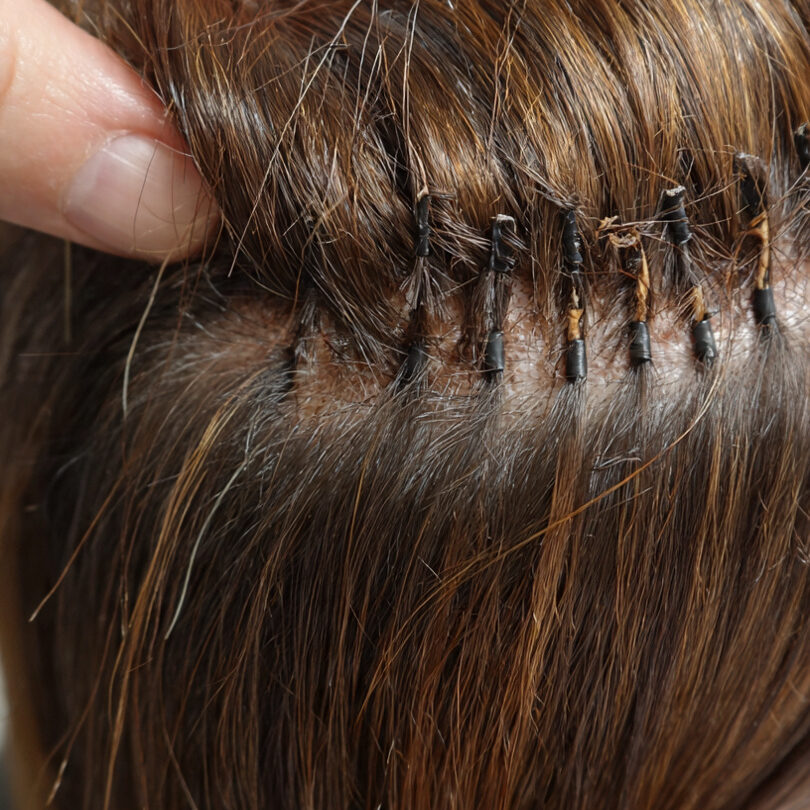
5. Sleeping Habits
Sleeping with wet or tangled extensions can damage them quickly.
Best Practices
- Brush before bed.
- Tie hair in a loose braid or ponytail.
- Sleep on a silk pillowcase.
- Never sleep with wet hair.
These habits prevent tangling and matting.
6. Products You Use
Some hair products contain ingredients that weaken the adhesive.
Avoid:
- Sulfates
- Alcohol-heavy sprays
- Oil-based products near roots
- Silicone buildup
Use extension-safe products instead.
How Often Should Tape-Ins Be Reapplied?
Most stylists recommend moving them up every:
6–8 Weeks
However, this varies depending on hair growth.
Faster Hair Growth
May need reapplication sooner.
Slower Hair Growth
May stretch wear slightly longer.
Never leave them installed too long because:
- Tangling increases
- Hair stress develops
- Bonds become visible
- Removal becomes harder
Can Tape In Extensions Be Reused?
Yes, quality tape-ins are reusable.
Most human hair tape-ins can be reused.
- 3–5 times
- Sometimes more with excellent care
During reinstallation:
- The old adhesive is removed.
- Hair is cleaned.
- New tape tabs are applied.
- Extensions are reinstalled.
Proper maintenance saves money because you won’t need new hair with every appointment.
Signs Your Tape In Extensions Need Replacement
Even high-quality extensions eventually wear out.
Here are common signs it’s time to replace them:
1. Dryness
Extensions feel rough, stiff, or brittle.
2. Excessive Tangling
Hair knots constantly despite brushing.
3. Shedding
Large amounts of hair fall from the wefts.
4. Split Ends
Ends appear frayed and unhealthy.
5. Adhesive Breakdown
The tape in extensions no longer sticks properly.
6. Loss of Shine
Hair looks dull and lifeless.
When multiple signs appear, replacing the extensions is usually best.
How to Make Tape In Extensions Last Longer?
Use Sulfate-Free Shampoo.
Sulfates strip moisture and weaken adhesive.
Choose:
- Gentle cleansers
- Extension-safe formulas
- Lightweight conditioners
Brush Correctly
Use a loop brush or extension brush.
Start:
- From the ends
- Slowly move upward
- Hold roots while brushing
Brush 2–3 times daily to prevent knots.
Avoid Oil Near tape in extensions Bonds
Oil loosens the adhesive quickly.
Apply oils:
- Mid-length to ends only.
- Never directly on the roots.
Dry Bonds Completely
After washing:
- Blow-dry tape in extensions areas thoroughly.
- Avoid leaving roots damp.
Moisture weakens adhesive over time.
Protect Hair While Swimming
Chlorine and saltwater dry out extensions.
Before swimming:
- Wet hair with clean water
- Apply leave-in conditioner
- Braid hair
After swimming:
- Rinse immediately
- Detangle carefully
Limit Heat Styling
Try heatless hairstyles whenever possible.
Excessive curling and straightening shorten extension lifespan dramatically.
Schedule Regular Maintenance
Professional maintenance helps:
- Prevent matting
- Reposition extensions properly
- Protect natural hair
Skipping appointments may lead to damage.
Tape in extensions can damage your hair if they are applied, maintained, or removed incorrectly, but when professionally installed and properly cared for, they are generally considered one of the safest semi-permanent extension methods.
When Tape In Extensions Can Cause Damage
Here are the most common causes of hair damage:
1. Improper Installation
If the extensions are:
- Applied too tightly
- Attached to very small sections of hair
- Too heavy for your natural hair
They can create tension on the roots and lead to breakage or thinning.
2. Poor Removal Technique
Tape-ins should never be pulled out by force.
Incorrect removal can:
- Rip out natural hair
- Cause shedding
- Weaken the roots
Professional stylists use adhesive removers to safely dissolve the tape.
3. Skipping Maintenance
Tape-ins need repositioning every 6–8 weeks because your hair grows naturally.
Leaving them in too long may cause the following:
- Matting at the roots
- Tangling
- Stress on your natural hair
4. Sleeping With Wet Hair
Wet extensions are more likely to tangle and pull on your hair while you sleep.
This can lead to:
- Knots
- Breakage
- Weak roots
5. Excessive Heat and Product Buildup
Too much heat styling or oily products near the tape in extensions can weaken both the adhesive and hair quality.
Signs of Damage From Tape In Extensions
You may notice:
- Hair breakage
- Thinning edges
- Scalp soreness
- Excessive shedding
- Tangling near the roots
If these occur, it’s best to remove the extensions and let your hair recover.
How to Prevent Damage?
Choose a Professional Stylist
Correct application is the most important factor in preventing damage.
Use Lightweight Extensions
Extensions should match your natural hair density.
Heavy extensions on fine hair can strain the roots.
Brush Gently
Use an extension-safe brush and avoid tugging.
Brush:
- Morning
- Before bed
- After washing
Avoid Oil Near the Tape
Oils can loosen the adhesive and cause slipping.
Apply oils only to mid-lengths and ends.
Keep Up With Maintenance
Reinstall tape-ins every 6–8 weeks.
This prevents matting and tension buildup.
Sleep Carefully
- Tie hair in a loose braid
- Use a silk pillowcase
- Never sleep with wet hair
Are Tape-Ins Safer Than Other Extensions?
In many cases, yes.
Compared to:
- Fusion extensions
- Tight sew-ins
- Microbeads
Tape-ins usually:
- Distribute weight more evenly
- Cause less scalp tension
- Feel lighter and more comfortable
That’s why they’re often recommended for people with fine or thin hair.
Tape In Extensions vs. Other Extension Methods
Tape-Ins vs. Clip-Ins
Tape-Ins
- Semi-permanent
- Last week at a time
- More natural
- Lower daily effort
Clip-Ins
- Temporary
- Removed daily
- Easy DIY option
- Less commitment
Tape-Ins vs. Sew-Ins
Tape-Ins
- Lightweight
- Faster installation
- Better for fine hair
Sew-Ins
- Longer salon appointments
- Better for thick hair
- More tension on the scalp
Tape-Ins vs. Fusion Extensions
Tape-Ins
- Reusable
- Faster application
- Less heat damage
Fusion
- Longer-lasting installation
- More expensive
- Harder removal process
Are Tape In Extensions Worth It?
For many people, yes.
Benefits include:
- Natural appearance
- Comfortable wear
- Reusability
- Fast application
- Versatile styling
They are especially ideal for:
- Thin hair
- Medium-density hair
- Adding volume
- Special occasions
- Everyday glam looks
However, they do require ongoing maintenance and proper care.
Cost of Maintaining Tape In Extensions
The total cost depends on:
- Hair quality
- Salon location
- Number of wefts
- Stylist experience
Typical Costs
- Initial installation: $200–$800+
- Maintenance appointments: $100–$300
- Replacement hair: varies by quality
Premium human hair costs more upfront but lasts longer, making it more cost-effective over time.
Common Mistakes That Shorten Lifespan
Using Cheap Products.
Harsh shampoos dry out both hair and epidermis.
Sleeping With Wet Hair.
Causes tangling and weakens bonds.
Overusing Heat Tools.
Dries the extended hair quickly.
Pulling or tugging.
Leads to shedding and breakage.
Skipping Maintenance.
Allows matting and stress on natural hair.
Avoiding these mistakes can add months to an extension’s lifespan.
Best Hair Types for Tape In Extensions.
Tape-ins work best for:
- Fine hair
- Thin hair
- Medium-density hair
- Straight hair
- Wavy hair
People with extremely oily scalps may experience faster bond slippage.
Very coarse or tightly curled hair may require specialized installation techniques.
Can You Exercise With Tape-In Extensions?
Yes, but sweat and oils may affect the adhesive over time.
Tips for Active Lifestyles
- Tie your hair up during workouts
- Dry scalp after sweating
- Wash gently after intense exercise
- Avoid excessive product buildup
With proper care, active individuals can still maintain long-lasting extensions.
Can you tie your hair up with tape in extensions?
Yes, you can absolutely tie your hair up with tape in extensions—but you need to do it carefully to keep the tapes hidden and prevent strain on your natural hair.
Here are the best ways to wear your hair up with tape-ins:
Hairstyles That Work Well
- Low ponytails
- Loose buns
- Braids
- Half-up, half-down styles
- Claw clip styles
- Soft high ponytails (if tapes are placed properly)
Tips to Hide Tape in Extensions
- Leave enough natural hair covering the top rows.
- Avoid pulling hair too tightly.
- Use soft hair ties or scrunchies.
- Tease the crown slightly for extra coverage.
- Position ponytails lower if tapes are visible.
Be Careful With:
- Very tight high ponytails
- Slick-back buns
- Constant tension on extension bonds
Too much pulling can:
- Loosen the adhesive
- Cause discomfort
- Lead to breakage or traction damage over time
Best Placement for Updos
A professional stylist usually installs tape-ins strategically so you can still wear the following:
- ponytails,
- buns,
- and braided styles naturally.
If you frequently wear your hair up, tell your stylist beforehand so they can place the tapes lower and more discreetly.
Pro Tip
Wait at least 48 hours after installation before tying your hair up or washing it. This helps the adhesive fully bond to your natural hair.
How Are Tape-In Extensions Removed?
Removal should always be done carefully.
Stylists use:
- Adhesive remover solution
- Gentle separation techniques
- Detangling methods
Never pull extensions out manually because this can damage natural hair.
Professional removal protects both your hair and reusable extension wefts.
Read more: Can you dye synthetic hair?
How to Know If Your Extensions Are High Quality
Quality extensions:
- Feel soft
- Stay smooth after washing
- Tangle minimally
- Match natural density
- Hold shine over time
Low-quality extensions:
- Shed excessively
- Become dry quickly
- Mates easily
- Have uneven texture
Investing in premium hair improves both appearance and longevity.
Final Thoughts
So, how long do tape-in extensions last?
The answer depends on two things:
- Installation lifespan: around 6–8 weeks before maintenance
- Hair lifespan: approximately 6–12 months with proper care
High-quality human hair extensions combined with professional installation and good maintenance habits can dramatically extend their lifespan. Regular brushing, gentle washing, minimal heat styling, and proper nighttime care all help keep extensions looking beautiful for longer.
Tape-in extensions remain one of the best options for achieving fuller, longer, natural-looking hair without excessive damage. With the right routine, they can stay soft, seamless, and stunning for many months.