Drying your hair may seem like a simple part of your routine, but the way you dry it can greatly affect its health, texture, shine, and strength. Many people unknowingly damage their hair every day by rubbing it aggressively with a towel, using high heat, or brushing it while wet. Over time, these habits can lead to dryness, split ends, frizz, and breakage.
Learning how to dry your hair without damaging it is essential for maintaining healthy, beautiful hair. Whether you have straight, curly, wavy, thick, or fine hair, using the right drying techniques can protect your strands and improve your hair’s overall appearance.
In this complete guide, you’ll learn the safest ways to dry your hair, common mistakes to avoid, the best tools to use, and expert tips for minimizing damage while maximizing shine and softness.
Why Proper Hair Drying Matters
Hair is most vulnerable when it is wet. Water causes the hair shaft to swell, making strands weaker and easier to stretch or break. Rough handling during drying can damage the outer layer of the hair, called the cuticle.
When the cuticle becomes damaged, hair may appear
- Frizzy
- Dull
- Dry
- Brittle
- Tangled
- Split at the ends
Proper drying techniques help preserve the hair cuticle, retain moisture, and reduce stress on your strands.
Common Hair Drying Mistakes
Before learning the correct methods, it’s important to understand which factors damage hair the most.
1. Rubbing Hair with a Towel
One of the biggest mistakes is aggressively rubbing wet hair with a regular bath towel. This creates friction that roughens the cuticle and causes frizz and breakage.
2. Using High Heat
Excessive heat weakens hair proteins and strips moisture from the strands. Frequent exposure can leave dry your hair and fragile.
3. Blow-Drying Soaking Wet Hair
Applying direct heat to dripping-wet hair increases drying time and exposes strands to unnecessary heat damage.
4. Brushing Wet Hair Roughly
Wet hair stretches easily and breaks more quickly. Using the wrong brush or pulling too hard can lead to significant breakage.
5. Drying Hair Every Day
Constant washing and heat styling can gradually weaken hair and reduce natural oils.
Best Ways to Dry Your Hair Without Damage
1. Gently Squeeze Out Excess Water
After washing your hair, avoid twisting or wringing it out forcefully. Instead:
- Use your hands to squeeze out extra water gently.
- Pat her hair softly instead of rubbing.
- Let water drip naturally for a few seconds.
This reduces stress on wet strands.
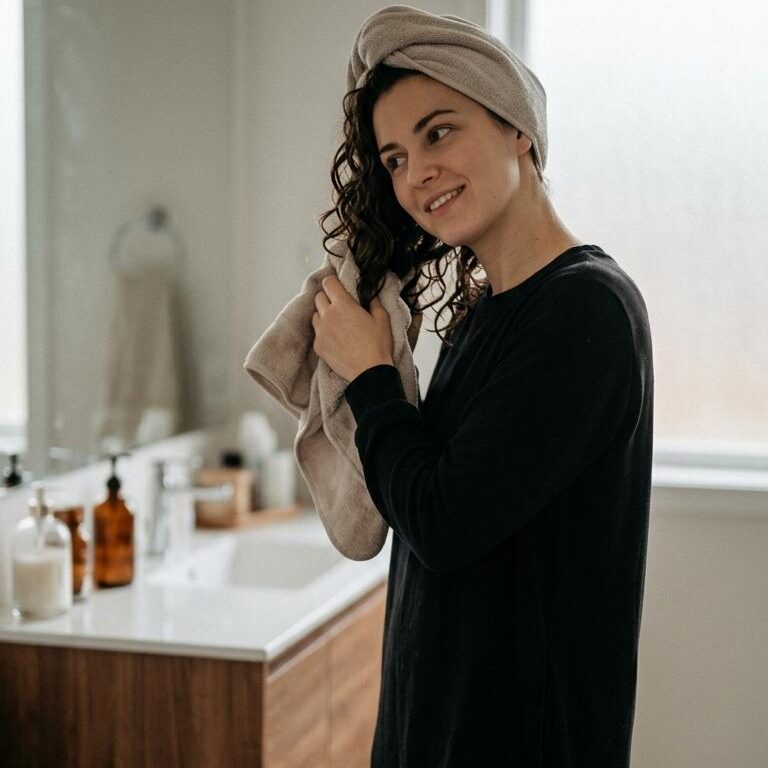
2. Use a Microfiber Towel or Cotton T-Shirt
Traditional towels are rough and can create friction. A microfiber towel or soft cotton T-shirt is much gentler on hair.
Benefits of Microfiber Towels.
- Reduce frizz.
- Absorb water quickly.
- Prevent breakage.
- Minimize tangles.
- Protect curls and waves.
Wrap your hair loosely instead of twisting it tightly.
3. Let Hair Air-Dry Partially.
One of the safest methods is allowing hair to air-dry about 50–70% before using a blow dryer.
This reduces:
- Heat exposure.
- Drying time.
- Moisture loss.
Air-drying partially is especially helpful for damaged or color-treated hair.
4. Apply a heat protectant.
If you use any heated tool, always apply a heat protectant first.
Heat protectants form a shield between your hair and the source of heat. They help:
- Reduce moisture loss.
- Prevent protein damage.
- Smooth the cuticle.
- Add shine.
Spray or distribute evenly through damp hair before blow-drying.
5. Use the Lowest Effective Heat Setting.
High heat is not necessary for healthy drying. Use:
- Medium or low heat.
- Cool settings whenever possible.
Lower temperatures help preserve hair strength and reduce dryness.
Fine or damaged hair especially benefits from cooler settings.
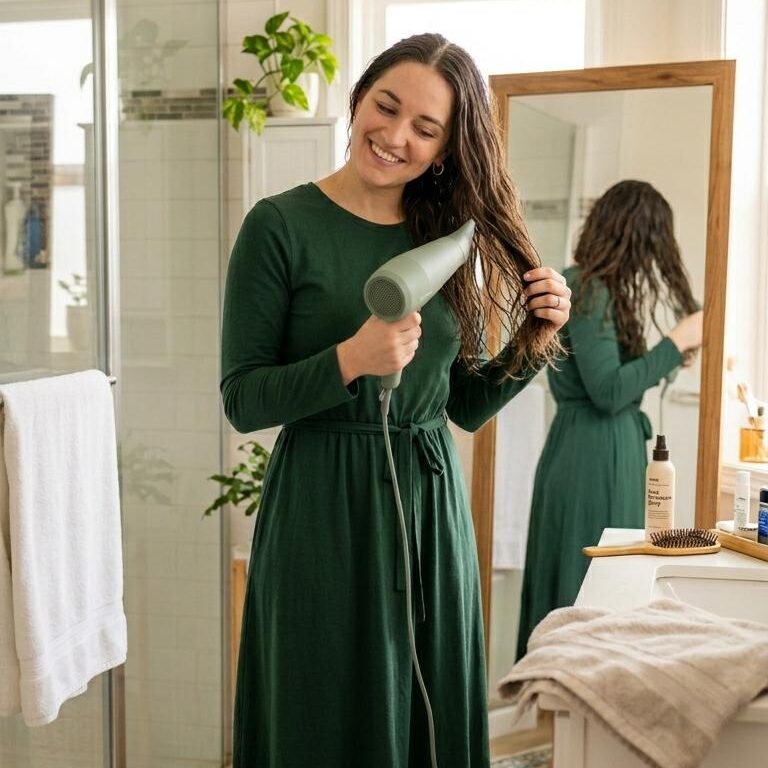
6. Keep the blow dryer moving.
Holding heat in one spot for too long can burn and weaken strands.
Instead:
- Keep the dryer moving constantly.
- Maintain distance from hair.
- Avoid concentrating heat on one section.
Aim the airflow downward to smooth the cuticle and reduce frizz.
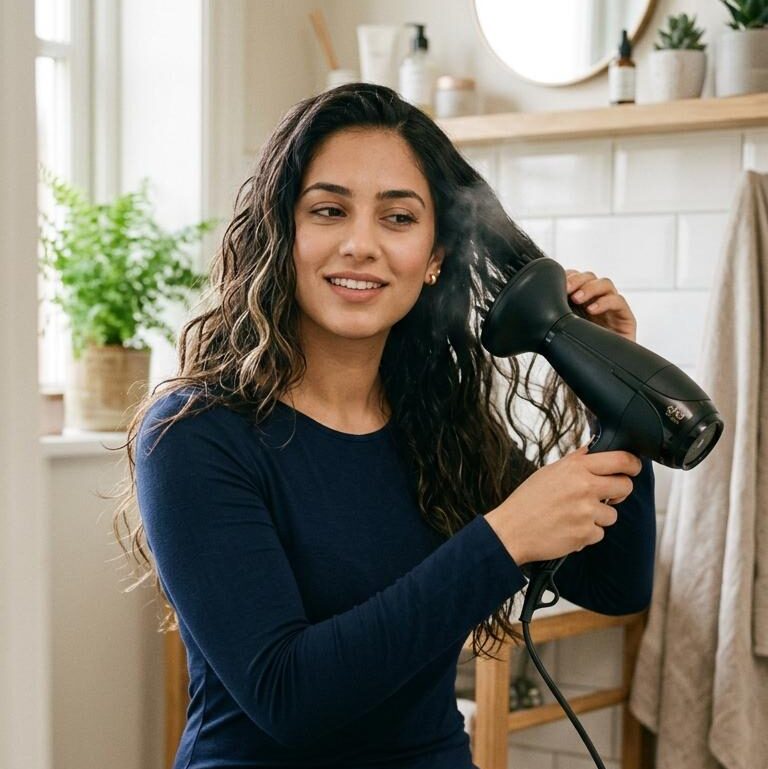
7. Use a blow dryer with ionic technology.
Modern hair dryers with ionic technology help dry hair faster while reducing damage.
Benefits of Ionic Dryers.
- Reduce frizz.
- Lock in moisture.
- Speed up drying.
- Smooth hair cuticles.
- Improve shine.
Ceramic and tourmaline dryers are also gentler than older metal heating models.
8. Finish with Cool Air.
Most blow dryers have a cool-shot button. Using cool air at the end helps the following:
- Seal the cuticle.
- Add shine.
- Reduce frizz.
- Lock in style.
Cool air is much less damaging than continuous heat.
9. Avoid Over-Drying.
Hair does not need to be completely bone-dry. Over-drying removes too much moisture from the hair shaft.
Stop drying once your hair is just dry your hair enough.
10. Detangle Carefully.
Use a wide-tooth comb or detangling brush designed for wet hair.
Start at the ends and slowly work upward to prevent pulling and snapping.
Never yank through knots aggressively.
Air-Drying vs. Blow-Drying.
Many people wonder which method is healthier.
Air-Drying Benefits
- No heat damage
- Better moisture retention
- Less protein damage
Air-Drying Drawbacks
- Hair remains swollen longer
- Can cause frizz
- May weaken hair if wet for too long
Blow-Drying Benefits
- Faster drying
- Less prolonged swelling
- Smoother finish
Blow-Drying Drawbacks
- Heat damage if overused
- Dryness
- Breakage from high temperatures
The Best Solution
A combination method often works best:
- Air-dry partially
- Finish with low-heat blow-drying
This minimizes both water stress and heat damage.
How to dry your hair Curly Hair Without Damage?
Curly hair tends to be naturally drier and more delicate.
Best Curly Hair Drying Tips
- Use a cotton T-shirt or microfiber towel.
This prevents frizz and preserves curl patterns.
- Avoid Rough Handling.
Scrunch curls gently instead of rubbing.
- Apply leave-in conditioner.
Hydration is essential for healthy curls.
- Use a diffuser.
A diffuser attachment spreads airflow evenly and protects curl shape.
- Dry on low heat.
High heat can disrupt curls and create frizz.
How to dry your hair Fine Hair Safely?
Fine hair is more prone to breakage and flattening.
Tips for Fine Hair
- Use lightweight products
- Avoid heavy oils
- Blow-dry on medium heat
- Lift roots gently for volume
- Do not overbrush.
How to dry your hair Thick Hair Without Frizz?
Thick hair takes longer to dry your hair and often becomes frizzy.
Best Methods
- Divide hair into sections
- Use a microfiber towel
- Apply smoothing serum
- Use ionic dryers
- Finish with cool air
Patience is important when drying thick hair.
Best Hair Products for Damage-Free Drying
Heat Protectant Sprays
These reduce heat-related moisture loss and breakage.
Leave-In Conditioners
Help maintain softness and hydration during drying.
Hair Oils
Light oils can seal moisture and smooth frizz.
Popular oils include the following:
- Argan oil
- Coconut oil
- Jojoba oil
Use small amounts to avoid greasiness.
Should You Sleep with Wet Hair?
Sleeping with wet hair is generally not ideal.
Problems with Sleeping on Wet Hair
- Increased breakage
- Frizz
- Tangling
- Scalp irritation
- Flattened hair
Wet hair rubbing against pillows creates friction throughout the night.
If necessary:
- dry your hair partially first
- Use a silk pillowcase
- Braid hair loosely
Best Towels for Hair Drying
Why Regular Towels Are Harmful?
Traditional bath towels have rough fibers that can lift the cuticle.
Better Alternatives
Microfiber Towels
Soft, lightweight, and highly absorbent.
Cotton T-Shirts
Gentle and affordable option for reducing friction.
How Often Should You Blow-Dry Your Hair?
Daily blow-drying can gradually weaken hair, especially at high heat.
For healthier hair:
- Limit heat styling.
- Use low temperatures.
- Give hair rest days.
- Focus on moisture repair.
Signs Your Hair Drying Routine Is Damaging Your Hair
Watch for these warning signs:
- Excessive frizz
- Split ends
- Hair snapping
- Dry texture
- Dullness
- Tangles
- Increased shedding
If you notice these issues, adjust your drying routine immediately.
Natural Ways to Protect Hair During Drying
- Coconut Oil Pre-Treatment
Applying small amounts before washing may reduce protein loss.
- Aloe Vera
Provides lightweight hydration.
- Argan Oil
Adds shine and smoothness.
- Silk Pillowcases
Reduce friction and breakage overnight.
Best Hair Drying Routine for Healthy Hair
Here is a simple step-by-step routine.
Step 1: Wash Gently
Use sulfate-free shampoo and conditioner.
Step 2: Squeeze Out Water
Avoid twisting or wringing.
Step 3: Use a Microfiber Towel
Blot gently.
Step 4: Apply Heat Protectant
Focus on mid-lengths and ends.
Step 5: Air-Dry Partially
Let dry your hair naturally first.
Step 6: Blow-Dry on Low Heat
Keep airflow moving downward.
Step 7: Finish with Cool Air
Seal the cuticle.
Step 8: Add Lightweight Serum
Boost shine and reduce frizz.
Hair Drying Tips for Different Seasons
Summer
- Avoid excessive sun exposure
- Use UV-protecting hair products
- Air-dry more often
Winter
- Prevent dryness with deep conditioning
- Avoid very hot dryers
- Use moisturizing leave-ins
Humidity and temperature can affect how your hair reacts to drying.
Is Air-Drying Always Better?
Not necessarily.
Leaving hair wet for too long may weaken the inner structure of the strand. Hair expands when wet, making it vulnerable to stress.
For many people, partial air-drying followed by gentle blow-drying is the healthiest balance.
How Salons dry your hair Without Damage?
Professional stylists use techniques designed to minimize stress on hair.
These include:
- Heat protectants
- Professional dryers
- Sectioning hair
- Controlled airflow
- Proper brushes
- Moderate temperatures
You can achieve similar results at home with the right tools and patience.
Best Brushes for Blow-Drying
Round Brushes
- Help smooth hair and add volume.
Paddle Brushes
- Best for straight styles.
Boar Bristle Brushes
- Distribute oils and reduce frizz.
- Avoid metal brushes that become too hot and burn hair.
Can Cold Air dry your hair?
Yes. Cold air takes longer but causes far less damage than hot air.
Cool airflow is excellent for:
- Fine hair
- Damaged hair
- Color-treated hair
- Frizz-prone hair
How to Reduce Frizz While Drying Hair?
Frizz often happens when the cuticle becomes rough or raised.
Frizz Prevention Tips
- Avoid rough towels
- Use moisturizing products
- Dry downward
- Finish with cool air
- Avoid over-drying
- Use anti-frizz serum
Hydration is key to smoother hair.
Best Hairstyles While Hair Dries
Protective hairstyles reduce friction and breakage.
Good options include:
- Loose braids
- Twists
- Low buns
- Plopping for curls
Avoid tight hairstyles while the hair is wet.
Is it better to let dry your hair naturally overnight?
Letting your dry your hair naturally overnight is not always the best option. While it avoids heat damage from blow dryers, sleeping with wet hair can create other problems for both your hair and scalp.
Possible Downsides of Sleeping With Wet Hair
Hair Breakage
Wet hair is more fragile than dry your hair. Tossing and turning during sleep creates friction against your pillow, which can lead to the following:
- Breakage
- Split ends
- Frizz
- Tangling
Scalp Issues
Keeping your scalp damp for hours may encourage:
- Irritation
- Itchiness
- Oil imbalance
- Fungal or bacterial growth in some cases
Flat or Frizzy Hair
Hair often dries unevenly overnight, especially if you move a lot in your sleep. You may wake up with:
- Kinks
- Flattened roots
- Frizz
- Misshapen curls
Is Air-Drying Overnight Ever Okay?
It can be okay occasionally if you take precautions, especially if you want to avoid heat styling. It is usually safer when:
- Your hair is just a bit wet, not completely soaked.
- You have healthy hair and a scalp.
- You use protective techniques.
Healthier Overnight Drying Tips
dry your hair Partially First.
Before bed:
- Use a microfiber towel.
- Let hair air dry 50–70%.
- Avoid sleeping with dripping wet hair.
Use a silk or satin pillowcase.
These reduce friction and help prevent the following:
- Frizz
- Breakage
- Tangles
Braid Hair Loosely
A loose braid can help dry your hair more evenly and reduce knots.
Keep Your Room Cool and Ventilated
Air circulation helps dry your hair faster overnight.
Better Alternative: Partial Air-Dry + Blow-Dry
Many hair experts recommend:
- Air-drying partially
- Finishing with a quick blow-dry on low or medium heat
This often gives the best balance between the following:
- Hair health
- Speed
- Smoothness
- Reduced damage
Who Should Avoid Sleeping With Wet Hair?
You may want to avoid it if you:
- Have dandruff or scalp sensitivity
- Have highly damaged or bleached hair
- Experience frequent breakage
- Have thick hair that stays wet for many hours
What is the fastest way to dry your hair?
The fastest way to dry your hair is to remove as much water as possible before using heat, then use a high-airflow blow dryer correctly. Here’s the quickest and healthiest method:
- Gently squeeze out excess water after washing.
- Use a microfiber towel or cotton T-shirt to blot hair for 5–10 minutes.
- Apply a heat protectant spray.
- Detangle your hair with a wide-tooth comb.
- Use an ionic blow dryer on medium heat and high airflow.
- Section your hair so each part dries faster.
- Keep the dryer moving and point airflow downward to reduce frizz.
- Finish with cool air for shine and smoothness.
For even faster results:
- Use a vented brush while drying.
- Dry roots first since they hold the most moisture.
- Avoid heavy styling products before drying.
If you have curly hair, a diffuser attachment helps dry curls faster without creating frizz. Fine hair usually dries quickest with medium heat, while thick hair benefits most from sectioning and strong airflow.
The biggest mistake is trying to blow-dry soaking wet hair immediately. Removing water first can cut drying time almost in half.
Read more: Yoga face before and after
Final Thoughts
Learning how to dry your hair without damaging it can completely transform your hair’s health and appearance. Small changes in your routine—such as using a microfiber towel, reducing heat, applying heat protectant, and handling wet hair gently—can significantly reduce breakage, dryness, and frizz.
Healthy hair drying is not about avoiding all heat forever. It’s about using smarter techniques that protect the hair cuticle while maintaining moisture and strength.
Whether you prefer air-drying, blow-drying, or a combination of both, the key is balance and gentle care. By adopting healthier habits and choosing the right products, you can enjoy softer, shinier, and stronger hair every day. If you have any queries, please don’t hesitate to reach out fajarhafeez117@gmail.com.