Curly hair is naturally beautiful, voluminous, and full of personality, but it also requires extra care to stay healthy. One of the most important steps in a curly hair routine is deep conditioning.
Because curls and coils tend to be drier than straight hair, they need regular moisture to prevent frizz, breakage, and dullness. Deep conditioning helps restore hydration, improve curl definition, and strengthen hair from the inside out.
Whether your curls are loose waves, tight coils, or somewhere in between, learning how to deep condition curly hair properly can completely transform your hair health.
In this complete guide, you’ll learn everything about deep conditioning curly hair, including benefits, techniques, ingredients, mistakes to avoid, and the best homemade treatments.
Why Curly Hair Needs Deep Conditioning
Curly hair has a spiral shape that makes it difficult for natural scalp oils to travel down the hair shaft. As a result, curls often become dry faster than straight hair. Heat styling, coloring, harsh shampoos, weather changes, and product buildup can make the problem worse.
Deep conditioning provides intense moisture and nourishment that regular conditioners cannot deliver.
Benefits of Deep Conditioning Curly Hair
1. Restores Moisture
Deep conditioners penetrate the hair shaft and hydrate dry strands deeply.
2. Reduces Frizz
Hydrated curls are smoother and less likely to puff up in humid weather.
3. Improves Curl Definition
Moisturized curls clump together better, creating more defined curl patterns.
4. Prevents Breakage
Deep conditioning strengthens weak strands and improves elasticity.
5. Adds Shine
Healthy curls reflect light better and look softer and shinier.
6. Helps Detangle Hair
Deep conditioners soften knots and reduce tangles, making wash day easier.
7. Repairs Damage
Ingredients like proteins, oils, and vitamins help repair heat and chemical damage.
What Is Deep Conditioning?
Deep conditioning is a treatment that uses rich, concentrated conditioners designed to penetrate deeper into the hair compared to regular conditioners. These treatments are usually left on the hair for 15 to 45 minutes.
Deep conditioners contain nourishing ingredients such as
- Shea butter
- Coconut oil
- Argan oil
- Aloe vera
- Avocado oil
- Keratin
- Honey
- Proteins
- Fatty acids
Unlike regular conditioners, deep conditioners are meant to provide long-lasting hydration and repair.
How Often Should You Deep Condition Curly Hair?
The frequency depends on your curl type and hair condition.
Once a Week
Ideal for most curly hair types.
Twice a Week
Best for:
- Extremely dry curls
- Bleached hair
- Heat-damaged hair
- High-porosity hair
Every Two Weeks
Suitable for healthy curls that do not feel dry.
Listen to your hair. If your curls feel rough, brittle, or frizzy, they may need more moisture.
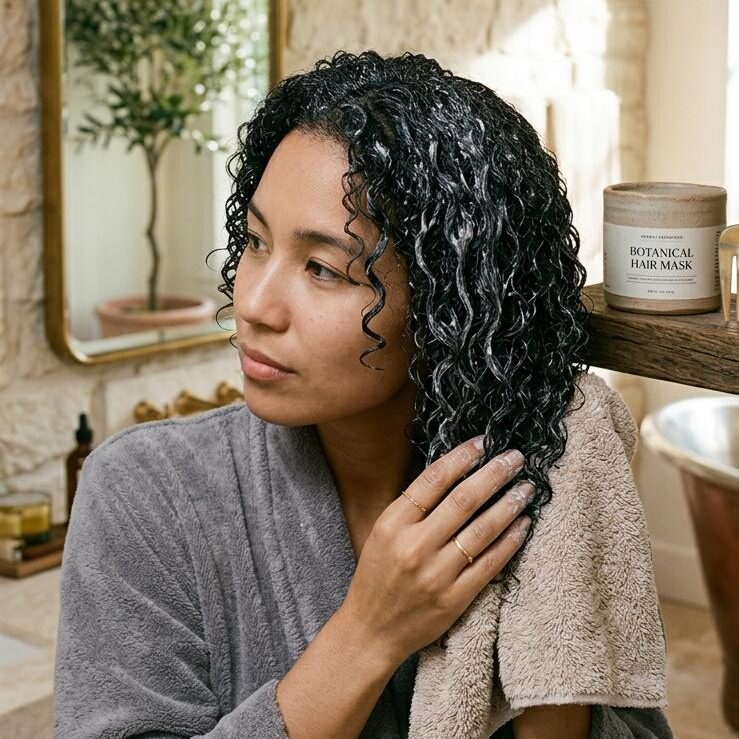
Signs Your Curly Hair Needs Deep Conditioning
Your curls may need deep conditioning if you notice the following:
- Excessive frizz
- Dry texture
- Split ends
- Dullness
- Tangling
- Weak or stretchy strands
- Lack of curl definition
- Breakage during brushing
Deep conditioning regularly can reverse many of these issues over time.
Step-by-Step Guide: How to Deep Condition Curly Hair
Step 1: Start With Clean Hair
Always apply deep conditioner to freshly washed hair.
Use:
- A sulfate-free shampoo
- A gentle cleansing conditioner
- Clarifying shampoo once a month if you have buildup
Clean hair allows the treatment to penetrate properly.
Tip
Avoid shampoos with harsh sulfates because they strip natural oils from curls.
Step 2: Remove Excess Water
After washing, gently squeeze out excess water using the following:
- A microfiber towel
- A cotton T-shirt
Avoid rubbing your hair because it causes frizz and breakage.
Hair should be damp, not dripping wet.
Step 3: Section Your Hair
Curly hair is easier to manage in sections.
Divide your hair into the following:
- 4 sections for medium hair
- 6 to 8 sections for thick or coily hair
Sectioning ensures every curl gets enough product.
Step 4: Apply the Deep Conditioner
Take a generous amount of deep conditioner and apply it from the
- Mid-lengths to ends
- Then lightly near roots if needed
Focus especially on:
- Dry areas
- Damaged ends
- Frizzy spots
Use your fingers or a wide-tooth comb to distribute evenly.
Pro Tip
Use the “praying hands” method by smoothing the product down the hair shaft.
Step 5: Detangle Carefully
Use:
- Fingers
- Wide-tooth comb
- Detangling brush
Always detangle from ends upward to avoid breakage.
Deep conditioner provides slip, making detangling easier.
Step 6: Use Heat for Better Penetration
Heat helps open the hair cuticle so the conditioner absorbs better.
You can use:
- Shower cap
- Warm towel
- Hooded dryer
- Steamer
- Thermal heat cap
Leave the conditioner on for:
- 15–30 minutes
- Up to 45 minutes for very dry hair
Do not leave protein treatments too long.
Step 7: Rinse With Cool Water
Cool water helps:
- Seal the cuticle
- Lock in moisture
- Reduce frizz
- Add shine
Rinse thoroughly but gently.
Step 8: Style Your Curls
After deep conditioning:
- Apply leave-in conditioner
- Use curl cream or gel
- Air-dry or diffuse gently
Your curls should feel softer and more defined.
Best Ingredients for Deep Conditioning Curly Hair
Shea Butter
Excellent for:
- Thick curls
- Coarse hair
- Dry ends
It locks in moisture and softens hair.
Coconut Oil
Helps reduce protein loss and strengthens strands.
Best for:
- Medium to thick curls
Avoid excessive use if your hair becomes stiff.
Aloe Vera
Hydrates curls without heaviness.
Perfect for:
- Fine curls
- Low-porosity hair
Honey
A natural humectant that attracts moisture.
Benefits:
- Adds shine
- Softens hair
- Reduces dryness
Avocado Oil
Rich in vitamins and fatty acids.
Helps:
- Repair damage
- Increase softness
- Improve elasticity
Argan Oil
Known as “liquid gold” for hair.
Benefits:
- Smooths frizz
- Adds shine
- Protects against dryness
Protein
Protein treatments strengthen weak curls.
Best for:
- Chemically treated hair
- Heat damage
- Breakage
Avoid too much protein because it can make curls stiff.
Homemade Deep Conditioning Treatments for Curly Hair
Natural DIY masks can work wonderfully for curls.
1. Avocado and Honey Mask
Ingredients
- 1 ripe avocado
- 2 tablespoons honey
- 2 tablespoons olive oil
Benefits
- Deep hydration
- Softer curls
- Added shine
How to Use
Blend until smooth, apply for 30 minutes, then rinse.
2. Banana and Coconut Milk Mask
Ingredients
- 1 banana
- 1/2 cup coconut milk
- 1 tablespoon coconut oil
Benefits
- Reduces frizz
- Smooths curls
- Moisturizes deeply
Blend completely to avoid banana chunks.
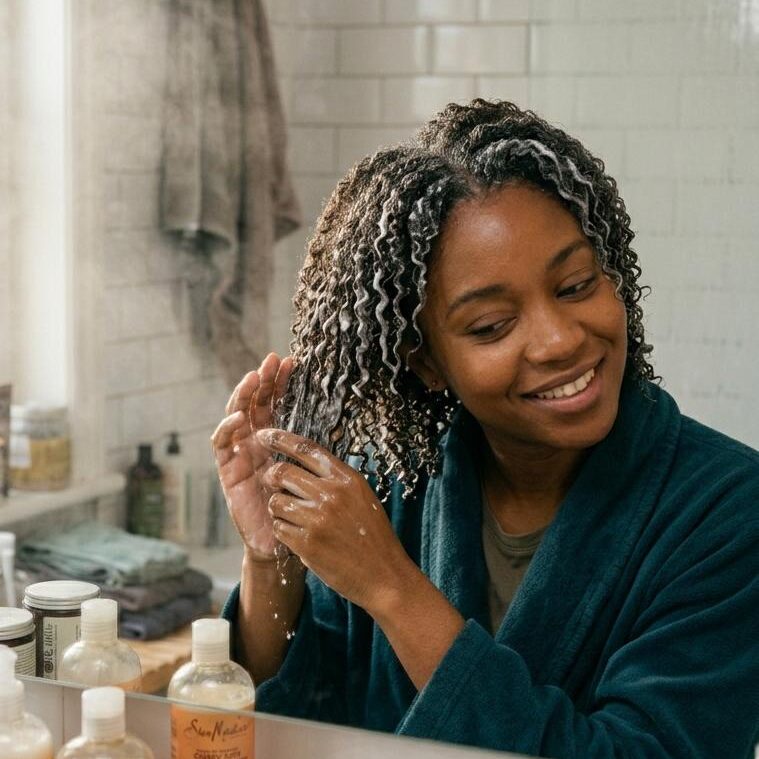
3. Aloe Vera and Yogurt Mask
Ingredients
- 3 tablespoons aloe vera gel
- 1/2 cup yogurt
- 1 tablespoon honey
Benefits
- Soothes scalp
- Hydrates curls
- Improves elasticity
4. Egg and Olive Oil Protein Treatment
Ingredients
- 1 egg
- 2 tablespoons olive oil
Benefits
- Strengthens hair
- Repairs damage
Use once monthly only.
Deep Conditioning Based on Curl Type
Wavy Hair (Type 2)
Needs lightweight moisture.
Best ingredients:
- Aloe vera
- Argan oil
- Lightweight creams
Avoid overly heavy butters.
Curly Hair (Type 3)
Needs balanced hydration and definition.
Best ingredients:
- Shea butter
- Coconut oil
- Avocado oil
Weekly deep conditioning works well.
Coily Hair (Type 4)
Needs intense moisture and sealing.
Best ingredients:
- Castor oil
- Shea butter
- Honey
- Rich creams
Often benefits from twice-weekly treatments.
Deep Conditioning for High-Porosity Curly Hair
High-porosity hair absorbs moisture quickly but loses it fast, too.
Signs
- Frizzy hair.
- Dry ends.
- Fast-drying hair.
Best Tips
- Use heavier conditioners.
- Add protein occasionally.
- Seal with oils.
- Use heat while conditioning.
Deep Conditioning for Low-Porosity Curly Hair
Low-porosity hair struggles to absorb moisture.
Signs
- The product sits on the hair.
- Slow drying.
- Buildup easily.
Best Tips
- Use lightweight products
- Apply heat
- Avoid heavy oils
- Clarify monthly
Protein vs. Moisture: What Curly Hair Needs
Healthy curls need both moisture and protein balance.
Signs You Need Moisture
- Dryness
- Frizz
- Rough texture
Signs You Need Protein
- Weak strands
- Excess shedding
- Mushy wet hair
- Lack of elasticity
Too much protein can make hair hard and brittle.
Common Deep Conditioning Mistakes
1. Skipping Wash Day
Applying deep conditioner to dirty hair reduces effectiveness.
2. Using Too Much Protein
Protein overload causes stiffness and breakage.
3. Leaving Conditioner Overnight Too Often
Over-conditioning can weaken curls.
Occasionally is okay, but not every week.
4. Not Using Heat
Heat improves absorption, especially for low-porosity curls.
5. Applying Unevenly
Section hair carefully for full coverage.
6. Rinsing With Hot Water
Hot water can strip moisture away again.
Should You Deep Condition Before or After Shampoo?
Usually, after shampooing is best because clean hair absorbs nutrients better.
However, some people use “pre-poo” treatments before washing to protect very dry curls.
Can you deep condition overnight?
Yes, but only occasionally.
Benefits
- Extra softness
- Better hydration
Risks
- Hygral fatigue
- Weakened strands
- Limp curls
Use a shower cap and a silk pillowcase if trying overnight conditioning.
Best Practices for Healthy Curly Hair
Deep conditioning works best alongside a healthy routine.
- Use Sulfate-Free Shampoo.
Harsh cleansers dry out curls.
- Sleep on Silk
Silk pillowcases reduce friction and frizz.
- Avoid Excess Heat Styling
Too much heat damages curl patterns.
- Trim Split Ends
Regular trims keep curls healthier.
- Use leave-in conditioner.
Helps maintain moisture between wash days.
Protect Hair From Sun
UV rays can dry out curls.
Wear:
- Hats
- Scarves
- UV-protecting sprays
Deep Conditioning and the Curly Girl Method
The Curly Girl Method encourages:
- Sulfate-free cleansing
- Silicone-free products
- Regular deep conditioning
Deep conditioning is considered essential because it maintains curl hydration naturally.
How Long Does It Take to See Results?
Some benefits appear immediately:
- Softer curls.
- More shine.
- Better definition.
Long-term improvements usually take:
- 4–8 weeks of consistent care.
Consistency matters more than using expensive products.
Best Time to Deep Condition Curly Hair
Many people deep-condition.
- During weekly wash day.
- After swimming.
- After heat styling.
- After coloring hair.
Nighttime treatments are convenient because you can relax while the conditioner works.
Budget-Friendly Deep Conditioning Tips
Healthy curls do not require luxury products.
Affordable ideas:
- DIY masks.
- Drugstore deep conditioners.
- Using steam from a warm shower.
- Mixing oils into conditioner.
Consistency matters more than price.
Natural Oils to Seal Moisture After Deep Conditioning
After rinsing, oils can help lock in hydration.
Best Oils
- Argan oil
- Jojoba oil
- Grapeseed oil
- Castor oil
- Olive oil
Use only a small amount to avoid greasy buildup.
How to Maintain Moisture Between Deep Conditioning Sessions
Refresh Curls Daily
Use:
- Water spray.
- Curl refresher.
- Leave-in conditioner.
Avoid Overwashing.
Washing too often can dry out curls.
Most curly hair does best with:
- 1–3 washes weekly.
Protective Hairstyles
Styles like:
- Braids.
- Twists.
- Buns.
help reduce moisture loss.
Can I use Kerastase on curly hair?
Yes, Kérastase can absolutely be used on curly hair—and the brand even has a dedicated curly hair line called Curl Manifesto designed specifically for curls, coils, and textured hair.
Some of the most popular curly-hair products from the Curl Manifesto range include the following:
- Kérastase Curl Manifesto Bain Hydratation Douceur Shampoo
- Kérastase Curl Manifesto Fondant Hydratation Essentielle Conditioner
- Kérastase Curl Manifesto Masque Beurre Haute Nutrition
These products are made to:
- hydrate dry curls
- reduce frizz
- improve curl definition
- soften hair without weighing it down.
Many curly-haired users on Reddit also report softer, shinier, and more defined curls after using the Curl Manifesto line, especially the mask, leave-in cream, and oil.
However, not every Kérastase product is “Curly Girl Method” friendly. Some lines contain sulfates or silicones, which some curl routines avoid.
If you have:
- dry or frizzy curls → Curl Manifesto works very well.
- fine curls → use lightweight amounts.
- damaged or color-treated curls → the masks and oils can help nourish hair.
For best results:
- Use a moisturizing shampoo.
- Follow with a deep conditioner or mask weekly.
- Apply leave-in cream to damp hair.
- Scrunch curls gently while drying.
Many curl specialists and beauty editors also recommend the Curl Manifesto leave-in products for hydration and curl definition.
Does minoxidil make your hair curlier?
Yes, minoxidil can sometimes make hair appear curlier or change its texture, although this does not happen to everyone. Some people notice that new hair growth after using minoxidil becomes
- Curlier.
- Waiver.
- Thicker.
- Coarser.
- Darker.
This effect is reported fairly often by users treating hair loss, especially during regrowth phases.
Researchers are not completely certain why it happens, but possible reasons include:
- Change the shape of the hair follicle.
- Stimulation of dormant follicles.
- Thicker hair strands are growing back differently.
- Altered growth cycles.
People with naturally wavy or curly hair may notice the change more clearly.
However, results vary:
- Some people see no texture change at all.
- Others only notice temporary waviness.
- A few experience permanent texture changes while using it.
If the hair becomes dry or frizzy while using minoxidil, regular moisturizing and deep conditioning can help maintain softness and curl definition.
Common side effects of minoxidil may include:
- Scalp irritation
- Dryness
- Shedding during the first few weeks
- Itching
If you experience severe irritation or unusual hair changes, it’s best to speak with a dermatologist.
Read more: Best wet hair brush
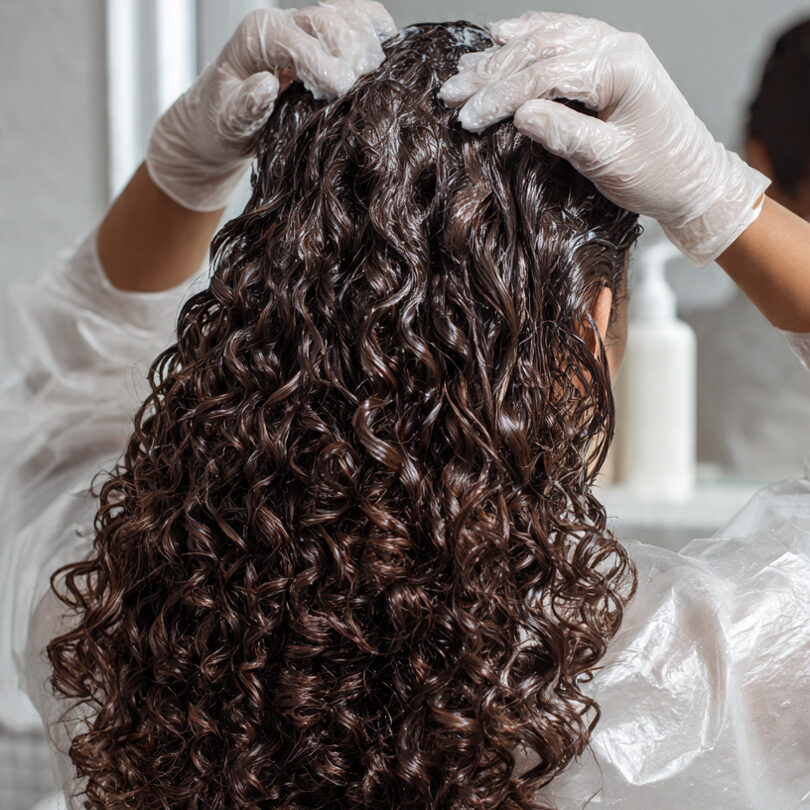
Final Thoughts
Deep conditioning is one of the most powerful ways to keep curly hair healthy, soft, and manageable. Because curls naturally struggle to retain moisture, regular deep conditioning helps restore hydration, reduce frizz, and improve curl definition over time.
The key is consistency. Choosing the right ingredients for your curl type, applying treatments correctly, and maintaining a moisture-protein balance can dramatically improve the condition of your hair. Whether you use store-bought products or homemade masks, deep conditioning should become a regular part of your curly hair routine.
Healthy curls are not about perfection — they are about nourishment, patience, and proper care. With the right deep conditioning routine, your curls can become shinier, stronger, and easier to manage naturally.