Beautiful, healthy hair starts with a healthy scalp. While shampoos, conditioners, and serums can improve the appearance of your hair, ES3 drops chamomile oil. Discover 9 Essential Oils That Will Transform Your Hair by boosting shine, reducing dryness, supporting hair growth, and improving overall scalp health naturally.
Essential oils work deeper by nourishing the scalp, supporting hair strength, reducing dryness, and helping create the ideal environment for growth.
Essential oils have been used for centuries in beauty rituals across cultures. Today, modern research and real-world experiences continue to support the idea that certain oils may improve scalp health, reduce breakage, add shine, and even support hair growth when used correctly.
Oils such as rosemary, peppermint, tea tree, and lavender are especially popular for their potential benefits.
In this complete guide, you’ll discover 9 essential oils that can transform your hair naturally, along with their benefits, how to use them, and important safety tips.
Why Essential Oils Are Good for Hair
Essential oils are concentrated plant extracts obtained through distillation or cold pressing. They contain powerful compounds that may offer benefits such as:
- Improving scalp circulation
- Reducing dandruff and scalp buildup
- Adding moisture and shine
- Supporting stronger hair strands
- Calming scalp irritation
- Reducing breakage
- Supporting healthy hair growth
Research suggests that some oils may help improve scalp conditions and support healthier hair over time when combined with proper hair care practices.
However, essential oils are highly concentrated and should always be diluted with a carrier oil such as coconut oil, jojoba oil, argan oil, or olive oil before use.
1. Rosemary Essential Oil
Why It’s Amazing for Hair
Rosemary oil is often considered the king of hair-growth essential oils. It has become incredibly popular because studies suggest it may help stimulate hair follicles and improve scalp circulation.
A well-known study compared rosemary oil with minoxidil, a common hair-loss treatment, and found similar improvements in hair count after consistent use over several months.
Benefits of Rosemary Oil
- Supports hair growth
- May reduce hair thinning
- Improves scalp circulation
- Helps strengthen roots
- Can reduce scalp itchiness
- Adds shine to dull hair
Best For
- Hair thinning
- Slow hair growth
- Weak roots
- Oily scalp
How to Use Rosemary Oil
Mix:
- 3–5 drops rosemary oil
- 2 tablespoons coconut or jojoba oil
Massage into your scalp for 5 minutes and leave for 30–60 minutes before washing.
Use 2–3 times weekly.
2. Lavender Essential Oil
Why Lavender Oil Is a Hair Favorite
Lavender oil is famous for its calming aroma, but it also offers excellent hair benefits. It has antimicrobial and soothing properties that may support a healthier scalp.
Many people love lavender oil because it can help reduce dryness, irritation, and stress-related hair shedding.
Benefits of Lavender Oil
- Helps soothe the scalp
- May reduce dandruff
- Adds softness and shine
- Supports healthy hair growth
- Helps reduce scalp irritation
- Leaves hair smelling fresh
Best For
- Dry scalp
- Damaged hair
- Stress-related shedding
- Sensitive scalp
How to Use Lavender Oil
Add:
- 4 drops lavender oil
- 2 tablespoons almond oil
Massage gently into your scalp before bedtime and wash the next morning.
3. Peppermint Essential Oil
Cooling and Refreshing for the Scalp
Peppermint oil contains menthol, which creates a cooling sensation and may improve blood circulation around hair follicles. Animal studies have shown promising results for hair growth support.
It also leaves the scalp feeling incredibly fresh and clean.
Benefits of Peppermint Oil
- Stimulates the scalp
- Creates a refreshing sensation
- May support hair growth
- Helps control excess oil
- Can reduce itchiness
Best For
- Oily scalp
- Thin hair
- Hair shedding
- Scalp buildup
How to Use Peppermint Oil
Mix:
- 2–3 drops peppermint oil
- 2 tablespoons carrier oil
Gently apply to the scalp and let it sit for 15–20 minutes.
Avoid using too much because peppermint oil is very strong.
4. Tea Tree Essential Oil
The Ultimate Scalp Cleanser
Tea tree oil is well recognized for its antifungal and antibacterial abilities. It may help remove buildup, unclog follicles, and reduce dandruff.
A clean scalp provides a better setting for hair growth.
Benefits of Tea Tree Oil
- Helps fight dandruff
- Reduces scalp irritation
- Cleans clogged follicles
- Controls excess oil
- May reduce flakes
Best For
- Dandruff
- Oily scalp
- Itchy scalp
- Product buildup
How to Use Tea Tree Oil
Add:
- 2 drops tea tree oil
- Your regular shampoo
Or dilute with coconut oil and massage lightly into the scalp.
Never apply tea tree oil directly without dilution.
5. Cedarwood Essential Oil
Strengthens Hair Naturally
Cedarwood oil is believed to balance oil production in the scalp while supporting stronger hair follicles. It is also popular in many hair-growth blends.
Benefits of Cedarwood Oil
- Helps balance scalp oils
- May reduce hair loss
- Supports thicker-looking hair
- Helps calm scalp irritation
Best For
- Oily scalp
- Hair thinning
- Weak hair strands
How to Use Cedarwood Oil
Mix:
- 3 drops cedarwood oil
- 2 tablespoons jojoba oil
Massage gently into the scalp twice weekly.
6. Ylang-Ylang Essential Oil
Deep Moisture for Dry Hair
Ylang-ylang oil is excellent for people with dry or brittle hair because it helps support natural oil production in the scalp. It is also known for its luxurious floral scent.
Benefits of Ylang-Ylang Oil
- Helps moisturize dry hair
- Reduces breakage
- Adds softness
- Improves hair texture
- May support scalp health
Best For
- Dry hair
- Curly hair
- Brittle ends
- Frizzy hair
How to Use Ylang-Ylang Oil
Blend:
- 3 drops ylang-ylang oil
- 2 tablespoons argan oil
Apply to the scalp and hair lengths for extra softness.
7. Lemongrass Essential Oil
Powerful Against Dandruff
Lemongrass oil has antimicrobial properties that may help reduce dandruff and scalp irritation.
It also makes the scalp feel clean and revitalized.
Benefits of Lemongrass Oil
- Helps reduce flakes.
- Cleanses the scalp.
- Controls oiliness.
- Adds freshness.
Best For
- Dandruff.
- Greasy scalp.
- Scalp irritation.
How to Use Lemongrass Oil
Add:
- 2 drops lemongrass oil.
- To your shampoo or conditioner.
Use 2–3 times weekly.
8. Clary Sage Essential Oil
Supports Hair Strength
Clary sage oil contains compounds that may help support healthy hair and reduce breakage. Some research suggests it may support hair growth by influencing scalp health.
Benefits of Clary Sage Oil
- Helps strengthen strands.
- Adds shine.
- May reduce hair fall.
- Supports scalp balance.
Best For
- Weak hair.
- Breakage.
- Dull hair.
How to Use Clary Sage Oil
Mix:
- 3 drops of clary sage oil.
- 2 tablespoons coconut oil.
Rub it into the scalp and let it sit for 30 minutes.
9. Chamomile Essential Oil
Gentle and Soothing for Sensitive Scalps
Chamomile oil is perfect for calming irritation and adding softness to hair. It is especially loved by people with dry or sensitive scalps.
Benefits of Chamomile Oil
- Soothes irritation.
- Adds shine.
- Softens hair.
- Helps calm inflammation.
Best For
- Sensitive scalp.
- Dry hair.
- Frizz.
- Dull hair.
How to Use Chamomile Oil
Blend:
- 3 drops of chamomile oil.
- 2 tablespoons of sweet almond oil.
Use as a relaxing scalp massage treatment.
Best Carrier Oils to Mix With Essential Oils
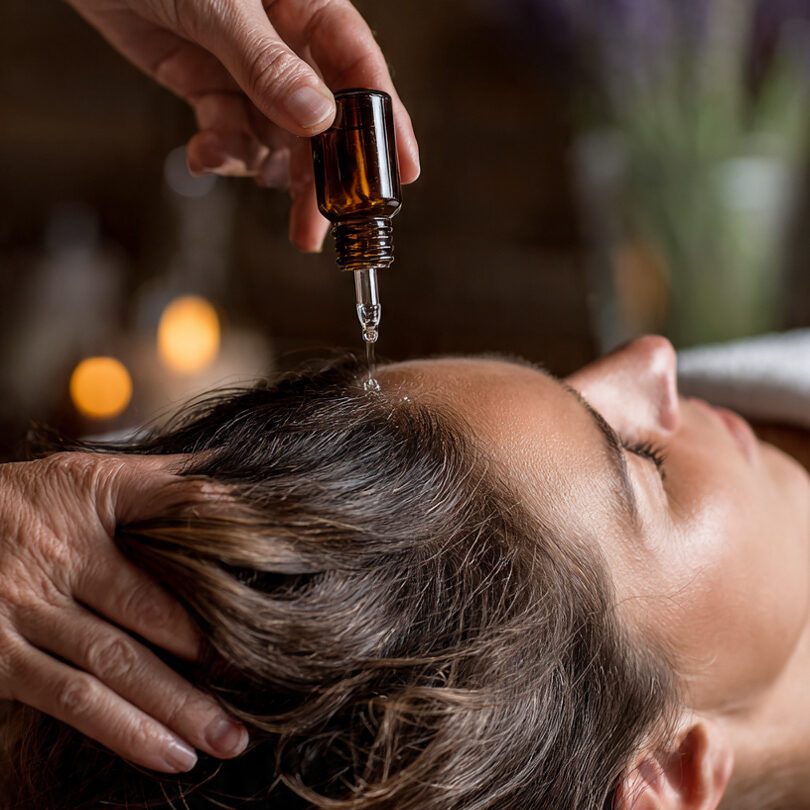
Essential oils must not be used directly on the scalp without being diluted.
Here are the best carrier oils:
| Carrier Oil | Benefits |
| Coconut Oil | Deep moisture and reduced protein loss |
| Jojoba Oil | Balances scalp oils |
| Argan Oil | Adds shine and softness |
| Olive Oil | Nourishes dry hair |
| Castor Oil | Thick texture for dry ends |
| Almond Oil | Lightweight hydration |
How to Use Essential Oils Safely
Essential oils are powerful, so proper use is important.
Safety Tips
- Always dilute essential oils.
- Do a patch test first.
- Avoid contact with eyes.
- Stop use if irritation occurs.
- Don’t overuse strong oils like peppermint or tea tree.
- Use only a few drops at a time.
Research and experts warn that undiluted essential oils may cause irritation or allergic reactions.
DIY Essential Oil Hair Growth Blend
Try this simple blend for healthier-looking hair.
Ingredients
- 2 tablespoons of coconut oil.
- 1 tablespoon of castor oil.
- 4 drops of rosemary oil.
- 3 drops of peppermint oil.
- 3 drops of lavender oil.
Instructions
- Mix all oils together.
- Massage into scalp for 5 minutes.
- Leave for 1 hour.
- Wash with gentle shampoo.
Use twice weekly.
Common Mistakes to Avoid
1. Using Too Much Oil
More oil does not mean better results. Overuse may clog follicles or irritate the scalp.
2. Applying Oils Undiluted
Always mix with a carrier oil.
3. Expecting Overnight Results
Hair growth takes time. Most people need several months of consistent use.
4. Ignoring Scalp Health
Healthy hair begins with a healthy scalp.
Do Essential Oils Really Help Hair Growth?
Essential oils are not miracle cures for baldness, but some may support healthier hair growth by improving scalp condition and circulation and reducing inflammation. Research is promising, especially for rosemary oil, though more human studies are still needed.
Many users online also report improvements in scalp health, reduced shedding, and stronger hair when using oils consistently and safely.
Can oil reverse hair loss?
Some oils may help support healthier hair growth and reduce certain types of hair shedding, but oils usually cannot fully reverse significant hair loss or baldness on their own.
Certain essential oils — especially rosemary oil — have shown promising results for improving scalp circulation and supporting hair growth.
A few studies even found rosemary oil performed similarly to minoxidil for mild androgenetic hair loss after several months of consistent use. However, results vary from person to person.
Oils may help if your hair loss is related to:
- Dry or unhealthy scalp.
- Breakage.
- Mild thinning.
- Stress-related shedding.
- Scalp inflammation.
Helpful oils include:
- Rosemary oil.
- Peppermint oil.
- Tea tree oil.
- Lavender oil.
- Castor oil (mainly for moisture and reducing breakage).
But oils are less effective for:
- Advanced baldness.
- Hormonal hair loss.
- Genetic male/female pattern baldness.
- Medical conditions causing hair loss.
For best results:
- Use oils consistently for 3–6 months.
- Massage gently into the scalp.
- Combine with a healthy diet, good sleep, and proper hair care.
If hair loss is severe, sudden, or patchy, it’s best to see a dermatologist because conditions like alopecia, thyroid problems, anemia, or hormonal issues may need medical treatment.
Which is more effective for hair growth, rosemary or peppermint oil?
Both can help, but rosemary oil is generally considered better for hair growth overall because it has stronger human research behind it. Peppermint oil is more stimulating and refreshing, but most of its evidence comes from animal studies rather than human trials.
Here’s a simple comparison:
| Characteristic | Rosemary Essential Oil | peppermint essential oil |
| Research strength | Stronger human evidence | Mostly animal studies |
| Best for | Thinning hair and long-term growth | Oily scalp and scalp stimulation |
| Sensation | Warm and mild | Strong cooling/tingling |
| Scalp irritation risk | Lower | Higher |
| Growth timeline | Slower but steadier | Faster stimulation feeling |
| Good for dandruff/oil | Moderate | Very good |
Research suggests rosemary oil may perform similarly to low-strength minoxidil for some people with pattern hair thinning after several months of consistent use.
Peppermint oil may improve circulation and follicle activity, but experts say there is not enough strong human evidence yet to prove it works as reliably for hair regrowth.
Best Choice by Hair Type
- Choose rosemary oil if you have:
- Hair thinning.
- Hair shedding.
- Slow hair growth.
- Weak roots.
- Choose peppermint oil if you have:
- Oily scalp.
- Itchy scalp.
- Product buildup.
- Want a cooling scalp treatment.
Can You Use Both Together?
Yes — many people combine them.
A popular blend:
- 3 drops of rosemary oil.
- 2 drops of peppermint oil.
- 2 tablespoons of coconut or jojoba oil.
Massage into the scalp 2–3 times weekly.
Just remember:
- Always dilute essential oils.
- Peppermint oil can irritate sensitive scalps.
- Results usually take 3–6 months of consistent use.
How can I stimulate hair growth?
Hair growth improves when you focus on scalp health, nutrition, and reducing damage. There’s no instant fix, but consistent habits can help stimulate stronger, healthier hair over time.
1. Massage Your Scalp Regularly
Scalp massage may improve blood circulation to hair follicles.
- Massage for 5 minutes daily.
- Use fingertips gently.
- You can combine it with oils like rosemary oil.
2. Use Rosemary Oil
Rosemary oil is one of the most researched natural oils for hair growth.
Try this mix:
- 3–5 drops of rosemary oil.
- 2 tablespoons of coconut or jojoba oil.
Massage into scalp 2–3 times weekly.
3. Eat More Protein
Hair is mostly made of protein, so low protein intake can slow growth.
Good foods:
- Eggs
- Fish
- Chicken
- Lentils
- Yogurt
- Nuts
4. Fix Vitamin Deficiencies
Low iron, vitamin D, zinc, or biotin may contribute to shedding.
Important nutrients:
- Iron
- Vitamin D
- Zinc
- Omega-3s
- Biotin
If hair loss is severe, a blood test can help identify deficiencies.
5. Reduce Heat and Chemical Damage
Too much heat styling, bleaching, or tight hairstyles can weaken hair.
Avoid:
- Daily straightening.
- Tight ponytails.
- Frequent bleaching.
- Harsh shampoos.
6. Keep Your Scalp Clean
A healthy scalp supports healthier growth.
- Wash regularly based on your scalp type.
- Treat dandruff early.
- Avoid heavy product buildup.
7. Sleep and Stress Management
Stress can trigger hair shedding.
Helpful habits:
- Sleep 7–9 hours.
- Exercise regularly.
- Reduce chronic stress.
- Stay hydrated.
8. Try Minoxidil if Needed
For genetic hair thinning, minoxidil is one of the most proven treatments. It may help regrow hair when used consistently for several months.
9. Be Consistent
Hair grows slowly. Average growth is about:
0.5 inches/month ≈ 1.25 cm/month
Most people need 3–6 months to notice visible improvement.
Signs Your Hair Is Growing Healthier
- Less shedding.
- Baby hairs around hairline.
- Stronger strands.
- More shine.
- Reduced breakage.
If you have sudden, patchy, or severe hair loss, it’s best to see a dermatologist because hormonal issues, thyroid problems, anemia, or alopecia may require medical treatment.
Read more: How to fix dry hair naturally
Final Thoughts
Essential oils can be a powerful addition to your hair care routine when used correctly. Whether you struggle with dryness, dandruff, breakage, or thinning hair, the right oil may help transform your scalp and strands naturally.
Here’s a quick recap:
- Rosemary oil: best for growth support.
- Lavender oil: best for soothing the scalp.
- Peppermint oil: best for stimulation.
- Tea tree oil: best for dandruff.
- Cedarwood oil: best for balancing scalp oils.
- Ylang-ylang oil: best for dry hair.
- Lemongrass oil: best for flakes.
- Clary sage oil: best for strengthening.
- Chamomile oil: best for sensitive scalps.
Consistency matters most. Use essential oils regularly, combine them with healthy hair habits, and be patient with the results. Healthy, shiny, stronger hair starts at the root.