Dry skin can feel tight, flaky, itchy, and uncomfortable. Weather changes, hot showers, harsh soaps, aging, and dehydration can all strip the skin of its natural moisture. When your skin feels rough and dehydrated, two products usually come to mind: body oil and body lotion. But which one is actually better for dry skin?
The response relies on your skin type, lifestyle, environment, and skincare objectives. Some people love the rich nourishment of body oils, while others prefer the lightweight hydration of lotions. Both products can improve dry skin, but they work in different ways.
In this detailed guide, you’ll learn everything about body oil vs. lotion for dry skin, including benefits, differences, ingredients, how to use them correctly, and which one may work best for your skin.
Understanding Dry Skin
Before comparing body oil and lotion, it helps to understand what dry skin really is.
Dry skin happens when the skin barrier loses moisture and natural oils. This makes the skin unable to retain hydration properly. As a result, the skin may become
- Rough
- Cracked
- Dull
- Tight
- Itchy
- Sensitive
- Flaky
Common causes of dry skin include:
- Cold weather
- Hot showers
- Aging
- Harsh soaps
- Low humidity
- Sun exposure
- Dehydration
- Over-exfoliation
The main goal of skincare for dry skin is to restore hydration and lock moisture into the skin barrier.
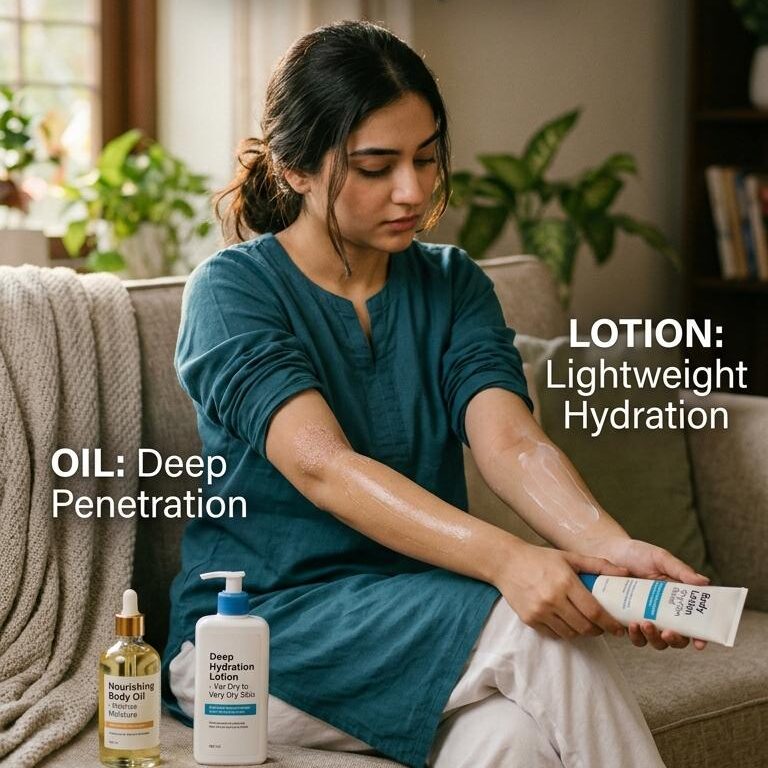
What Is Body Lotion?
Body lotion is a water-based moisturizer designed to hydrate and soften the skin. It usually contains a mix of the following:
- Water
- Humectants
- Emollients
- Oils
- Preservatives
Lotions are thin and penetrate the skin rapidly.
How Lotion Works
Body lotion mainly hydrates the skin by adding water and moisture-binding ingredients. Many lotions contain humectants like
- Glycerin
- Hyaluronic acid
- Aloe vera
These ingredients pull moisture into the skin and help keep it soft.
Benefits of Body Lotion for Dry Skin
1. Provides Instant Hydration
Lotions contain water, which helps hydrate dry skin quickly. Your skin often feels softer immediately after application.
2. Lightweight Texture
Many people prefer lotion because it feels lighter and less greasy than oil.
3. Fast Absorption
Lotion absorbs quickly, making it ideal for daytime use.
4. Easy to Layer
You can easily use sunscreen, perfume, or clothing after applying lotion.
5. Available for Different Skin Types
There are lotions made specifically for:
- Sensitive skin
- Eczema-prone skin
- Mature skin
- Very dry skin
What Is Body Oil?
Body oil is an oil-based skincare product designed to nourish and seal moisture into the skin. Unlike lotion, body oil contains little or no water.
Common body oils include:
- Coconut oil
- Almond oil
- Jojoba oil
- Argan oil
- Olive oil
- Rosehip oil
How Body Oil Works
Body oil forms a shield on the skin. Instead of adding water, it locks existing moisture into the skin and prevents water loss.
This makes body oil especially useful for extremely dry or flaky skin.
Benefits of Body Oil for Dry Skin
1. Deep Nourishment
Body oils are rich in fatty acids and vitamins that nourish dry skin deeply.
2. Locks in Moisture
Oil acts as a sealant that prevents moisture from escaping.
3. Gives Skin a Healthy Glow
Body oil leaves the skin looking smooth, radiant, and healthy.
4. Helps Repair the Skin Barrier
Natural oils support the skin’s protective barrier.
5. Ideal for Very Dry Areas
Body oils work especially well on:
- Elbows
- Knees
- Heels
- Hands
Body Oil vs. Lotion: Main Differences
| Feature | Body Lotion | Body Oil |
| Base | Water-based | Oil-based |
| Texture | Lightweight | Rich and silky |
| Absorption | Fast | Slower |
| Hydration | Adds moisture | Locks moisture |
| Finish | Soft and matte | Glowy and dewy |
| Best For | Mild to moderate dryness | Very dry or flaky skin |
| Feel on the skin | Non-greasy | Can feel oily |
| Application | Anytime | Best after shower |
Which is better for dry skin?
Both products help dry skin, but the best choice depends on your needs.
Choose lotion if…
- You dislike greasy textures.
- You need quick hydration.
- You live in a humid climate.
- You want something lightweight.
- You need daytime moisture.
Choose Body Oil If
- Your skin is extremely dry.
- You have flaky patches.
- Your skin barrier feels damaged.
- You want long-lasting softness.
- You love glowing skin.
Can You Use Body Oil and Lotion Together?
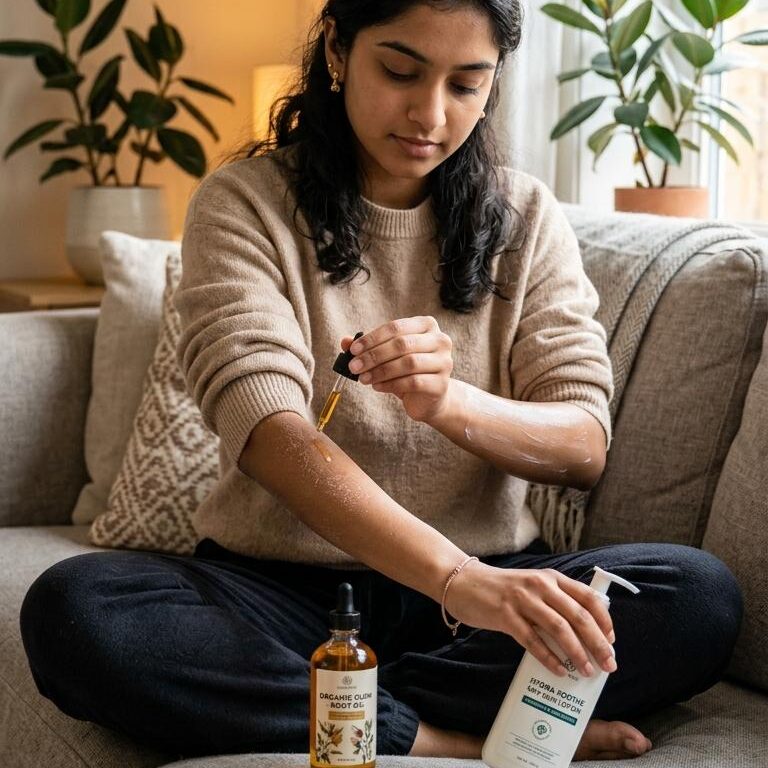
Yes, and this is often the best solution for very dry skin.
Using lotion and body oil together provides both hydration and moisture sealing.
Correct Layering Method
- Apply lotion first to hydrate the skin.
- Apply body oil afterward to lock in moisture.
This technique helps the skin stay soft longer.
Best Time to Apply Body Oil
The best time to apply body oil is right after a shower, while your skin is still slightly damp.
Damp skin helps the oil spread more easily and traps hydration inside the skin.
Tips for Applying Body Oil
- Use only a small amount
- Warm it between your palms
- Massage gently into damp skin
- Focus on dry areas
Best Time to Apply Lotion
You can apply lotion.
- After showering
- Before bed
- During the day
- After hand washing
Lotions are versatile and convenient for daily use.
Ingredients to Look for in Lotion for Dry Skin
1. Hyaluronic Acid
Helps attract moisture into the skin.
2. Glycerin
A powerful humectant that hydrates deeply.
3. Ceramides
Help repair the skin barrier.
4. Shea Butter
Softens rough, dry skin.
5. Oat Extract
Soothes irritation and sensitivity.
Ingredients to Look for in Body Oils
1. Jojoba Oil
Closely resembles the skin’s natural oil.
2. Argan Oil
Rich in vitamin E and antioxidants.
3. Almond Oil
Softens and smooths dry skin.
4. Coconut Oil
Provides intense moisture.
5. Rosehip Oil
Supports skin repair and improves texture.
Body Oil vs. Lotion in Winter
Winter weather can make dry skin worse because cold air and indoor heating reduce humidity.
Lotion in Winter
- Lotion helps replenish hydration quickly but may not last all day in harsh weather.
Body Oil in Winter
- Body oil creates a protective layer that helps prevent moisture loss.
- For winter dryness, many people benefit from using both together.
Body Oil vs. Lotion for Sensitive Skin
Sensitive skin needs gentle products without strong fragrances or harsh ingredients.
Lotion for Sensitive Skin
Look for fragrance-free lotions with:
- Ceramides
- Oatmeal
- Aloe vera
Body Oil for Sensitive Skin
Gentle oils include:
- Jojoba oil
- Squalane oil
- Sunflower oil
Always patch-test new products first.

Is Body Oil Greasy?
Some body oils can feel greasy if too much is used.
To avoid greasiness:
- Apply to damp skin
- Use a small amount
- Choose lightweight oils like jojoba or squalane
Modern body oils are often designed to absorb faster than traditional oils.
Is lotion enough for extremely dry skin?
Sometimes lotion alone may not be enough for severe dryness, especially in winter or for mature skin.
Signs you may need body oil too include the following:
- Persistent flaking
- Tightness after moisturizing
- Cracked skin
- Ashy appearance
- Rough texture
Adding oil to lotion can improve results significantly.
Body Oil vs. Lotion for Aging Skin
As skin ages, it naturally produces less oil and becomes drier.
Benefits of Lotion for Aging Skin
- Hydrates fine lines
- Improves softness
- Supports elasticity
Benefits of Body Oil for Aging Skin
- Adds glow
- Reduces dullness
- Nourishes deeply
Many mature skin types benefit from combining both.
Natural Oils vs. Commercial Lotions
Some people prefer pure natural oils, while others enjoy formulated lotions.
Natural Oils
Pros:
- Minimal ingredients.
- Rich nourishment.
- No water content.
Cons:
- Can feel heavy.
- May stain clothes.
- Some oils clog pores.
Commercial Lotions
Pros:
- Lightweight.
- Convenient.
- Balanced formulas.
Cons:
- May contain preservatives.
- Some include fragrances.
How Climate Affects Your Choice
Hot and Humid Weather
- Lotions usually feel more comfortable because they are lighter.
Cold and Dry Weather
- Body oils may protect the skin better against moisture loss.
Common Mistakes When Using Body Oil or Lotion
1. Applying to Completely Dry Skin
Moisturizers work better on slightly damp skin.
2. Using Too Much Product
Surplus product might remain on the skin without being absorbed.
3. Skipping Moisturizer After Hot Showers
Hot water strips natural oils from the skin.
4. Ignoring Ingredients
Some fragrances and alcohols can worsen dryness.
5. Inconsistent Use
Daily moisturizing gives the best results.
How to Build the Perfect Dry Skin Routine
Morning Routine
- Use a gentle cleanser
- Apply lotion
- Use sunscreen
Night Routine
- Take a lukewarm shower
- Apply lotion to damp skin
- Seal with body oil if needed
Consistency is the key to healthy, soft skin.
DIY Body Oil Blend for Dry Skin
You can create a simple homemade body oil blend.
Ingredients
- 2 tablespoons almond oil
- 1 tablespoon jojoba oil
- 1 tablespoon argan oil
Instructions
Mix the oils in a clean bottle and apply a few drops after showering.
Signs Your Moisturizer Is Working
Your skincare routine is helping if your skin becomes
- Softer
- Smoother
- Less flaky
- Less itchy
- More comfortable
- More radiant
Results usually improve with regular use over several weeks.
Why Is Lotion Important for Daily Skin Hydration?
Lotion plays an important role in keeping the skin healthy, soft, and hydrated every day. Our skin naturally loses moisture because of weather changes, hot showers, sun exposure, air conditioning, and harsh soaps.
Without proper hydration, the skin can become dry, flaky, rough, and irritated. Using lotion daily helps restore lost moisture and protects the skin barrier.
- One of the main benefits of lotion is that it contains water-based ingredients and humectants like glycerin or hyaluronic acid. These ingredients attract moisture to the skin and help keep it hydrated for longer periods. Daily application can improve skin texture and make the skin feel smoother and more comfortable.
- Lotion also helps strengthen the skin’s natural protective barrier. When the skin barrier is healthy, it can better defend against dryness, pollution, and environmental damage. This is especially important for people with dry or sensitive skin.
- Another reason lotion is important is that it helps prevent itching and tightness caused by dehydration. Using lotion post-shower is among the most effective methods to seal in moisture on the skin while it’s still a bit wet.
- Regular use of lotion can also improve the appearance of the skin by reducing dullness and making the skin look healthier and more radiant. Lightweight lotions are ideal for daytime use because they absorb quickly without leaving a greasy feeling.
For the best results, choose a lotion with nourishing ingredients like ceramides, shea butter, aloe vera, or vitamin E and use it consistently every day.
FAQs About Body Oil vs. Lotion for Dry Skin
1. Is body oil superior to lotion for dry skin?
Body oil is better for locking in moisture, while lotion is better for adding hydration. Numerous individuals achieve optimal outcomes by utilizing both simultaneously.
2. Can I use body oil every day?
Yes, body oil can be used daily, especially after showering on damp skin.
3. Should I apply oil before or after lotion?
Apply lotion first, then body oil to seal in moisture.
4. Which body oil is best for dry skin?
Jojoba oil, almond oil, argan oil, and coconut oil are popular choices for dry skin.
5. Can body oil replace lotion?
Body oil can help with dryness, but it may not provide enough hydration alone because it lacks water-based ingredients.
6. Is lotion or oil better for winter?
Body oil often works better in winter because it helps prevent moisture loss in cold weather.
7. Can oily skin use body oil?
Yes, lightweight oils like jojoba oil can work well even for oily skin.
8. Why does my skin still feel dry after lotion?
Your skin may need a richer moisturizer or an oil layer to seal in hydration.
9. Is body oil good for itchy skin?
Indeed, moisturizing oils can aid in alleviating itchiness resulting from dryness.
10. Can I mix body oil with lotion?
Yes, some people mix a few drops of oil into lotion for extra moisture and softness.
Final Verdict: Body Oil or Lotion?
There is no single winner in the body oil vs. lotion debate. Both products serve important roles in skincare.
- Lotion hydrates the skin.
- Body oil seals and nourishes the skin.
For mild dryness, lotion may be enough. For severe dryness, body oil can provide extra protection and softness. Many dermatologists recommend using both together for the best results.
Read more: Good skin care for dry skin
The ideal choice depends on your skin’s needs, your climate, and your personal preference. The most important thing is to use moisturizer consistently every day. For any questions, feel free to contact fajarhafeez117@gmail.com.