Dry hair is one of the most common hair concerns affecting people of all ages and hair types. When hair lacks moisture, it becomes rough, dull, frizzy, and difficult to manage. Discover the best salon treatment for dry hair to restore moisture, repair damage, reduce frizz, and leave your hair soft, shiny, smooth, and healthy-looking.
Heat styling, chemical treatments, pollution, sun exposure, and poor hair care habits can all strip natural oils from the hair shaft. While home remedies and moisturizing products can help, salon treatments often provide deeper hydration and faster results.
Professional salon treatments are designed to repair damaged hair, replenish moisture, smooth the cuticle, and improve overall hair texture. Whether your hair is mildly dry or severely damaged, there are specialized treatments available to restore softness and shine.
This complete guide explains everything you need to know about salon treatments for dry hair, including causes, best professional treatments, benefits, costs, aftercare, and frequently asked questions.
What Causes Dry Hair?
Before choosing a salon treatment, it is important to understand why hair becomes dry in the first place.
- Lack of Natural Oils
The scalp naturally produces sebum, an oil that moisturizes hair. When oil production decreases or fails to spread through the hair shaft, dryness develops.
- Heat Styling
Frequent use of flat irons, curling wands, and blow dryers removes moisture from the hair cuticle.
- Chemical Treatments
Hair coloring, bleaching, rebonding, perming, and relaxing can weaken the hair structure and cause dehydration.
- Weather Conditions
Cold weather, dry air, wind, and excessive sun exposure can strip moisture from hair.
- Hard Water
Mineral buildup from hard water prevents moisture absorption and leaves hair rough.
- Overwashing
Washing hair too often removes natural oils and can make hair brittle.
- Poor Diet
Nutrient deficiencies, especially low intake of healthy fats, vitamins, and proteins, may contribute to dry hair.
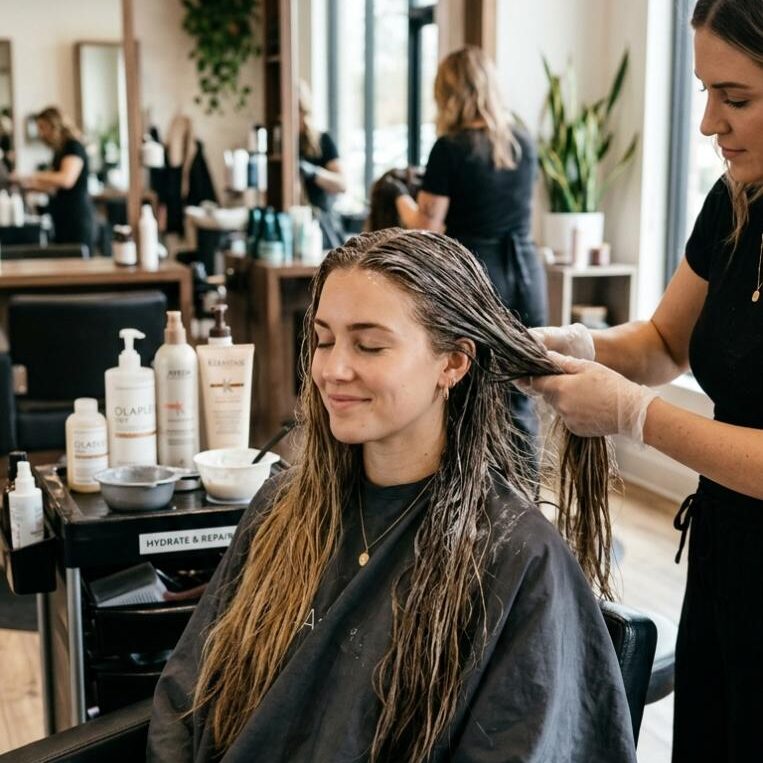
Signs You Need a Salon Treatment for Dry Hair
You may benefit from professional hair treatment if you notice:
- Rough or straw-like texture
- Split ends
- Excessive frizz
- Dull appearance
- Tangling easily
- Hair breakage
- Lack of elasticity
- Difficulty styling
- Faded hair color
- Brittle hair after bleaching
Salon treatments target these issues more effectively than regular conditioners.
Benefits of Salon Treatments for Dry Hair
Professional treatments offer deeper nourishment than home products because they contain concentrated ingredients and advanced technology.
- Deep Hydration.
Salon masks and therapies penetrate the hair shaft and restore lost moisture.
- Repair Damage.
Many treatments contain proteins, keratin, amino acids, and vitamins that strengthen weakened strands.
- Reduce frizz.
Professional smoothing treatments help seal the hair cuticle for smoother hair.
- Improve shine.
Hydrated hair reflects light better, making it look glossy and healthy.
- Increase manageability.
Moisturized hair becomes softer and easier to detangle.
- Protect Hair.
Some treatments create a protective barrier against heat, pollution, and humidity.
Best Salon Treatments for Dry Hair
Different salon treatments target dryness in different ways. The best option depends on your hair type and damage level.
1. Deep Conditioning Treatment
What Is It?
A deep conditioning treatment uses rich moisturizing masks infused with oils, proteins, vitamins, and humectants.
How It Works
The stylist applies a thick conditioner and uses steam or heat to help ingredients penetrate deeply into the hair shaft.
Benefits
- Adds instant softness
- Reduces frizz
- Improves shine
- Restores moisture
- Affordable option
Best For
- Mild to moderate dryness
- Curly hair
- Heat-damaged hair
Duration
Usually 30–45 minutes.
Results Last
About 1–2 weeks, depending on the hair care routine.
2. Hair Spa Treatment
What Is It?
Hair spa therapy combines massage, cleansing, steaming, and deep conditioning for complete scalp and hair nourishment.
Steps Involved
- Hair wash
- Scalp massage
- Application of hair cream or mask
- Steam treatment
- Rinse and blow-dry
Benefits
- Hydrates dry strands
- Improves scalp circulation
- Relaxes the scalp
- Reduces dryness and dullness
- Helps repair damage
Best For
- Dry and stressed hair
- Frizzy hair
- Dull hair
Duration
Around 60–90 minutes.
3. Keratin Treatment
What Is It?
Keratin treatment infuses hair with keratin protein to smooth and strengthen strands.
How It Helps Dry Hair
Dry hair often has raised cuticles. Keratin seals these cuticles, helping hair retain moisture.
Benefits
- Reduces frizz
- Makes hair smoother
- Adds shine
- Improves manageability
- Protects from humidity
Best For
- Frizzy dry hair
- Chemically treated hair
- Thick hair
Drawbacks
Some keratin formulas contain formaldehyde or similar chemicals. Overuse may weaken hair over time.
Duration
2–4 hours.
Results Last
2–5 months with sulfate-free products.
4. Olaplex Treatment
What Is It?
Olaplex is a bond-building treatment designed to repair broken hair bonds caused by bleaching and chemical damage.
How It Works
It reconnects broken disulfide bonds inside the hair structure.
Benefits
- Strengthens damaged hair
- Reduces breakage
- Restores elasticity
- Improves softness
- Helps retain moisture
Best For
- Bleached hair
- Color-damaged hair
- Severely dry hair
Duration
45–60 minutes.
Results Last
Several weeks with proper maintenance.
5. Cysteine Treatment
What Is It?
Cysteine treatment smooths hair using amino acids and proteins instead of harsh chemicals.
Benefits
- Reduces frizz
- Hydrates hair
- Makes hair silky
- Less damaging than rebonding
- Adds shine
Best For
- Dry, frizzy hair
- Wavy hair
- Medium damage
Duration
2–3 hours.
Results Last
Around 2–4 months.
6. Protein Treatment
What Is It?
Protein treatments replenish proteins lost due to chemical processing and heat damage.
Ingredients Commonly Used
- Keratin
- Silk proteins
- Wheat proteins
- Collagen
Benefits
- Strengthens weak hair
- Reduces breakage
- Improves elasticity
- Repairs damage
Best For
- Brittle hair
- Weak hair
- Overprocessed hair
Important Note
Too much protein can make hair stiff, so balance it with moisture treatments.
7. Hot Oil Treatment
What Is It?
Warm oils are applied to the hair and scalp to deeply nourish dry strands.
Oils Commonly Used
- Argan oil
- Coconut oil
- Olive oil
- Almond oil
- Jojoba oil
Benefits
- Restores softness
- Adds shine
- Reduces dryness
- Improves scalp health
Best For
- Natural hair
- Curly hair
- Mild dryness
8. Botox Hair Treatment
What Is It?
Hair Botox is a deep conditioning treatment that coats hair fibers with proteins, vitamins, and amino acids.
Benefits
- Repairs damaged hair
- Reduces frizz
- Smooths hair texture
- Adds softness and shine
Best For
- Aging hair
- Frizzy dry hair
- Chemically treated hair
Duration
1–2 hours.
Results Last
2–4 months.
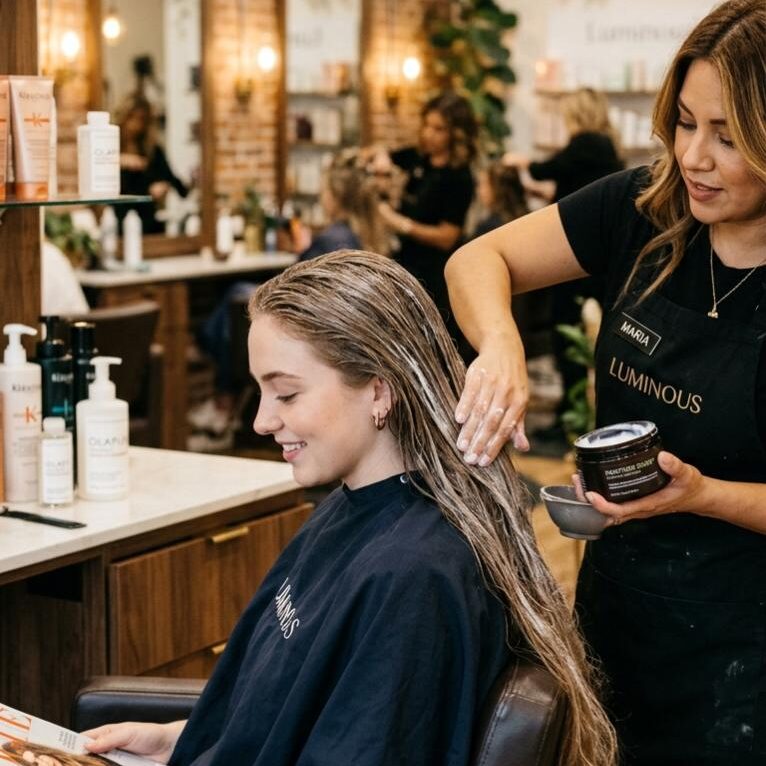
Best Salon Treatments Based on Hair Type
Curly Hair
Best options:
- Hair spa
- Hot oil treatment
- Deep conditioning
Curly hair naturally tends to be drier because scalp oils struggle to travel down the curls.
Bleached Hair
Best options:
- Olaplex
- Protein treatment
- Hair Botox
Bleached hair often has severe structural damage and requires bond repair.
Fine Hair
Best options:
- Lightweight deep conditioning
- Hair spa
- Mild protein treatment
Heavy treatments may weigh fine hair down.
Thick Frizzy Hair
Best options:
- Keratin treatment
- Cysteine treatment
- Hair Botox
These treatments help smooth thick hair and control frizz.
How Much Do Salon Treatments for Dry Hair Cost?
Prices vary based on location, salon reputation, hair length, and treatment type.
| Treatment | Average Cost |
| Deep Conditioning | $20–$60 |
| Hair Spa | $30–$100 |
| Hot Oil Treatment | $25–$70 |
| Protein Treatment | $40–$120 |
| Olaplex Treatment | $40–$100 |
| Keratin Treatment | $150–$400 |
| Hair Botox | $100–$300 |
| Cysteine Treatment | $120–$350 |
Luxury salons may charge more.
How to Prepare Before a Salon Treatment
Avoid Heavy Oils.
Do not apply thick oils before your appointment unless instructed.
Share hair history.
Tell your stylist about:
- Coloring
- Bleaching
- Relaxers
- Heat damage
- Allergies
Clarify Your Goals.
Explain whether you want:
- Moisture
- Frizz control
- Repair
- Smoothness
- Strengthening
Aftercare Tips for Salon-Treated Hair
Salon results last longer with proper maintenance.
- Use sulfate-free shampoo.
Harsh shampoos strip moisture and reduce treatment longevity.
- Limit heat styling.
Excessive heat can reverse treatment benefits.
- Deep condition weekly.
Maintain moisture with nourishing masks.
- Avoid Frequent Washing.
Wash hair 2–3 times weekly if possible.
- Protect Hair While Sleeping.
Use silk pillowcases or satin bonnets to reduce friction.
- Use leave-in conditioner.
Leave-in products help maintain hydration throughout the day.
Natural Ingredients Commonly Used in Salon Treatments
- Argan Oil
Rich in vitamin E and fatty acids for hydration and shine.
- Shea Butter
Deeply moisturizes dry, coarse hair.
- Keratin
Strengthens and smooths damaged strands.
- Aloe Vera
Hydrates and soothes the scalp.
- Coconut Oil
Penetrates deeply into the hair shaft to reduce protein loss.
- Hyaluronic Acid
Attracts moisture and helps maintain hydration.
Can Salon Treatments Damage Hair?
Some treatments are safe when done correctly, while others may damage hair if overused.
Low-Risk Treatments
- Deep conditioning
- Hair spa
- Hot oil therapy
- Olaplex
Treatments That May Cause Damage
- Frequent keratin treatments
- Excessive protein treatments
- Chemical straightening
Choosing an experienced stylist reduces risks significantly.
How Often Should You Get Salon Treatments?
Mild Dryness
- Every 4–6 weeks.
Severe Damage
- Every 2–4 weeks initially.
Keratin or cysteine treatments
- Every 3–5 months.
Hair Spa
- Twice monthly for very dry hair.
- Your stylist can create a customized schedule based on your hair condition.
DIY vs. Salon Treatments
DIY Treatments
Advantages:
- Affordable
- Convenient
- Natural ingredients
Disadvantages:
- Slower results
- Less penetration
- Limited repair ability
Salon Treatments
Advantages:
- Professional-grade products.
- Immediate visible results.
- Advanced repair technology.
Disadvantages:
- More expensive.
- Some treatments contain chemicals.
Many people combine both for the best results.
Lifestyle Tips to Prevent Dry Hair
Salon treatments work best alongside healthy habits.
Drink Enough Water.
- Hydration supports healthy hair growth.
Eat Nutrient-Rich Foods.
Include:
- Salmon
- Eggs
- Nuts
- Avocados
- Leafy greens
Protect Hair from the Sun.
- Wear hats or UV-protectant sprays.
Avoid Overwashing.
- Too much shampooing strips natural oils.
Trim Split Ends.
- Regular trims prevent further damage.
Common Myths About Dry Hair Treatments
Myth 1: Oily Hair Cannot Be Dry
Even oily scalps can have dry hair lengths and ends.
Myth 2: Trimming Hair Fixes Dryness
Trims help remove split ends but do not restore moisture.
Myth 3: Expensive Treatments Always Work Better
Effectiveness depends on hair type and the stylist’s expertise.
Myth 4: Keratin Treatments Repair Hair Completely
Keratin smooths hair but does not permanently heal internal damage.
Read more: How to fix dry hair naturally
Choosing the Right Salon
Not all salons specialize in hair repair.
- Look for Experienced Stylists
Check reviews and before-and-after photos before you make a decision.
- Ask About Products Used
High-quality professional products produce better results.
- Request Consultation
A proper hair analysis helps determine the best treatment.
- Avoid Unrealistic Promises
No treatment can permanently “cure” damaged hair overnight.
FAQs About Salon Treatment for Dry Hair
1. Which salon treatment is best for extremely dry hair?
Olaplex, deep conditioning, hair botox, and hair spa treatments are excellent for extremely dry hair because they deeply hydrate and repair damage.
2. How long do salon treatments for dry hair last?
Results vary by treatment. Deep conditioning may last 1–2 weeks, while keratin and cysteine treatments can last several months.
3. Are salon treatments safe for colored hair?
Yes, many treatments are designed specifically for color-treated hair. Olaplex is especially popular for bleached or colored hair.
4. Can salon treatments repair split ends?
Most treatments temporarily smooth split ends, but trimming is the only permanent solution.
5. Is keratin treatment good for dry hair?
Keratin treatments can help dry, frizzy hair by smoothing the cuticle and locking in moisture, but overuse may weaken hair.
6. How often should I get a hair spa for dry hair?
Many people benefit from a hair spa every 2–4 weeks, depending on hair condition.
7. Can I wash my hair after a salon treatment?
Some treatments require waiting 48–72 hours before washing, while others can be washed sooner. Follow your stylist’s instructions.
8. What is better for dry hair: protein or moisture treatment?
Dry hair usually needs moisture first. Protein treatments help if hair is weak, stretchy, or breaking.
9. Are natural salon treatments effective?
Yes, treatments using oils, aloe vera, shea butter, and botanical ingredients can effectively improve dryness.
10. Can salon treatments stop hair breakage?
Professional treatments can reduce breakage by strengthening and hydrating hair, especially when combined with proper home care.
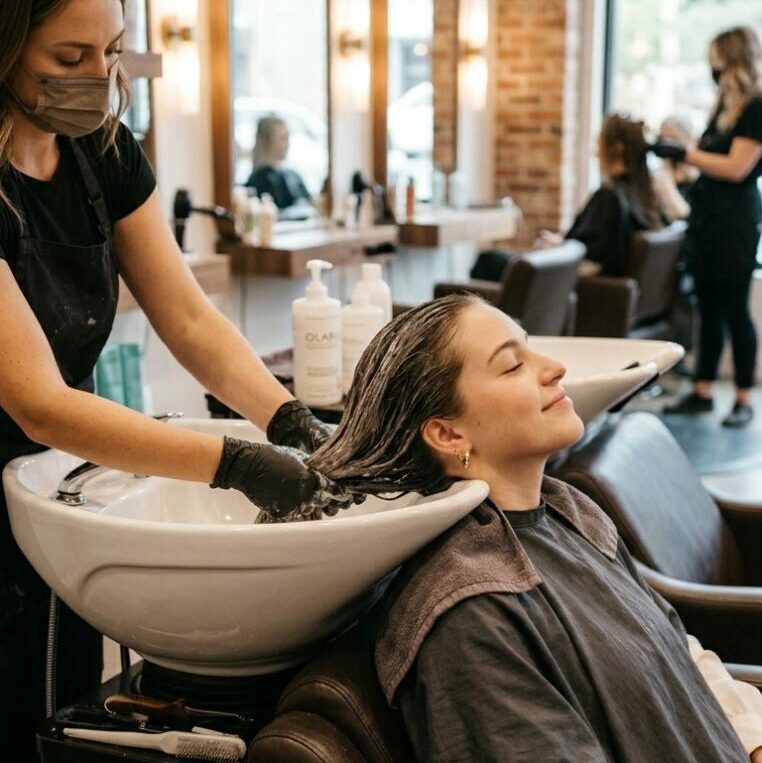
Conclusion
Salon treatments for dry hair can dramatically improve softness, shine, hydration, and manageability. Whether you choose a simple deep conditioning service or advanced bond-repair therapy, professional treatments help restore moisture and strengthen damaged strands.
The best treatment depends on your hair type, texture, and level of damage. Deep conditioning and hair spa treatments work well for mild dryness, while Olaplex, Hair Botox, and keratin treatments are better suited for severe damage and frizz control.
Healthy hair also requires consistent aftercare. Using moisturizing products, reducing heat styling, eating a balanced diet, and protecting hair from environmental stress will help maintain salon results longer.
With the right treatment plan and proper hair care routine, dry and brittle hair can become softer, shinier, healthier, and easier to manage. If you have any queries, please don’t hesitate to reach out fajarhafeez117@gmail.com.