Laser treatments can transform the skin by improving acne scars, unwanted hair, hyperpigmentation, fine lines, and uneven texture. But for years, people with melanin-rich skin were often told to avoid lasers completely because of the higher risk of burns, scarring, and post-inflammatory hyperpigmentation (PIH).
Thankfully, modern laser technology has changed that.
Today, several advanced laser systems are considered much safer for deeper Melanin-Rich skin tones when performed by experienced professionals using the correct settings. Dermatologists now recommend longer wavelengths, lower energy levels, and non-ablative technologies for Fitzpatrick Melanin-Rich skin types IV, V, and VI.
In this guide, you’ll learn:
- Why melanin-rich skin needs special laser care
- Which lasers are safest for darker skin tones
- Which treatments to avoid
- Benefits, risks, downtime, and results
- Expert aftercare tips for preventing hyperpigmentation
Why Laser Treatments Can Be Risky for Melanin-Rich Skin
Laser devices work by targeting pigment, heat, or water in the skin. Because darker skin contains more melanin, certain lasers may accidentally target healthy skin instead of just the treatment area.
This can lead to:
- Burns
- Blisters
- Hyperpigmentation
- Hypopigmentation
- Scarring
- Uneven skin tone
Research shows that longer wavelength lasers, such as 1064 nm Nd: YAG, are generally safer because they penetrate deeper while bypassing much of the epidermal melanin.
The key isn’t avoiding lasers entirely—it’s choosing the right technology and the right provider.
Understanding Fitzpatrick Skin Types
Dermatologists classify skin using the Fitzpatrick scale:
| Skin Type | Description |
| I | Very fair skin |
| II | Fair skin |
| III | Medium skin |
| IV | Olive or light brown skin |
| V | Brown skin |
| VI | Deep brown to black skin |
Melanin-rich skin usually falls into Types IV–VI. These skin types are more prone to pigment changes after inflammation or injury.
What Makes a Laser Safe for Darker Skin?
Safe laser treatments for deeper skin tones usually share several characteristics:
1. Longer Wavelengths
Longer wavelengths penetrate deeper into the skin and avoid excessive absorption by surface melanin.
Examples include:
- 1064 nm Nd: YAG
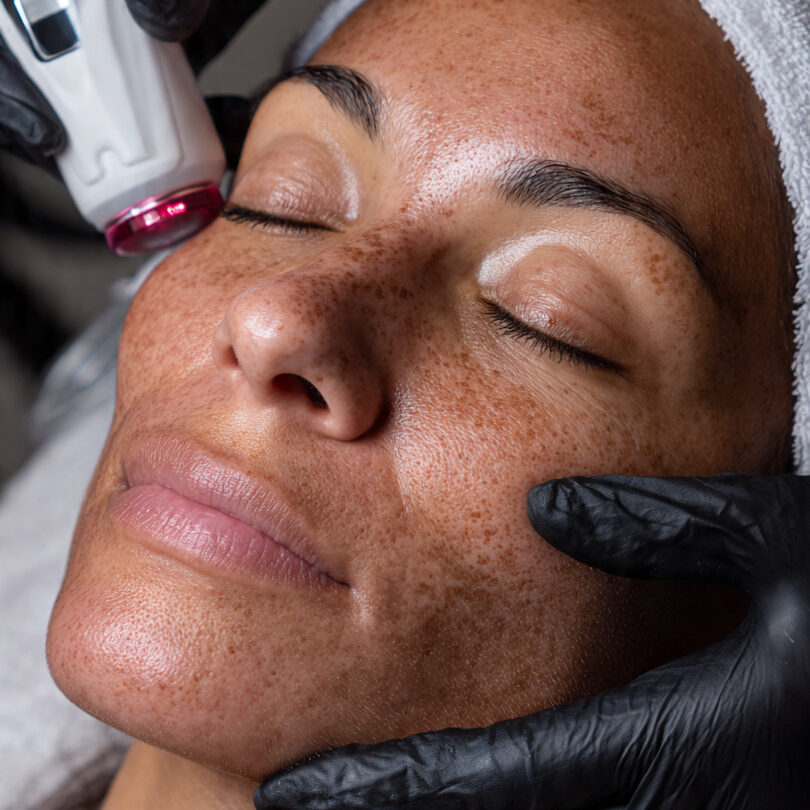
- 1540–1550 nm fractional lasers
2. Non-Ablative Technology
Non-ablative lasers heat the skin without removing the outer layer, lowering the risk of discoloration.
3. Cooling Systems
Modern devices often include the following:
- Contact cooling
- Cryogen spray cooling
- Air cooling
These protect the epidermis during treatment.
4. Conservative Settings
Experienced practitioners use:
- Lower influence
- Fewer passes
- Longer pulse durations
This minimizes thermal injury.
1. Nd: YAG Laser
The Nd: YAG laser is widely considered the gold standard for melanin-rich skin. 1064 nm
Best For
- Laser hair removal
- Hyperpigmentation
- Acne
- Skin rejuvenation
- Vascular concerns
Why It’s Safe
The 1064 nm wavelength penetrates deeply while bypassing much of the melanin in the epidermis. This dramatically lowers the risk of burns and pigmentation changes.
Benefits
- Safe for Fitzpatrick IV–VI
- Effective for coarse hair
- Lower risk of PIH
- Minimal downtime
Possible Side Effects
- Temporary redness
- Mild swelling
- Dryness
Recovery Time
Usually 1–3 days.
2. Moxi Laser
The Moxi laser has become extremely popular for preventative skincare and gentle resurfacing.
Best For
- Sun damage
- Uneven skin tone
- Mild pigmentation
- Texture improvement
Why It’s Safe
Moxi targets water instead of melanin, reducing the risk of overheating darker Melanin-Rich skin .
Benefits
- Gentle resurfacing
- Little downtime
- Suitable for beginners
- Safe for year-round use in many cases
Downtime
Typically, 2–5 days of mild redness and roughness.
3. Clear + Brilliant
Often called a “baby Fraxel,” Clear + Brilliant is a gentler fractional laser treatment.
Best For
- Early aging
- Texture
- Mild acne scars
- Hyperpigmentation
- Enlarged pores
Why It’s Safe
Unlike aggressive ablative lasers, Clear + Brilliant uses lower energy levels and fractional technology, making it safer for darker skin when used properly.
Benefits
- Brightens skin.
- Minimal downtime.
- Helps maintain collagen.
- Less aggressive than CO₂ lasers.
Downtime
1–4 days.
4. PicoSure Laser
PicoSure uses ultra-short picosecond pulses rather than continuous heat.
Best For
- Acne scars
- Dark spots
- Melasma
- Tattoo removal
- Uneven texture
Why It’s Safe
The laser delivers energy in extremely fast bursts, reducing heat damage to surrounding tissue.
Benefits
- Lower heat exposure
- Effective pigmentation treatment
- Improved collagen production
- Short recovery period
Risks
Improper settings can still trigger PIH, so provider experience matters greatly.
5. NeoClear Laser
NeoClear is designed specifically for acne treatment.
Best For
- Active acne
- Acne inflammation
- Acne-related pigmentation
Why It’s Safe
This laser minimizes inflammation while targeting acne-causing bacteria and sebaceous activity.
Benefits
- Less irritation
- Safe for darker skin
- Helps reduce acne breakouts
- Minimal downtime
Downtime
Usually mild redness for a few hours.
6. GentleMax Pro
The GentleMax Pro combines Alexandrite and Nd: YAG technologies.
Best For
- Hair removal
- Pigmentation
- Skin rejuvenation
Why It’s Safe
For melanin-rich skin, providers typically use the Nd: YAG component because it’s safer for deeper skin tones.
Benefits
- Effective hair reduction
- Fast treatment sessions
- Cooling system improves comfort
Important Note
The Alexandrite setting may not be suitable for very Melanin-Rich skin unless used cautiously by highly experienced professionals.
7. Palomar Lux 1540 Fractional Laser
This non-ablative fractional laser is commonly used for resurfacing.
1540\ \text{nm}
Best For
- Acne scars
- Stretch marks
- Fine lines
- Texture improvement
Why It’s Safe
Research suggests non-ablative fractional lasers in the 1540–1550 nm range can safely treat acne scars in Melanin-Rich skin when conservative settings are used.
Benefits
- Stimulates collagen
- Improves skin texture
- Lower risk than ablative resurfacing
Downtime
3–7 days.
8. Nano-Fractional Radio Frequency
Although technically not a laser, nano-fractional radio frequency is often grouped with laser resurfacing treatments.
Best For
- Skin tightening
- Texture
- Acne scars
- Fine lines
Why It’s Safe
It uses radiofrequency energy rather than pigment-targeting light, making it safer for melanin-rich skin.
Benefits
- Less pigmentation risk.
- Collagen stimulation.
- Minimal downtime.
- Good alternative to aggressive lasers.
Lasers: Melanin-Rich Skin Should Avoid
Some lasers still carry higher risks for darker skin tones.
These include:
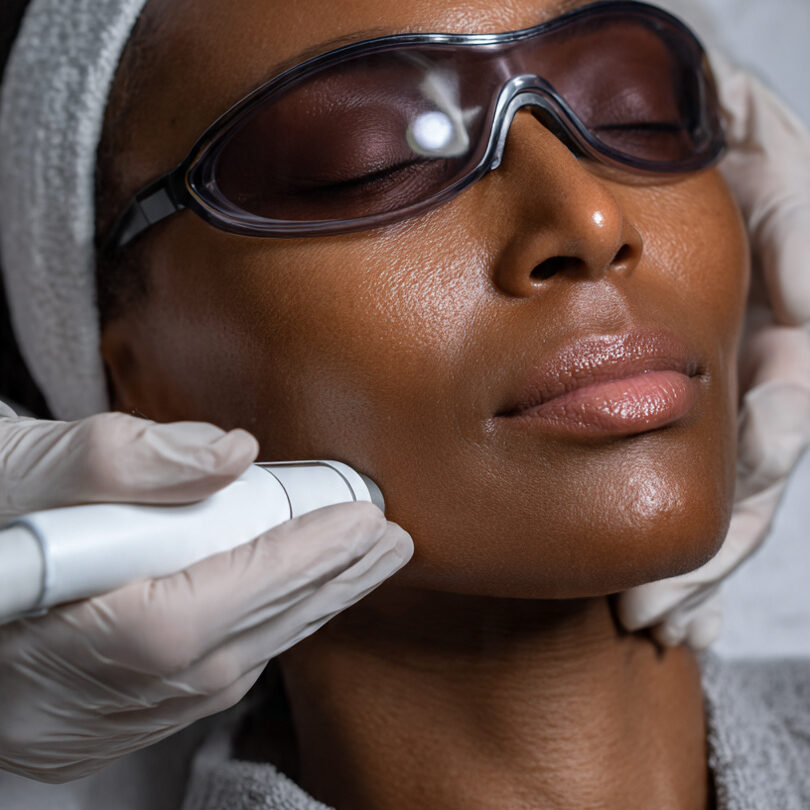
IPL (Intense Pulsed Light)
IPL is not technically a laser and can be unpredictable on deeper Melanin-Rich skin tones. Studies note increased risks of hyperpigmentation and burns.
Aggressive CO₂ lasers.
Traditional ablative CO₂ resurfacing may cause the following:
- Scarring.
- Hypopigmentation.
- Severe PIH.
Unless performed by highly specialized experts with conservative settings, they are generally riskier for darker skin.
Certain Alexandrite Lasers.
Shorter wavelengths are more easily absorbed by epidermal melanin, increasing complication risks.
How to Choose the Right Laser Provider
The provider matters just as much as the laser itself.
Ask These Questions
- Do you regularly treat Fitzpatrick IV–VI skin?
- Can I see before-and-after photos?
- Do you perform patch testing?
- What settings will you use?
- How do you prevent hyperpigmentation?
Red Flags
Avoid clinics that:
- Rush consultations.
- Promise instant results.
- Ignore your skin type.
- Don’t discuss PIH risks.
The Importance of Patch Testing
Patch testing is essential for melanin-rich skin.
A small area is treated first to observe the following:
- Healing response
- Pigmentation changes
- Irritation
- Sensitivity
This can significantly reduce complications.
Pre-Treatment Tips for Darker Skin
Avoid Sun Exposure
Tanned skin increases laser risks.
Stop Harsh Acts
Avoid for several days before treatment:
- Retinoids
- Acids
- Scrubs
- Benzoyl peroxide
Use SPF daily.
Broad-spectrum sunscreen is critical.
Discuss Medications
Certain medications can increase photosensitivity.
Aftercare Tips to Prevent Hyperpigmentation
Post-care is extremely important for deeper skin tones.
1. Wear Sunscreen Religiously
SPF 30–50+ helps prevent PIH.
2. Avoid Heat
Skip:
- Saunas
- Hot showers
- Intense workouts
for 24–48 hours.
3. Keep Skin Hydrated
Use gentle moisturizers and barrier-supporting products.
4. Avoid Picking or Scratching
This can trigger dark marks.
5. Follow Provider Instructions Carefully
Sometimes dermatologists prescribe the following:
- Hydroquinone
- Azelaic acid
- Tyrosinase inhibitors
to reduce pigmentation risks.
Are Laser Treatments Worth It for Melanin-Rich Skin?
Yes — when done correctly.
Modern laser technology has made treatments far safer for Melanin-Rich skin tones than in the past. Many people with Fitzpatrick IV–VI skin now safely use lasers for:
- Acne scars
- Hair removal
- Hyperpigmentation
- Fine lines
- Skin tightening
- Texture improvement
However, success depends heavily on:
- Proper laser selection.
- Conservative settings.
- Skilled providers.
- Strict aftercare.
Realistic Expectations
Laser treatments usually require multiple sessions.
You may need:
- 3–8 sessions for hair removal
- 3–6 sessions for acne scars
- Maintenance treatments yearly
Results also appear gradually as collagen rebuilds over time.
What type of laser is most powerful?
The “most powerful” laser depends on what you mean by “powerful”—medical strength, industrial cutting ability, or cosmetic skin resurfacing.
For cosmetic and dermatology treatments, ablative CO2 lasers are generally considered the most powerful skin-resurfacing lasers. They can dramatically improve:
- Deep wrinkles
- Severe acne scars
- Sun damage
- Skin texture
A common CO₂ laser wavelength is
10600 nm
These lasers remove layers of skin and stimulate major collagen production, but they also come with:
- Longer downtime
- Higher risk of redness and scarring
- Greater risk of hyperpigmentation in melanin-rich skin
For darker skin tones (Fitzpatrick IV–VI), CO₂ lasers are usually used very cautiously because they can cause pigment changes if not performed by an experienced specialist.
In other categories:
- Most powerful for hair removal: Nd:YAG lasers
- Most powerful for tattoo removal: Pico lasers
- Most powerful industrial lasers: Fiber lasers and high-energy CO₂ lasers used for metal cutting
So in skincare, CO₂ lasers are often considered the strongest and most aggressive option, while Nd: YAG lasers are considered safer and more versatile for deeper skin tones.
What laser targets melanin?
Several cosmetic lasers target melanin (the pigment in skin and hair). These lasers work by using specific wavelengths that are absorbed by melanin to treat pigmentation, sun spots, or unwanted hair.
Common melanin-targeting lasers include:
| Laser Type | Common Use | Notes |
| Nd: YAG | Hair removal, pigmentation | Safer for darker skin tones |
| Alexandrite | Hair removal, pigmented lesions | Best for lighter skin |
| Diode Laser | Hair removal | Works on many skin types |
| Ruby Laser | Pigmentation, tattoo removal | Mostly for very fair skin |
| IPL (not a true laser) | Sun spots, redness | Higher risk for dark skin |
The Nd: YAG laser is one of the safest melanin-targeting lasers for deeper skin tones because of its longer wavelength:
10600 nm
This wavelength penetrates deeper into the skin and bypasses much of the surface melanin, reducing the risk of burns and hyperpigmentation.
Melanin-targeting lasers are commonly used for the following:
- Laser hair removal
- Sun spots
- Freckles
- Hyperpigmentation
- Melasma (with caution)
- Some tattoo removal treatments
Because darker skin contains more melanin naturally, treatment settings must be adjusted carefully to avoid:
- Burns
- Blistering
- Post-inflammatory hyperpigmentation (PIH)
That’s why choosing an experienced laser specialist is especially important for melanin-rich skin.
Is a laser suitable for dark skin?
Yes, laser treatments can be suitable and safe for dark skin when the correct laser and settings are used.
In the past, people with deeper skin tones were often told to avoid lasers because older devices could cause the following:
- Burns
- Blisters
- Hyperpigmentation
- Hypopigmentation
- Scarring
Today, newer technologies are much safer for Fitzpatrick skin types IV, V, and VI.
The safest options for dark skin usually include:
- Nd: YAG lasers
- Pico lasers
- Certain non-ablative fractional lasers
- Radiofrequency-based treatments
The Nd: YAG laser is especially popular because its longer wavelength penetrates deeper while avoiding much of the skin’s surface pigment:
10600 nm
Laser Treatments That Often Work Well for Dark Skin
- Laser hair removal
- Acne scar treatments
- Skin tightening
- Pigmentation correction
- Tattoo removal
- Skin rejuvenation
Important Safety Factors
Dark skin has more melanin, so improper laser use can still trigger complications. Safety depends on:
- The type of laser used
- Conservative energy settings
- An experienced provider
- Proper aftercare
- Patch testing beforehand
Lasers That Require Extra Caution
Some treatments are riskier for darker skin, including:
- Traditional aggressive CO₂ lasers
- IPL (Intense Pulsed Light)
- Certain Alexandrite lasers
These may increase the risk of pigment changes if used incorrectly.
Tips Before Getting Laser Treatment
- Choose a provider experienced with melanin-rich skin.
- Avoid tanning before treatment.
- Wear SPF daily.
- Follow all aftercare instructions carefully.
- Ask for a patch test first.
With the right approach, laser treatments can safely improve texture, acne scars, unwanted hair, and uneven tone in dark skin.
Can lasers brighten skin tone?
Yes—certain laser treatments can brighten and even out skin tone by reducing pigmentation, sun damage, acne marks, and dullness. However, lasers do not permanently change your natural skin color. Instead, they help restore a clearer, more even complexion.
Lasers brighten skin by targeting excess melanin and stimulating collagen production.
Common concerns lasers can improve include the following:
- Sun spots
- Hyperpigmentation
- Acne scars
- Uneven skin tone
- Melasma (with caution)
- Dull texture
Popular brightening lasers include the following:
- Pico lasers
- Clear + Brilliant
- Moxi
- Fractional non-ablative lasers
- Nd: YAG toning lasers
One commonly used wavelength for safer pigment treatment in deeper skin tones is
10600 nm
This Nd: YAG wavelength can help brighten skin while reducing the risk of burns and post-inflammatory hyperpigmentation in melanin-rich skin.
How Laser Brightening Works
Laser energy:
- Breaks up excess pigment
- Encourages skin cell turnover
- Stimulates collagen
- Improves overall skin clarity
Over several sessions, skin often appears
- More radiant
- Smoother
- More even-toned
- Less discolored
Important Things to Know
Results Are Gradual
Most people need multiple sessions for noticeable improvement.
Over-treatment can be harmful.
Aggressive treatments may trigger the following:
- Hyperpigmentation.
- Hypopigmentation.
- Irritation.
Especially in darker skin tones.
Sun Protection Is Essential
Without sunscreen, pigmentation can quickly return.
Read more: Best lip shape for filler
Is Laser Skin Brightening Safe for Dark Skin?
Yes — but only with the right laser and experienced providers. Safer options for melanin-rich skin usually include:
- Nd: YAG lasers
- Pico lasers
- Gentle fractional lasers
Aggressive ablative lasers and IPL treatments may carry higher risks if used improperly.
The goal of laser brightening should be healthier, clearer skin — not drastically changing your natural complexion.
Final Thoughts
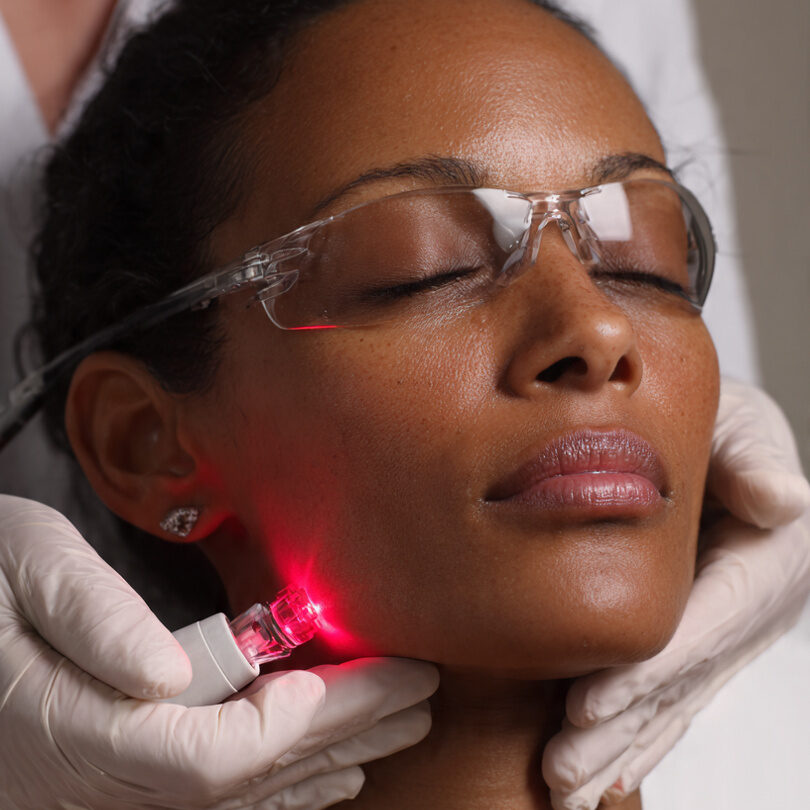
For years, melanin-rich skin was underserved in cosmetic dermatology, especially when it came to lasers. But today’s technology has changed the landscape dramatically.
Lasers like Nd: YAG, PicoSure, Clear + Brilliant, Moxi, and Palomar Lux 1540 offer safer options for darker skin tones when used by knowledgeable professionals. Research consistently supports the importance of longer wavelengths, conservative settings, and experienced providers for reducing complications.
The most important takeaway is this:
Dark skin can absolutely benefit from laser treatments—but safety must always come first.
With the right approach, melanin-rich skin can achieve smoother texture, clearer pigmentation, reduced acne scars, and healthier-looking skin without compromising skin integrity.