Shea butter has become one of the most popular natural ingredients in hair care. Individuals with dry hair, curly hair, damaged hair, and sensitive scalps frequently utilize it to enhance softness, shine, and ease of styling.
Extracted from the nuts of the African shea tree, shea butter is packed with vitamins, fatty acids, and moisturizing properties that nourish both the scalp and hair strands.
The beauty industry uses shea butter in shampoos, conditioners, leave-in creams, hair masks, styling products, and oils because of its deep moisturizing ability. Whether your hair suffers from breakage, frizz, split ends, heat damage, or dryness, shea butter may help restore moisture and improve hair texture naturally.
In this detailed guide, you will learn everything about the best shea butter for hair, including benefits, types, how to use it, what to look for when buying it, and answers to common questions.
What is shea butter for hair?
Shea butter is a natural oil extracted from the nuts of the shea tree, mainly located in West Africa. The butter has been used for centuries for skin and hair care because of its healing and moisturizing properties.
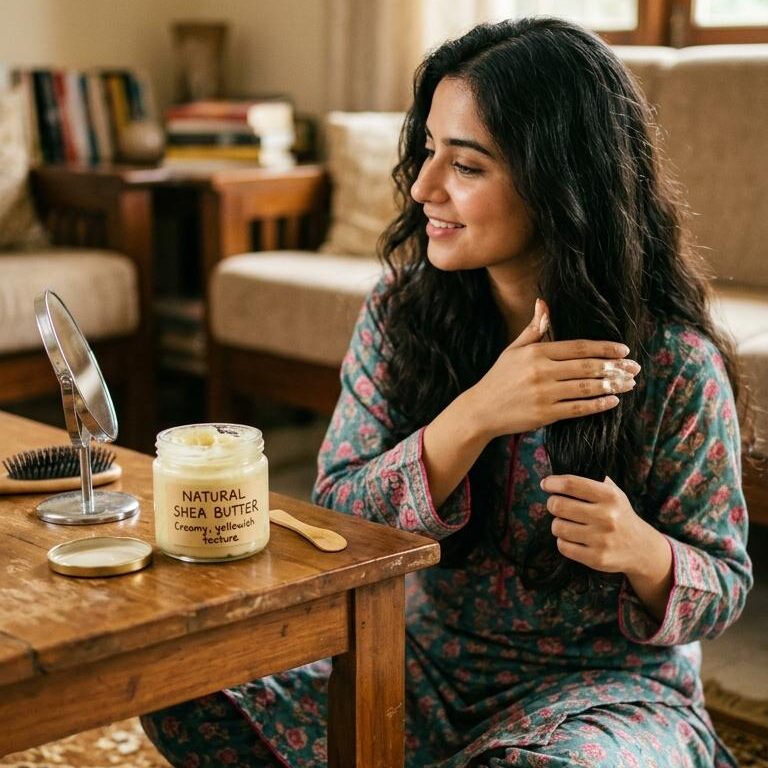
Raw shea butter usually has:
- An ivory or cream color
- A nutty smell
- A thick, buttery texture
It contains:
- Vitamins A and E
- Essential fatty acids
- Antioxidants
- Anti-inflammatory compounds
These nutrients make it highly beneficial for dry and damaged hair.
Why Shea Butter Is Good for Hair
Many people choose shea butter because it deeply moisturizes hair without using harsh chemicals. Unlike some synthetic products, natural shea butter helps protect the hair while keeping it soft and manageable.
Main Benefits of Shea Butter for Hair
- Deep Moisture
- Shea butter coats the hair shaft and locks in moisture. This helps dry hair stay hydrated longer.
- Reduces Frizz
- Frizz often happens when hair lacks moisture. Shea butter smooths the hair cuticle and reduces flyaways.
- Prevents Breakage
- Dry hair breaks easily. The fatty acids in shea butter help strengthen strands and improve elasticity.
- Helps Damaged Hair
- People who use heat tools, hair dye, or chemical treatments may benefit from the repairing effects of shea butter.
- Softens Hair
- Coarse or rough hair becomes softer and easier to manage after regular use.
- Adds Shine
- Shea butter gives hair a healthy natural shine without making it look greasy when used properly.
- Protects Against Heat and Weather
- It forms a protective barrier around the shea butter for hair against sun exposure, pollution, wind, and heat styling.
- Soothes Dry Scalp
- Its anti-inflammatory properties may help calm itchy, flaky, or irritated scalps.
Types of Shea Butter for Hair
Not all shea butter products are the same. Comprehending the various kinds can assist you in selecting the most suitable one for your hair.
Raw Shea Butter
Raw shea butter is unprocessed and retains most of its nutrients. It is usually:
- Cream or yellow in color
- Thick in texture
- Slightly nutty in smell
This type is often considered the best for natural hair care.
Unrefined shea butter for hair
- Unrefined shea butter undergoes minimal processing while keeping most nutrients intact. It is highly recommended for dry and damaged hair.
Refined Shea Butter
- Processed shea butter is refined to eliminate odor and pigmentation. While smoother and easier to use, it may contain fewer nutrients.
Whipped Shea Butter
- Whipped shea butter is lighter and fluffier. It is easier to spread through shea butter for hair and is often mixed with oils like coconut oil or jojoba oil.
Best Shea Butter for Different Hair Types
Different hair textures respond differently to shea butter for hair. Choosing the right form and usage method matters.
Best shea butter for Curly Hair
Curly hair tends to lose moisture quickly. Raw or whipped shea butter for hair works well for the following:
- Defining curls
- Reducing frizz
- Preventing dryness
- Improving softness
Curly-haired people often use it as a leave-in moisturizer.
Best Shea Butter for Dry Hair
- Unrefined shea butter deeply hydrates dry strands and seals in moisture. It works best when applied after washing hair.
Best Shea Butter for Damaged Hair
- Hair damaged by bleaching, coloring, or heat styling benefits from shea butter for hair masks and overnight treatments.
Best Shea Butter for Thick Hair
- Thick hair can handle heavier products. Pure shea butter or whipped shea butter hair blends are usually effective.
Best shea butter for hair for Fine Hair
- Fine hair may become greasy if too much shea butter is used. Lightweight whipped versions work better in small amounts.
How to Choose the Best Shea Butter for Hair
There are many shea butter hair products available online and in stores. Here are some important factors to consider.
Look for unrefined or raw shea butter.
These types contain more nutrients and moisturizing properties than highly processed versions.
Check the ingredient list.
Choose products with:
- Minimal additives
- Natural oils
- No harsh sulfates or parabens
Organic products are better.
- Organic shea butter typically lacks harmful chemicals and pesticides.
Texture matters.
- If pure shea butter feels too thick, whipped shea butter for hair may be easier to apply.
Avoid artificial fragrances.
- Strong fragrances may irritate sensitive scalps.
Best Ingredients to Combine with Shea Butter
Shea butter works even better when combined with other nourishing ingredients.
- Coconut Oil
- Helps penetrate the hair shaft and improve softness.
- Argan Oil
- Adds shine and smoothness.
- Castor Oil
- Supports thicker-looking hair and scalp nourishment.
- Aloe Vera
- Hydrates and soothes the scalp.
- Jojoba Oil
- Lightweight oil that balances scalp moisture.
- Rosemary Oil
- Popular for promoting healthier hair growth.
How to Use Shea Butter for Hair
There are several ways to use shea butter depending on your hair needs.
- As a Leave-In Moisturizer
- Apply a little and rub it in your hands until it liquefies. Apply to damp hair, focusing on the ends.
- As a Hair Mask
- Mix shea butter with oils like coconut or olive oil. Leave it on for 30–60 minutes before washing.
- For Scalp Massage
- Massage a tiny amount into the scalp to help with dryness and flakes.
- For Heat Protection
- Apply a light layer before blow-drying or heat styling.
- For Split Ends
- Apply a small amount of shea butter to dry ends to minimize roughness and prevent breakage.
DIY Shea Butter Hair Mask Recipe
Making a homemade shea butter hair mask is easy and affordable.
Ingredients
- 2 tablespoons raw shea butter
- 1 tablespoon coconut oil
- 1 tablespoon olive oil
- A few drops of rosemary oil
Instructions
- Melt the shea butter gently.
- Mix in the oils.
- Let the mixture cool slightly.
- Apply to damp hair.
- Leave for 30 minutes.
- Wash with mild shampoo.
This mask can help soften dry hair and reduce frizz.
Shea Butter for Hair Growth
Shea butter does not directly grow hair like a medical treatment, but it creates healthier conditions for growth.
How It Supports Hair Growth
- Reduces breakage
- Keeps scalp moisturized
- Prevents split ends
- Protects strands from damage
When hair breaks less, it may appear to grow faster and healthier.
Shea Butter for Scalp Health
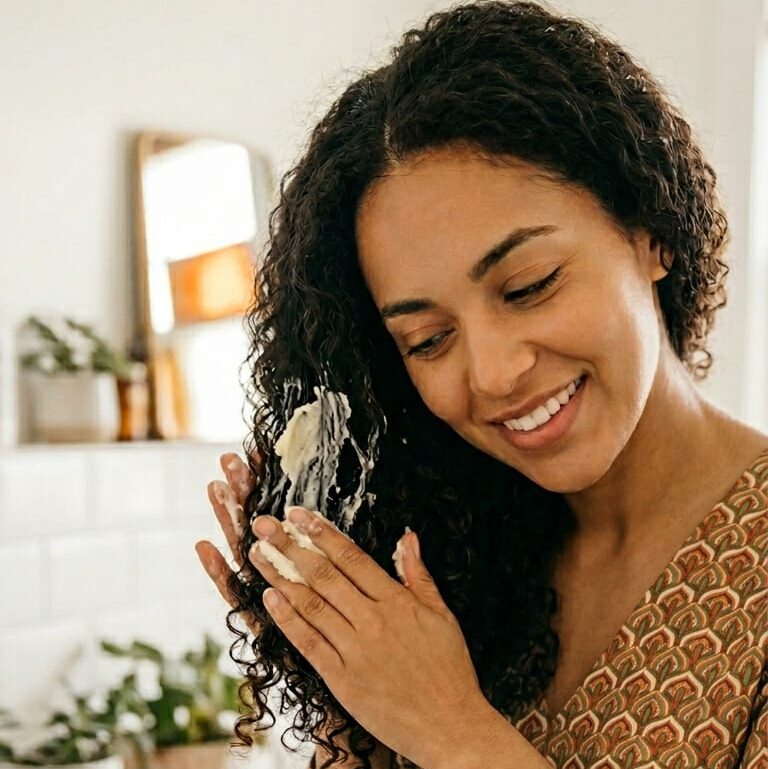
A dry scalp can lead to itching, flakes, and irritation. Shea butter may help because of its soothing properties.
Benefits for the Scalp
- Moisturizes dry skin
- Reduces irritation
- Calms itching
- Helps improve scalp comfort
People with mild dryness often use it before shampooing.
Can Shea Butter Cause Hair Problems?
Although shea butter works well for many people, using too much may create issues.
Possible Problems
- Greasy appearance
- Product buildup
- Heavy feeling on fine hair
- Difficulty washing out
Using the right amount is important. Begin with a minimal amount and modify as required.
How frequently should you apply shea butter to your hair?
The ideal frequency depends on hair type.
- Dry or Curly Hair
- 2–4 times weekly may work well.
- Oily Hair
- Once weekly or less may be enough.
- Damaged Hair
- Use deep treatments weekly for extra moisture.
Shea Butter vs. Coconut Oil for Hair
Both ingredients are popular for hair care, but they work differently.
| Shea Butter | Coconut Oil |
| Thick and creamy | Lightweight oil |
| Great for sealing moisture | Penetrates hair deeply |
| Ideal for dry hair | Helps reduce protein loss |
| Good for frizz control | Adds softness and shine |
Many people combine both for better results.
Shea Butter vs. Hair Oil
Shea butter and hair oils serve different purposes.
Shea Butter
- Seals moisture
- Thick texture
- Best for dry or curly hair
Hair Oils
- Lightweight
- Add shine
- Easier for fine hair
Using both together can improve hair hydration.
Signs You Are Using Too Much Shea Butter
Using excessive shea butter may weigh hair down.
Common Signs
- Sticky hair
- Greasy roots
- Dull appearance
- Hair feels heavy
Wash with a clarifying shampoo occasionally if buildup occurs.
Best Time to Apply Shea Butter
Timing affects results.
- After Washing Hair
- Applying to damp hair helps lock in moisture.
- Before Bed
- Overnight treatments may deeply soften hair.
- Before Styling
- A small amount can help protect hair from heat and frizz.
Can Shea Butter Be Used on Color-Treated Hair?
Yes, shea butter is often safe for color-treated hair because it is gentle and moisturizing.
Benefits include:
- Less dryness after coloring
- Improved softness
- Reduced breakage
However, avoid overly greasy applications near roots.
Shea Butter for Natural Hair
Natural hair routines often include shea butter because it helps maintain moisture and curl definition.
Why Natural Hair Loves Shea Butter
- Reduces dryness
- Helps detangle hair
- Defines curls
- Protects ends
Many natural hair creams contain shea butter as a key ingredient.
How to Store Shea Butter Properly
Proper storage helps preserve quality.
Storage Tips
- Keep in a cool, dry place
- Avoid direct sunlight
- Seal tightly after use
High heat may melt the butter, but it usually solidifies again after cooling.
Is Pure Shea Butter Better Than Shea Butter Products?
Both options have advantages.
Pure Shea Butter
- Fewer ingredients
- Strong moisturizing effect
- Natural formulation
Shea Butter Hair Products
- Easier application
- Lighter texture
- Often combined with helpful oils
The best choice depends on your hair needs.
Which is the best shea butter for fine or thin hair?
The best shea butter for fine or thin hair is usually whipped, lightweight, or blended shea butter rather than heavy raw shea butter alone. Fine hair can become greasy or flat easily, so lighter formulas work better while still providing moisture and softness.
Here are the best options for fine or thin hair:
- Whipped Shea Butter
Whipped shea butter has an airy texture that spreads easily and feels less heavy on hair. It helps reduce frizz without weighing strands down. - Unrefined Shea Butter Mixed with Lightweight Oils
Shea butter blended with oils like- jojoba oil
- argan oil
- grapeseed oil
- works well because these oils absorb faster and feel lighter than thick oils.
- Shea Butter Leave-In Creams
Lightweight leave-in conditioners containing shea butter are often better than pure butter for thin hair. They moisturize while keeping volume intact. - Refined Shea Butter for Easier Application.
Refined shea butter is smoother and lighter than raw shea butter, making it easier to use in small amounts on fine hair.
Tips for Using Shea Butter on Thin Hair
- Use only a pea-sized amount.
- Focus on the mid-lengths and ends.
- Avoid applying too much to the scalp.
- Apply to damp hair for better absorption.
- Use 1–2 times weekly instead of daily.
Ingredients to Look for with Shea Butter
Fine hair benefits from shea butter products containing:
- aloe vera
- argan oil
- jojoba oil
- glycerin
- coconut water
These ingredients add hydration without excessive heaviness.
What to Avoid
Avoid very thick products that contain:
- heavy waxes
- too much castor oil
- petroleum
- large amounts of raw butter
These can make thin hair look oily and limp.
Overall, the best shea butter for fine or thin hair is a lightweight whipped or blended formula that hydrates without flattening the hair.
FAQs About the Best Shea Butter for Hair
1. Which shea butter is best for hair growth?
Raw or unrefined shea butter is usually best because it contains more nutrients that support scalp and hair health.
2. Can I use shea butter on my hair every day?
Yes, but use small amounts. Regular use might benefit extremely dry or curly hair, but it may feel overly weighty on fine hair.
3. Does shea butter help with frizzy hair?
Yes, shea butter smooths the hair cuticle and helps reduce frizz and flyaways.
4. Is shea butter good for low-porosity hair?
It can work for low-porosity hair if used sparingly or mixed with lightweight oils.
5. Can shea butter clog hair follicles?
Using too much on the scalp may cause buildup for some people. Proper cleansing helps prevent this.
6. Should I apply shea butter to wet or dry hair?
Damp hair is usually best because shea butter helps seal in moisture.
7. Does shea butter expire?
Yes, shea butter typically lasts 1–2 years if stored properly in a cool, dry place.
8. Can men use shea butter for hair?
Yes, shea butter works for all hair types and genders.
9. Is whipped shea butter better than raw shea butter?
Whipped shea butter is lighter and easier to apply, while raw shea butter is richer and more concentrated.

10. Can shea butter repair damaged hair?
It may help improve the appearance and feel of damaged hair by moisturizing and reducing breakage, though severely damaged hair may still require trimming or professional treatment.
Read more: Best shea butter for skin
Final Thoughts
Shea butter is one of the best natural ingredients for improving hair moisture, softness, and protection. Whether you have curly, dry, thick, damaged, or natural hair, using the right type of shea butter can help reduce frizz, minimize breakage, and improve overall hair health.
Raw and unrefined shea butters are usually the best choices because they contain the most nutrients. However, whipped blends and lightweight formulas may work better for fine hair or daily use.
Consistency matters most. Regular use combined with a healthy hair care routine can help your hair feel softer, stronger, shinier, and easier to manage over time. For any questions, feel free to contact fajarhafeez117@gmail.com.