Synthetic wigs are affordable, stylish, and easy to maintain, making them a popular choice for everyday wear and special occasions. However, one common issue many wig users face is stiffness, dryness, tangling, and rough texture after repeated use.
Over time, synthetic fibers can lose their softness due to friction, heat exposure, product buildup, and improper washing methods.
The good news is that you can restore softness and smoothness to a synthetic wig without damaging the fibers. With the right care routine, gentle washing techniques, and moisturizing methods, your wig can feel soft, silky, and manageable again.
This detailed guide explains everything you need to know about how to soften synthetic wigs safely at home. You will also learn the best products, mistakes to avoid, and expert tips for keeping your wig looking fresh and natural for longer.
Why Synthetic Wigs Become Hard and Dry
Before learning how to soften synthetic wigs, it is important to understand why they become rough in the first place.
Synthetic wig fibers are made from artificial materials such as acrylic, polyester, or polyvinyl. Unlike human hair, these fibers do not produce natural oils. As a result, they can dry more quickly.
Several factors can make synthetic wigs stiff:
- Friction from clothing
- Heat damage from styling tools
- Product buildup
- Dust and pollution
- Improper washing
- Overwashing
- Exposure to sunlight
- Tangling and matting
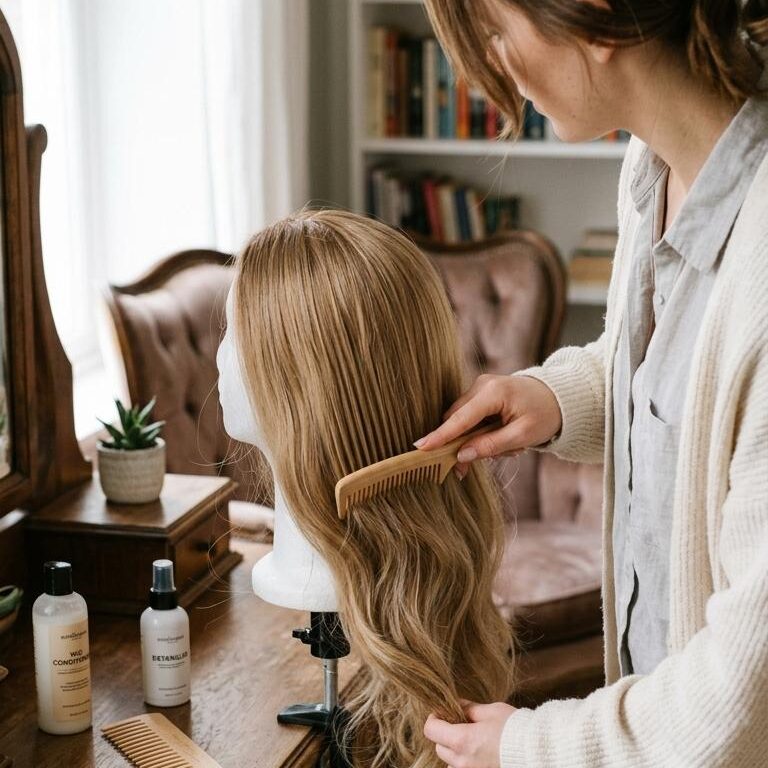
The nape area of the wig often becomes rough first because it rubs against the neck and clothing throughout the day.
Signs Your Synthetic Wig Needs Softening
You may notice several changes in your wig’s texture when it starts drying out.
Common signs include:
- Fibers feel coarse or crunchy.
- Excessive tangling.
- Matted ends.
- Loss of shine.
- Frizzy appearance.
- Stiff movement.
- Difficult brushing.
- Static buildup.
If your wig shows these signs, it likely needs deep conditioning and gentle restoration.
How To Wash a Synthetic Wig Properly
Proper washing is the foundation of keeping a synthetic wig soft.
Step 1: Detangle Before Washing
- Utilize a wide-toothed comb or wig brush to softly detangle knots. Start from the ends and slowly move upward toward the roots.
- Never brush aggressively because synthetic fibers can stretch and break.
Step 2: Use Cool Water
- Fill a basin with cool or lukewarm water. Hot water can damage synthetic fibers and permanently change their texture.
Step 3: Add Synthetic Wig Shampoo
- Use a shampoo specifically designed for synthetic wigs. Regular shampoo for human hair may contain harsh ingredients that dry out fibers.
- Mix a small amount into the water before placing the wig inside.
Step 4: Soak Gently
- Submerge the wig and let it soak for about 5 minutes. Avoid rubbing or twisting the fibers.
Step 5: Rinse Thoroughly
- Rinse using cool water until all shampoo is removed.
Step 6: Apply Wig Conditioner
- Apply synthetic wig conditioner mainly to the mid-lengths and ends. Avoid the wig cap because conditioner can loosen knots.
Best Methods To Soften Synthetic Wigs
There are several effective methods for restoring softness to synthetic wigs.
Use fabric softener.
Fabric softener is one of the most popular tricks for softening synthetic wig fibers.
How To Use It
- Mix one part fabric softener with three parts cool water.
- Place the wig into the mixture.
- Let it soak for 20 to 30 minutes.
- Rinse lightly with cool water.
- Air dry naturally.
Fabric softener helps reduce friction and makes fibers feel smoother.
However, avoid overusing this method because excessive buildup can make the wig greasy.
Apply leave-in wig conditioner.
A leave-in conditioner made for synthetic wigs can restore softness and reduce tangles.
Spray lightly onto damp fibers and comb through gently.
Benefits include:
- Improved softness
- Less frizz
- Easier detangling
- Added shine
Avoid heavy oils because they may damage synthetic materials.
Steam Treatment for Synthetic Wigs.
Steam can help relax stiff synthetic fibers safely when done carefully.
Steam Softening Method
- Place the wig on a mannequin head.
- Use a handheld steamer at a safe distance.
- Comb through gently while steaming.
- Allow the wig to cool completely.
This method works especially well for tangled ends.
Be careful not to overheat the fibers.
Use silicone-based wig serum.
- Silicone serums coat synthetic fibers and reduce roughness.
- Apply a small amount to the ends to restore shine and softness.
- Too much serum can cause buildup, so use it sparingly.
Deep Conditioning Synthetic Wigs
Deep conditioning treatments help revive old wigs that feel extremely dry.
DIY Wig Conditioning Soak
Ingredients
- Cool water
- Synthetic wig conditioner
- A small amount of fabric softener
Instructions
- Mix ingredients in a basin.
- Soak the wig for 30 minutes.
- Rinse lightly.
- Pat dry using a towel.
- Air dry on a wig stand.
This treatment can make older wigs feel softer and more manageable.
How To Detangle Synthetic Wigs Without Damage
Tangles are a major reason for the coarseness of synthetic wigs.
Best Detangling Tips
- Use a wide-tooth comb.
- Detangle when damp.
- Work from ends upward.
- Use a wig-detangling spray.
- Avoid pulling harshly.
- Separate knots using fingers first.
Never use regular hairbrushes on delicate synthetic fibers.
Can You Use Hair Oil on Synthetic Wigs?
Many people wonder if oils can soften synthetic wigs.
Light oils may temporarily reduce dryness, but heavy oils can attract dirt and create buildup.
Safe Options
- Argan oil spray
- Silicone serum
- Wig shine spray
Avoid
- Coconut oil
- Olive oil
- Castor oil
Natural oils are often too heavy for synthetic fibers.
How To Soften Frizzy Synthetic Wig Ends
The ends of synthetic wigs usually become dry first.
Effective Solutions
- Trim damaged ends.
- If fibers are severely rough, trimming small amounts may improve appearance instantly.
- Use steam.
- Steam can smooth frizz and restore movement.
- Apply wig serum.
- A tiny amount of serum can reduce rough texture.
- Detangle daily.
- Prevent knots before they become severe.
How Often Should You Wash a Synthetic Wig?
Overwashing can make synthetic wigs dry faster.
General recommendations:
- Every 6 to 8 wears for occasional use
- Every 2 weeks for daily wear
Wash sooner if there is heavy product buildup.
Best Products for Softening Synthetic Wigs
Using proper wig products makes a major difference.
Recommended Product Types
- Synthetic Wig Shampoo
- Specially formulated to clean fibers gently.
- Wig Conditioner
- Adds softness without damaging the wig.
- Detangling Spray
- Helps prevent knots and friction.
- Wig Serum
- Improves shine and smoothness.
- Fabric Softener
- Useful occasionally for deep softening.

Mistakes That Make Synthetic Wigs Hard
Avoiding common mistakes can extend your wig’s lifespan.
- Using Hot Water
- Heat can permanently damage fibers.
- Excessive Brushing
- Rough brushing stretches synthetic strands.
- Using Human Hair Products
- Regular shampoos may contain sulfates and alcohol.
- Sleeping in the wig.
- Friction causes matting and stiffness.
- Heat Styling Non-Heat-Friendly Wigs
- This can melt or damage fibers.
How To Keep Synthetic Wigs Soft Longer
Preventive care is easier than restoring damaged fibers.
- Store Properly
- Keep the wig on a stand when not in use.
- Reduce Friction
- Wear smooth fabrics around the neck area.
- Use wig spray regularly.
- Hydrating sprays help maintain softness.
- Avoid sun damage.
- Direct sunlight can dry synthetic fibers.
- Detangle Frequently.
- Small tangles quickly become severe knots.
Can Fabric Softener Damage Synthetic Wigs?
Fabric softener is widely used for synthetic wigs, but moderation is important.
Too much fabric softener may:
- Cause residue buildup
- Reduce natural movement
- Attract dust
Use it only occasionally for deep softening treatments.
Are Heat-Friendly Synthetic Wigs Easier To Soften?
Heat-friendly synthetic wigs are usually softer than standard synthetic wigs because their fibers are more flexible.
However, they still require proper care.
Benefits include:
- Better movement
- Easier styling
- Softer texture
- Reduced stiffness
But excessive heat can still damage them.
How Long Does a Synthetic Wig Last?
The lifespan depends on quality and maintenance.
Average Lifespan
- Daily wear: 4 to 6 months
- Occasional wear: Up to 1 year
Proper softening and care routines can help extend wig life significantly.
DIY Homemade Wig Softening Spray
You can make a simple wig-softening spray at home.
Ingredients
- 1 cup cool water
- 1 teaspoon fabric softener
- 1 teaspoon wig conditioner
Instructions
- Mix ingredients in a spray bottle.
- Shake well before use.
- Spray lightly onto wig fibers.
- Comb gently.
This spray helps reduce static and dryness.
How To Air Dry a Synthetic Wig Properly
Drying methods affect softness, too.
Best Drying Method
- Pat gently with a towel
- Place on a wig stand
- Allow natural air-drying
- Keep away from direct heat
Never use a regular hair dryer on non-heat-friendly synthetic wigs.
How To Restore an Old Synthetic Wig
Old wigs can often be revived with patience.
Restoration Process
- Detangle carefully.
- Wash with wig shampoo.
- Deep condition.
- Steam fibers gently.
- Trim damaged ends.
- Apply wig serum.
Although severely damaged wigs may not return to perfect condition, this process can improve softness and appearance dramatically.
Benefits of Keeping Synthetic Wigs Soft
Soft wigs look more natural and are easier to wear.
Main Benefits
- Less tangling
- More realistic appearance
- Better comfort
- Longer wig lifespan
- Easier styling
- Reduced frizz
Regular maintenance keeps wigs looking salon-fresh.
Differences Between Cheap and Premium Synthetic Wig Fibers
Not all synthetic wigs are made with the same quality of fibers. Some wigs feel soft, natural, and realistic, while others may look shiny, stiff, or tangled quickly. The biggest difference usually comes down to the quality of the synthetic fibers used during manufacturing.
Understanding the differences between cheap and premium synthetic wig fibers can help you choose a wig that matches your budget, comfort, and styling needs.
1. Texture and Softness
Cheap synthetic wigs are often made with low-grade acrylic or plastic-based fibers. These fibers can feel rough, stiff, or overly silky in an unnatural way. Premium synthetic wigs use advanced fibers such as Kanekalon or heat-resistant modacrylic blends that are designed to mimic the softness and movement of real hair.
2. Shine and Natural Appearance
One of the easiest ways to spot a cheap wig is excessive shine. Lower-quality fibers reflect light heavily, creating a plastic or “doll hair” appearance. Premium fibers are designed with a matte or low-sheen finish that looks more natural under sunlight and indoor lighting.
3. Tangling and Frizz Resistance
Cheap synthetic wigs tend to tangle faster, especially around the neck area. The fibers rub together more harshly and create knots easily. Premium synthetic fibers are smoother and better engineered to reduce friction, which helps prevent tangling and frizz.
4. Heat Resistance
Many low-cost wigs cannot handle heat styling tools at all. Exposure to heat may melt or permanently damage the fibers. Premium synthetic wigs are often heat-friendly and can tolerate low- to moderate styling temperatures, usually around 300–350°F, depending on the brand.
5. Lifespan and Durability
Cheap wigs usually wear out more quickly because the fibers break down faster from brushing, washing, and friction. Premium synthetic wigs are more durable and maintain their shape and texture longer with proper care.
6. Fiber Thickness
Budget wigs often use thicker fibers, which can make the hair look bulky or unnatural. Premium wigs use finer strands that move more like real human hair and create a softer overall appearance.
7. Comfort During Wear
Premium wigs usually feel lighter and more breathable because they combine better fibers with improved cap construction. Cheap wigs may feel heavier, hotter, or less comfortable during long wear.
8. Styling and Shape Retention
Premium synthetic wigs often hold curls, waves, and styles better after washing. Cheap fibers may become stiff or lose their original style more quickly.
9. Price Difference
Cheap synthetic wigs are typically affordable and great for short-term use, costumes, or experimenting with new styles. Premium synthetic wigs cost more because they use higher-quality fibers, advanced technology, and better craftsmanship.
10. Which One Should You Choose?
If you wear wigs occasionally, a cheaper synthetic wig may work fine for temporary use. However, if you wear wigs daily and want a more natural appearance, comfort, and longer lifespan, investing in premium synthetic fibers is often worth it.
Premium synthetic wigs may cost more upfront, but they usually provide better softness, realism, and durability over time.
FAQs About How To Soften Synthetic Wigs
1. Can fabric softener really soften synthetic wigs?
Yes, fabric softener can help reduce stiffness and improve softness when used occasionally in diluted form.
2. How do you make a synthetic wig silky again?
Wash the wig properly, use synthetic conditioner, detangle gently, and apply a light wig serum.
3. Can you use regular conditioner on synthetic wigs?
It is better to use products designed specifically for synthetic wigs because regular conditioners may leave residue.
4. Why does my synthetic wig feel crunchy?
Crunchiness usually happens due to product buildup, friction, heat damage, or dryness.
5. Can steaming damage synthetic wigs?
Excessive heat can damage fibers, so always use low steam and maintain a safe distance.
6. How often should I soften my synthetic wig?
Deep softening treatments are usually needed every few weeks depending on wear frequency.
7. What is the best spray for synthetic wigs?
Synthetic wig detangling sprays and silicone-based wig sprays work best for softness and shine.
8. Can synthetic wigs become soft again after matting?
Yes, mild to moderate matting can often be improved through detangling, conditioning, and steaming.
9. Is coconut oil safe for synthetic wigs?
Coconut oil is generally too heavy and may cause buildup on synthetic fibers.

10. How can I prevent my synthetic wig from becoming rough?
Wash gently, avoid heat, reduce friction, detangle regularly, and use proper wig care products.
Read more: Can you dye synthetic hair?
Final Thoughts
Learning how to soften synthetic wigs can save money and extend the life of your favorite hairstyles. Synthetic wigs naturally become dry and rough over time, but proper washing, conditioning, detangling, and storage methods can restore softness and shine effectively.
Simple techniques such as using synthetic wig conditioner, fabric softener treatments, steaming, and gentle brushing can make a noticeable difference. Avoid harsh heat, overwashing, and heavy oils to protect the fibers.
With consistent care, your synthetic wig can remain smooth, manageable, and beautiful for much longer. For any questions, feel free to contact fajarhafeez117@gmail.com.