Spending time in the sun can feel relaxing and healthy, but too much UV exposure can seriously damage your skin. Most people are familiar with sunburn, yet many confuse it with sun poisoning.
Learn the difference between sunburn vs. sun poisoning, including symptoms, causes, treatment options, and when severe sun exposure may require medical attention.
While both conditions are caused by excessive sun exposure, they are not the same thing. Sunburn is a common skin injury caused by ultraviolet (UV) rays, while sun poisoning is a more severe reaction that may include symptoms beyond the skin.
Understanding the differences between sunburn and sun poisoning is important because severe sun damage can lead to dehydration, infection, premature aging, and an increased risk of skin cancer.
In this article, you will learn the symptoms, causes, treatments, prevention tips, and when to seek medical help for both conditions.
What Is Sunburn?
Sunburn is a skin reaction caused by overexposure to ultraviolet rays from the sun or tanning beds. UV radiation damages the DNA in skin cells, causing inflammation and redness.
Sunburn usually appears a few hours after sun exposure and can worsen within 24 hours. Mild cases heal within a few days, while severe burns may take weeks.
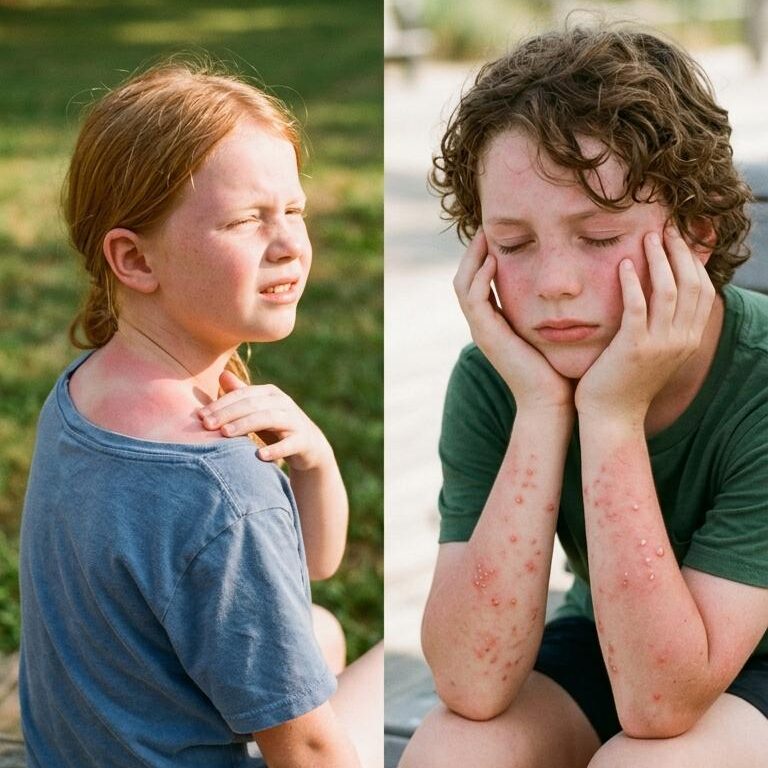
Common Symptoms of Sunburn
- Red or pink skin
- Warm or hot skin
- Pain or tenderness
- Swelling
- Dryness and itching
- Peeling skin after a few days
- Mild fatigue
In more severe cases, blisters may form on the skin.
What Is Sun Poisoning?
Sun poisoning is not an official medical term, but it refers to a severe form of sunburn combined with a systemic reaction. It happens when the body becomes overwhelmed by intense UV exposure.
Unlike ordinary sunburn, sun poisoning affects more than just the skin. It can cause dehydration, immune reactions, and heat-related illness symptoms.
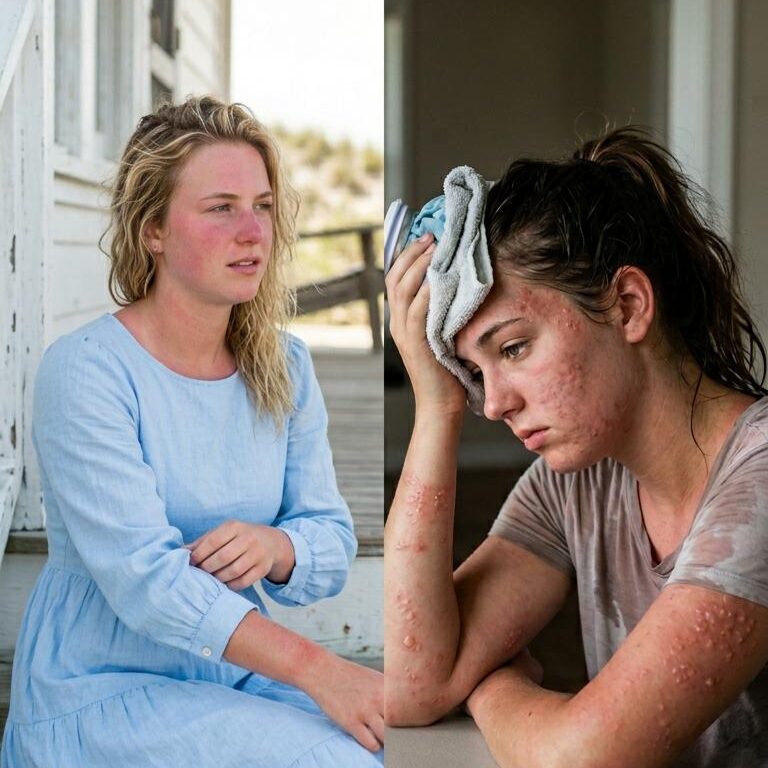
Common Symptoms of Sun Poisoning
- Severe redness and pain
- Large blisters
- Fever
- Chills
- Headache
- Nausea or vomiting
- Dizziness
- Dehydration
- Rapid heartbeat
- Confusion
- Swelling
Some people also develop a red rash or hives after sun exposure.
Sunburn vs. Sun Poisoning: Key Differences
| Feature | Sunburn | Sun Poisoning |
| Severity | Mild to moderate | Severe |
| Skin redness | Common | Severe |
| Blisters | Sometimes | Often extensive |
| Fever | Rare | Common |
| Nausea | Rare | Common |
| Dehydration | Mild | Severe |
| Medical attention needed | Usually not | Sometimes yes |
| Recovery time | A few days | Several days to weeks |
Sun poisoning is essentially a dangerous escalation of sunburn symptoms.
Causes of Sunburn and Sun Poisoning
Both conditions happen because of UV radiation exposure, but certain factors increase the risk.
Causes of Sunburn
- Spending too much time outdoors
- Forgetting sunscreen
- Using weak SPF protection
- Tanning beds
- Reflective surfaces like water or snow
Causes of Sun Poisoning
- Intense or prolonged sun exposure
- Very fair or sensitive skin
- Certain medications
- Heat exposure with dehydration
- Previous skin damage
- Allergic reactions to sunlight
Risk Factors
Some people are more likely to experience severe sun damage.
High-Risk Groups
- People with fair skin
- Children and older adults
- Outdoor workers
- Athletes
- People living in hot climates
- Individuals taking photosensitive medications
- People with weakened immune systems
Symptoms Timeline
Sunburn Timeline
Within 2–6 hours
- Skin becomes red and warm
After 12–24 hours
- Pain increases
- Swelling may appear
After 3–7 days
- Skin peels and heals
Sun Poisoning Timeline
Early Stage
- Severe redness
- Burning pain
Within Hours
- Fever
- Headache
- Dehydration
- Nausea
Later Stage
- Blistering
- Weakness
- Skin peeling
Degrees of Sunburn
Sunburn severity is often classified similarly to thermal burns.
First-Degree Sunburn
Affects only the outer skin layer.
Symptoms include:
- Redness
- Mild pain
- Dryness
Second-Degree Sunburn
Damages deeper skin layers.
Symptoms include:
- Blisters
- Severe pain
- Swelling
Sun poisoning usually involves second-degree burns plus bodywide symptoms.
How UV Rays Damage Skin
The sun emits ultraviolet rays that penetrate the skin.
UVA Rays
- Cause skin aging
- Penetrate deeply
UVB Rays
- Cause sunburn
- Damage outer skin layers
Both contribute to skin cancer risk.
Signs You Have Sun Poisoning Instead of Sunburn
You may have sun poisoning if you experience the following:
- Fever after sun exposure
- Vomiting
- Severe blistering
- Extreme dizziness
- Dehydration
- Fainting
- Confusion
- Severe swelling
These symptoms suggest the body is struggling to cope with heat and UV damage.
Treatment for Sunburns
Most mild sunburns can be treated at home.
1. Get Out of the Sun
Avoid further UV exposure immediately.
2. Cool the Skin
Use:
- Cool showers
- Cold compresses
- Damp towels
Avoid ice directly on the skin.
3. Apply Moisturizer
Use soothing products like the following:
- Aloe vera gel
- Fragrance-free lotion
4. Stay Hydrated
Drink extra water because sunburn draws fluid to the skin surface.
5. Use Pain Relievers
Over-the-counter medications may reduce pain and inflammation.
6. Avoid Peeling Skin
Do not pick or peel damaged skin.
Treatment for Sun Poisoning
Sun poisoning may require more aggressive care.
Immediate Steps
- Move indoors
- Drink water or electrolyte drinks
- Apply cool compresses
- Rest in a cool environment
Medical Treatment May Include
- IV fluids
- Prescription creams
- Anti-nausea medication
- Burn treatment
- Infection prevention
Severe blistering should be examined by a healthcare provider.
When to See a Doctor
Seek medical attention if you experience:
- Fever over 101°F
- Severe dehydration
- Fainting
- Confusion
- Trouble breathing
- Extensive blistering
- Severe swelling
- Signs of infection
Children with severe sunburn should also be evaluated quickly.
Can Sun Poisoning Be Dangerous?
Yes. Severe sun poisoning can become serious if untreated.
Potential complications include the following:
- Heat exhaustion
- Heatstroke
- Skin infections
- Severe dehydration
- Electrolyte imbalance
Repeated severe sun damage also increases long-term skin cancer risk.
How Long Does Recovery Take?
Sunburn Recovery
- Mild: 3–5 days
- Moderate: About 1 week
- Severe blistering: Up to 2 weeks
Sun Poisoning Recovery
- Mild cases: Several days
- Severe cases: Weeks
Fatigue and skin sensitivity may linger longer.
Best Ingredients for Healing Sun-Damaged Skin
- Aloe Vera
- Helps cool and soothe inflammation.
- Oatmeal
- Can reduce itching and irritation.
- Hyaluronic Acid
- Supports hydration.
- Vitamin E
- May help repair skin damage.
- Cucumber
- Provides cooling relief.
What to Avoid After Severe Sun Exposure
Do not:
- Use harsh scrubs
- Pop blisters
- Take very hot showers
- Continue tanning
- Use alcohol-based skincare products
These can worsen irritation.
Can you get sun poisoning on cloudy days?
Yes. Up to 80% of UV rays can penetrate clouds. People often underestimate sun exposure during overcast weather.
Sunburn and Skin Cancer Risk
Repeated UV damage increases the likelihood of:
- Basal cell carcinoma
- Squamous cell carcinoma
- Melanoma
Even a single severe blistering sunburn in childhood may increase melanoma risk later in life.
Best Ways to Prevent Sunburn and Sun Poisoning
Wear Sunscreen Daily
Choose:
- SPF 30 or higher
- Broad-spectrum protection
Reapply every two hours.
Wear protective clothing.
Use:
- Wide-brimmed hats
- Sunglasses
- Long sleeves
Avoid Peak Sun Hours
- The sun’s intensity peaks from 10 AM to 4 PM.
Stay Hydrated
- Water helps regulate body temperature.
Seek Shade
- Take breaks from direct sunlight.
Natural Remedies for Mild Sunburn
Some home remedies may help soothe discomfort.
Cold Milk Compress
- May calm irritated skin.
Green Tea
- Contains antioxidants that reduce inflammation.
Coconut Oil
- Useful after initial heat subsides.
Honey
- Has antibacterial properties.
- Avoid applying oils immediately after burning because they may trap heat.
Sunburn in Children
Children’s skin burns faster than adult skin. Signs of severe sunburn in kids include:
- Fever
- Lethargy
- Blisters
- Crying from pain
- Dehydration
Young children should avoid prolonged direct sunlight.
Sun Poisoning and Allergic Reactions
Sometimes sun poisoning resembles a sun allergy. Certain medications and skincare ingredients increase sensitivity, including the following:
- Antibiotics
- Retinoids
- Acne treatments
- Some antihistamines
Always check medication warnings.
Tanning Beds and Sun Damage
Tanning beds subject the skin to intense UV rays.
Risks include:
- Burns
- Premature aging
- Skin cancer
- Eye damage
Indoor tanning is not safer than natural sunlight.
Emotional Effects of Severe Sun Damage
Painful burns can interfere with:
- Sleep
- Daily activities
- Exercise
- Mood
Some people experience anxiety about future skin damage after severe burns.
Can You Exercise With Sunburn or Sun Poisoning?
Yes, sun poisoning can cause permanent skin damage in some cases, especially if the exposure is severe or happens repeatedly. Sun poisoning is a serious form of sunburn caused by too much UV radiation from the sun. It can damage deeper layers of the skin and lead to long-term effects.
Some possible permanent changes include:
- Wrinkles and premature aging
- Dark spots or uneven skin tone
- Increased skin sensitivity
- Scarring from severe blisters
- Broken blood vessels
Repeated sun poisoning also increases the risk of skin cancer because UV rays damage the DNA in skin cells. Severe blistering burns, especially during childhood or teenage years, are linked to a higher risk of melanoma later in life.
Mild cases usually heal completely with proper care, but severe cases may leave lasting damage if not treated correctly. Using sunscreen, staying hydrated, avoiding further sun exposure, and caring for the skin during healing can help reduce long-term effects.
Best Foods to Eat After Severe Sun Exposure
Severe sun exposure can leave your body dehydrated, tired, and inflamed. Eating the right foods after too much sun can help your skin recover faster, reduce redness, and restore lost fluids. Foods rich in water, antioxidants, vitamins, and healthy fats are especially beneficial for healing sun-damaged skin.
1. Watermelon
Watermelon contains a high amount of water, making it excellent for rehydration. It also provides lycopene, an antioxidant that may help reduce sun-related skin damage.
2. Cucumber
Cucumbers help cool and hydrate the body after sun exposure. They are light, refreshing, and contain antioxidants that support skin repair.
3. Coconut Water
Coconut water helps replace electrolytes lost through sweating. It supports hydration and may help reduce fatigue after spending too much time in the heat.
4. Tomatoes
Tomatoes are rich in lycopene and vitamin C. These nutrients help protect skin cells and support healing after UV damage.
5. Berries
Blueberries, strawberries, and raspberries are loaded with antioxidants that help fight free radicals caused by sun exposure.
6. Leafy Greens
Spinach, kale, and other leafy vegetables provide vitamins A, C, and E, which are important for healthy skin recovery.
7. Fatty Fish
Salmon and sardines contain omega-3 fatty acids that help reduce inflammation and dryness caused by sunburn.
8. Citrus Fruits
Oranges, lemons, and grapefruits are rich in vitamin C, which supports collagen production and skin healing.
9. Yogurt
Yogurt contains protein and probiotics that support overall recovery and hydration.
10. Nuts and Seeds
Almonds, walnuts, sunflower seeds, and chia seeds provide vitamin E and healthy fats that nourish the skin.
Foods to Avoid
After severe sun exposure, try to avoid:
- Alcohol
- Sugary drinks
- Fried foods
- Too much caffeine
- Salty snacks
These can worsen dehydration and irritation.
Read more: How to stop sunburn peeling overnight
FAQs About Sunburn vs. Sun Poisoning
1. How do I know if I have sunburn or sun poisoning?
Sunburn mainly causes redness and pain, whereas sun poisoning can include severe symptoms such as fever, nausea, dizziness, and blistering.
2. Can sun poisoning go away on its own?
Mild cases may improve with rest and hydration, but severe symptoms require medical care.
3. How long does sun poisoning last?
Symptoms can last several days to weeks, depending on severity.
4. Is peeling a sign of healing?
Yes. Peeling means the body is shedding damaged skin cells.
5. Can I put ice on a sunburn?
No. Ice can further damage sensitive skin. Use cool compresses instead.
6. Does drinking water help sunburn?
Yes. Hydration helps the body recover and prevents dehydration.
7. Can dark skin get sun poisoning?
Yes. Although darker skin has more melanin protection, severe UV exposure can still cause sun poisoning.
8. Should I pop sunburn blisters?
No. Popping blisters increases infection risk.
9. Can sunscreen completely prevent sunburn?
No sunscreen blocks 100% of UV rays, but proper use greatly lowers the risk.
10. When should I go to the hospital for sun poisoning?
Seek emergency care if you experience confusion, fainting, severe dehydration, breathing difficulty, or widespread blistering.

Conclusion
Sunburn and sun poisoning are both caused by excessive sun exposure, but sun poisoning is far more serious. A mild sunburn usually causes redness and peeling, while sun poisoning may involve fever, nausea, dehydration, blistering, and systemic illness.
Protecting your skin with sunscreen, hydration, shade, and protective clothing is the best defense against UV damage. If symptoms become severe or involve fever, vomiting, confusion, or extensive blistering, medical attention is important.
Taking sun safety seriously today can help protect your health and skin for years to come. For any questions, feel free to contact fajarhafeez117@gmail.com.