Blue hair dye can look bold, stylish, and eye-catching, but removing it is often much harder than applying it. Whether you tried a vibrant electric blue, deep navy, pastel sky blue, or turquoise shade, blue pigment tends to cling stubbornly to the hair shaft.
Discover the best way to remove blue hair dye safely with effective methods, expert tips, and hair care solutions that help fade color while minimizing damage and dryness.
Many people discover that even after multiple washes, the color fades into greenish or gray tones instead of disappearing completely.
The good news is that blue hair dye can be removed safely with the right methods, patience, and proper hair care. The best approach depends on several factors, including whether the dye is semi-permanent or permanent, how long it has been in your hair, and your hair’s current condition.
In this detailed guide, you’ll learn the safest and most effective ways to remove blue hair dye at home, how to avoid hair damage, professional salon options, mistakes to avoid, and expert aftercare tips.
By the end, you’ll know exactly how to get rid of unwanted blue tones while keeping your hair as healthy as possible.
Why Blue Hair Dye Is So Hard to Remove
Blue dye molecules are among the most stubborn color pigments used in hair coloring. Cool-toned colors such as blue, green, and purple often penetrate deeply into the hair cuticle and fade unevenly.
Several reasons make blue dye difficult to remove:
- Blue pigments are highly concentrated.
- Porous hair absorbs blue color quickly.
- Bleached hair holds vivid pigments longer.
- Some dyes stain the hair shaft permanently.
- Blue often fades into green rather than disappearing.
If your hair was heavily bleached before coloring, the blue dye likely soaked deeply into the cuticles. This makes fading and removal slower.
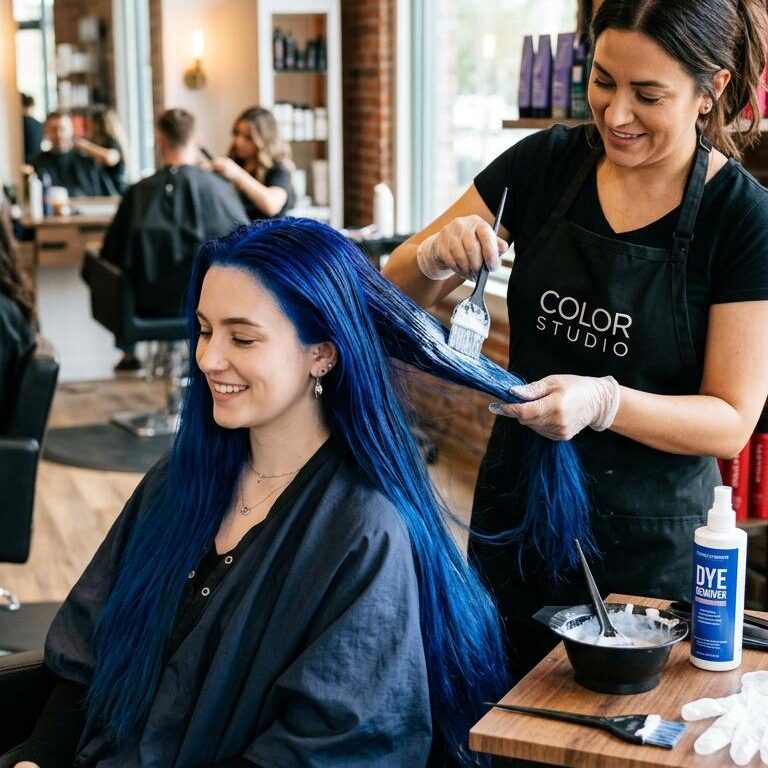
Types of Blue Hair Dye
Before choosing a removal method, it’s important to identify what type of dye you used.
Semi-Permanent Blue Dye
Semi-permanent colorings cover the hair strand and slowly diminish with washing. These are the easiest to remove.
Examples include:
- Fashion colors
- Direct dyes
- Color-depositing conditioners
Demi-Permanent Blue Dye
- Demi-permanent dyes use a low-level developer and last longer than semi-permanent color.
- These require stronger fading treatments.
Permanent Blue Hair Dye
- Permanent dyes penetrate deeply into the hair structure and are the hardest to remove.
- Professional color correction may be necessary.
Best Ways to Remove Blue Hair Dye
1. Clarifying Shampoo Method
One of the safest and easiest ways to fade blue hair dye is by using clarifying shampoo.
Clarifying shampoos contain stronger cleansing ingredients that remove buildup and excess pigment from the hair.
How to Use It
- Wet your hair thoroughly.
- Apply clarifying shampoo generously.
- Massage for 3–5 minutes.
- Rinse with warm water.
- Repeat if necessary.
- Follow with a deep conditioner.
Why It Works
Clarifying shampoos gradually strip color molecules from the hair without harsh bleaching.
Best For
- Fresh blue dye
- Semi-permanent color
- Mild fading
Tips
- Wash daily for faster fading
- Use warm water instead of cold
- Always condition afterward
2. Vitamin C Treatment
Vitamin C is a popular DIY method for removing semi-permanent blue dye naturally.
The acidity helps break down pigment molecules.
How to Make a Vitamin C Hair Mask
You’ll need:
- Vitamin C tablets
- Clarifying shampoo
- Bowl and spoon
Steps
- Crush 10–15 vitamin C tablets into powder
- Mix with clarifying shampoo
- Apply to damp hair
- Leave on for 30–60 minutes
- Rinse thoroughly
- Deep condition afterward
Benefits
- Less damaging than bleach
- Affordable
- Effective on fresh color
Drawbacks
- Can dry out hair
- May require several treatments
3. Baking Soda and Shampoo Mixture
Baking soda has mild bleaching and cleansing properties that help lift blue pigment.
Instructions
Mix:
- 2 tablespoons baking soda
- Clarifying shampoo
Apply to damp hair and leave for 10–20 minutes before rinsing.
Important
Do not overuse this method because baking soda can make hair dry and brittle.
Best For
- Semi-permanent dye
- Stubborn staining
- Oily hair types
4. Dish Soap Method
Dish soap is stronger than regular shampoo and can help fade vivid colors quickly.
How to Use
- Mix dish soap with shampoo
- Apply to wet hair
- Massage thoroughly
- Rinse with warm water
- Condition deeply
Warning
Dish soap can severely dry out hair if used too often.
Limit use to once or twice weekly.
5. Hot Oil Treatments
Oil treatments do not instantly remove blue dye, but they help loosen pigment while restoring moisture.
Good oils include:
- Coconut oil
- Olive oil
- Argan oil
Steps
- Warm the oil slightly
- Apply generously
- Cover with a shower cap
- Leave for 1–2 hours
- Shampoo thoroughly
Benefits
- Reduces dryness
- Improves shine
- Helps with gradual fading
6. Anti-Dandruff Shampoo
Anti-dandruff shampoos contain strong cleansing ingredients that accelerate color fading.
These shampoos work especially well with:
- Warm water
- Frequent washing
- Clarifying routines
Best Options
Look for shampoos containing:
- Selenium sulfide
- Zinc pyrithione
7. Color Remover Products
Commercial color removers are among the most effective ways to remove stubborn blue dye.
These products are specifically designed to shrink artificial color molecules so they can be washed out.
Types of Color Removers
Sulfur-Based Removers
- These are gentler than bleach and work well on oxidative dyes.
Bleach-Based Removers
- Stronger and faster, but more damaging.
8. Bleach Bath
A bleach bath is a diluted bleach mixture combined with shampoo.
This method can remove stubborn blue tones more effectively than regular washing.
Ingredients
- Bleach powder
- Developer
- Shampoo
Important Warning
Bleach baths can damage hair if used incorrectly.
Avoid this method if your hair is:
- Dry
- Brittle
- Overprocessed
- Breaking easily
Best Done By
- Experienced users
- Professional stylists
9. Professional Color Correction
Sometimes home methods are not enough. Professional stylists can safely remove blue dye while minimizing damage.
A salon may use:
- Color removers
- Toners
- Bleach correction
- Color balancing techniques
Benefits of Going Professional
- Less risk of uneven color
- Better damage control
- Customized solutions
- Faster results
10. Letting It Fade Naturally
If your blue hair isn’t too dark, simply allowing it to fade naturally may be the healthiest option.
Ways to Speed Up Natural Fading
- Wash hair more often
- Use warm water
- Spend time in the sunlight
- Avoid color-safe shampoos
How Much Time is Needed to Eliminate Blue Hair Dye?
The timeline depends on:
- Dye type
- Hair porosity
- Hair condition
- Removal method used
Average Timeframes
| Method | Time |
| Clarifying shampoo | Several washes |
| Vitamin C | 1–3 treatments |
| Color remover | 1 session |
| Bleach bath | Immediate lightening |
| Natural fading | Several weeks |
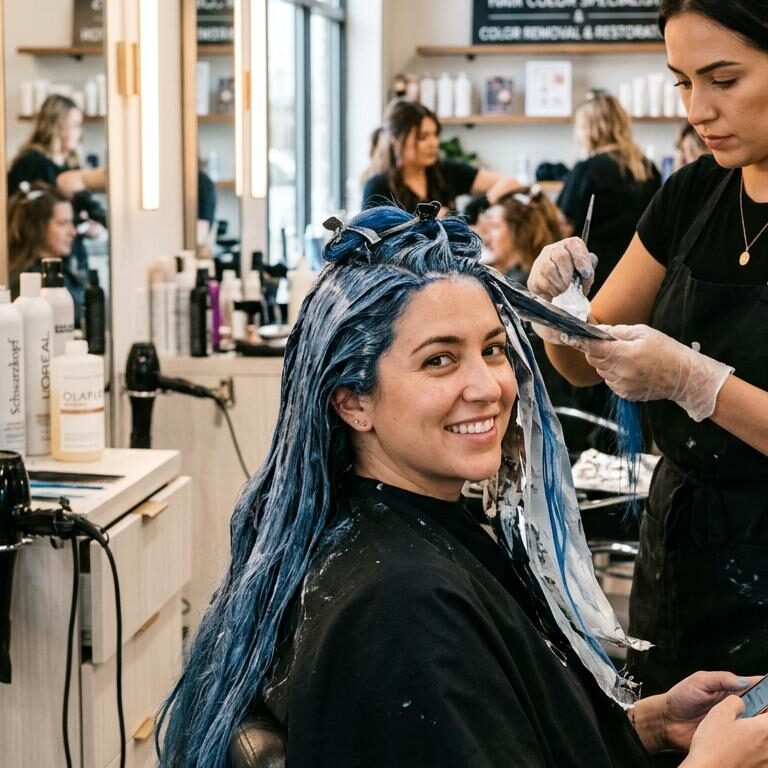
How to Remove Blue Dye Without Damaging Hair
Hair health should always come first.
Tips to Protect Your Hair
Deep condition frequently.
- Use hydrating masks after every fading session.
Avoid Excessive Heat
Limit:
- Flat irons
- Curling irons
- Blow dryers
Space Out Treatments
- Don’t perform multiple harsh treatments in one day.
Trim Damaged Ends
- Split ends worsen after color removal.
Common Mistakes to Avoid
Using Too Much Bleach
Over-bleaching can cause:
- Breakage
- Elastic hair
- Severe dryness
Skipping Conditioner
- Color removal strips moisture from the hair.
- Always rehydrate afterward.
Expecting Instant Results
- Blue dye often fades gradually.
- Patience is essential.
Mixing Harsh Ingredients Randomly
Avoid combining:
- Bleach
- Baking soda
- Peroxide
- Strong developers
Improper mixing can seriously damage hair.
Why Blue Hair Sometimes Turns Green
As blue dye fades, yellow undertones in the hair become visible. When yellow mixes with the remaining blue pigment, hair can appear green.
How to Fix Green Tones
You may need:
- Red-based toner
- Pink toner
- Color correction shampoo
Professional help may also be useful.
Best Products for Removing Blue Hair Dye
Some products are especially popular for fading vivid colors.
Recommended Product Types
- Clarifying shampoos
- Color removers
- Hydrating masks
- Bond repair treatments
Look for formulas designed for:
- Color correction
- Vivid hair colors
- Damaged hair support
Should You Bleach Over Blue Hair?
Bleaching over blue hair can produce the following:
- Green tones
- Uneven lifting
- Patchy color
It’s usually better to remove as much blue as possible before bleaching again.
Can you dye over blue hair?
Yes, but color theory matters.
Colors That Cover Blue Well
- Dark brown
- Black
- Purple
- Deep red
Lighter shades may not cover blue evenly.
Aftercare Tips Following blue hair dye Removal
Proper aftercare helps restore hair strength and softness.
- Use protein treatments.
- Protein helps rebuild damaged strands.
- Hydrate Intensely
- Moisturizing masks improve elasticity.
Avoid Chemical Treatments Temporarily
Wait before
- Perming
- Relaxing
- Re-bleaching
Sleep on silk pillowcases.
This reduces friction and breakage.
Natural Remedies vs. Professional Treatments
Natural Remedies
Pros
- Less expensive
- Gentler
- Easy at home
Cons
- Slower
- Less effective on permanent dye
Professional Treatments
Pros
- Faster
- More predictable
- Customized
Cons
- Expensive
- Potential chemical damage
When to See a Professional Immediately
Seek salon help if:
- Hair feels gummy
- Hair breaks excessively
- Scalp burns
- Color becomes extremely uneven
Professionals can prevent further damage.
Which color remover is best for blue hair?
Blue is one of the hardest hair colors to remove, so the “best” remover depends on whether your dye is semi-permanent or permanent and how damaged your hair already is.
For most people with vivid blue semi-permanent blue hair dye, these are the top-performing removers:
Best Overall for Blue Hair
Color Oops Bold Color Remover
It’s widely recommended because it targets direct dyes and fashion colors without requiring a harsh, full-bleach process. It also includes bond-protecting ingredients to reduce breakage.
Other Excellent Options
Professional-Level Option
- Pulp Riot Blank Canvas
- Hair color communities and stylists frequently recommend this for removing stubborn blue dye with less damage than bleach. Reddit users especially praise it for its vivid colors.
Best for Damaged Hair
- Malibu DDL
- This is considered gentler and works well if your hair is already fragile or overprocessed.
Best Drugstore Option
- L’Oréal Paris Colorista Remover
- Good for fading blue and green tones from semi-permanent dyes, especially if the color isn’t extremely dark.
Quick Comparison
| Feature | Color Oops Bold Color Remover | Pulp Riot Blank Canvas | Malibu DDL | L’Oréal Paris Colorista Remover |
| Best for vivid blue | Excellent | Excellent | Very good | Moderate |
| Damage level | Moderate | Lower | Lower | Moderate |
| Works on semi-permanent dye | Yes | Yes | Yes | Yes |
| Works on permanent dye | Limited | No | No | Limited |
| Easy for beginners | Yes | Medium | Medium | Yes |
| Salon-quality results | Good | Excellent | Excellent | Fair |
My Recommendation by Hair Situation
- Healthy hair + dark vivid blue: Color Oops Bold Remover.
- Damaged or bleached hair: Malibu DDL.
- Salon-quality fading with minimal damage: Pulp Riot Blank Canvas.
- Light pastel blue: L’Oréal Colorista Remover.
- Permanent blue dye: Professional salon correction is safest.
Important Tip
Avoid jumping straight to bleach unless necessary. Many people end up with:
- Green staining
- Patchy color
- Severe dryness
- Breakage
Blue pigments are extremely stubborn, and professional removers usually work better than repeated bleach sessions.
Read more: Can you put hair dye on wet hair
FAQs About Removing Blue Hair Dye
1. What is the fastest way to remove blue hair dye?
A professional color remover or bleach bath usually works fastest, though it may cause more damage than gentler methods.
2. Does clarifying shampoo remove blue hair dye?
Yes, clarifying shampoo helps fade blue dye gradually, especially semi-permanent colors.
3. Can baking soda remove blue hair dye?
Baking soda may help fade blue pigment when mixed with shampoo, but excessive use can dry out hair.
4. How long does blue hair dye take to fade?
It may take several weeks to months, depending on the dye type and how often you wash your hair.
5. Why did my blue hair turn green?
Yellow undertones in the hair mix with fading blue pigment, creating a green appearance.
6. Is bleach necessary to remove blue hair dye?
Not always. Many semi-permanent blues can fade using clarifying methods and color removers.
7. Can I remove blue hair dye naturally?
Natural fading methods like hot oil treatments, vitamin C masks, and frequent washing can help gradually remove color.
8. Will coconut oil remove blue hair dye?
Coconut oil may slightly loosen pigment and improve fading, but it won’t completely strip blue dye alone.
9. Can I dye brown over blue hair?
Yes, dark brown shades usually cover faded blue successfully.
10. What should I do if my hair becomes damaged after color removal?
Stop chemical treatments immediately and focus on protein treatments, deep conditioning, and trimming damaged ends.
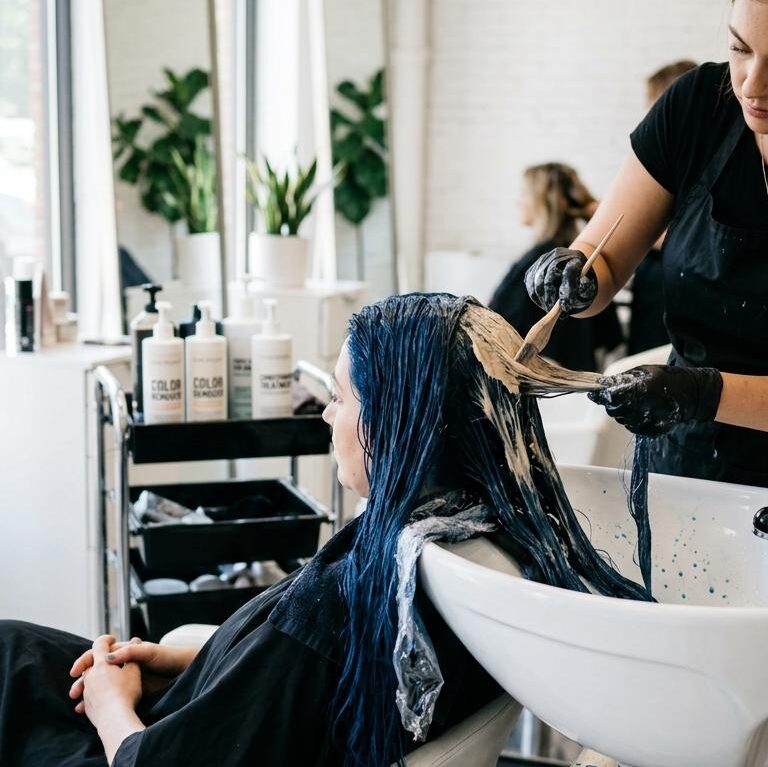
Final Thoughts
Removing blue hair dye can be frustrating, especially because blue pigments tend to linger longer than many other fashion colors. However, with the right approach, patience, and proper hair care, you can successfully fade or remove unwanted blue tones without destroying your hair.
For most people, starting with gentle methods such as clarifying shampoo, vitamin C treatments, and anti-dandruff shampoo is the safest approach. If those methods fail, commercial color removers or professional salon correction may be necessary.
The key is balancing effectiveness with hair health. Rushing the process with excessive bleach or harsh chemicals can lead to dryness, breakage, and long-term damage.
Healthy hair always looks better than overly processed hair, so take your time and prioritize conditioning throughout the removal process. If you have any queries, please don’t hesitate to reach out to fajarhafeez117@gmail.com.